Clear Sky Science · en
Evaluation of commercial probiotics for growth, health, and biometric indices of Thai silver barb (Barbonymus gonionotus)
Better Fish, Healthier Ponds
Farmed fish help feed millions of people, but keeping them healthy and fast-growing without overusing chemicals is a constant challenge. This study looks at whether everyday commercial probiotics—beneficial microbes already sold to shrimp farmers—can also help a popular freshwater food fish, the Thai silver barb, grow better, stay healthier, and live in cleaner ponds. The findings offer a glimpse of how tiny microbes could make aquaculture more sustainable and affordable for small-scale farmers.
Why This Little Fish Matters
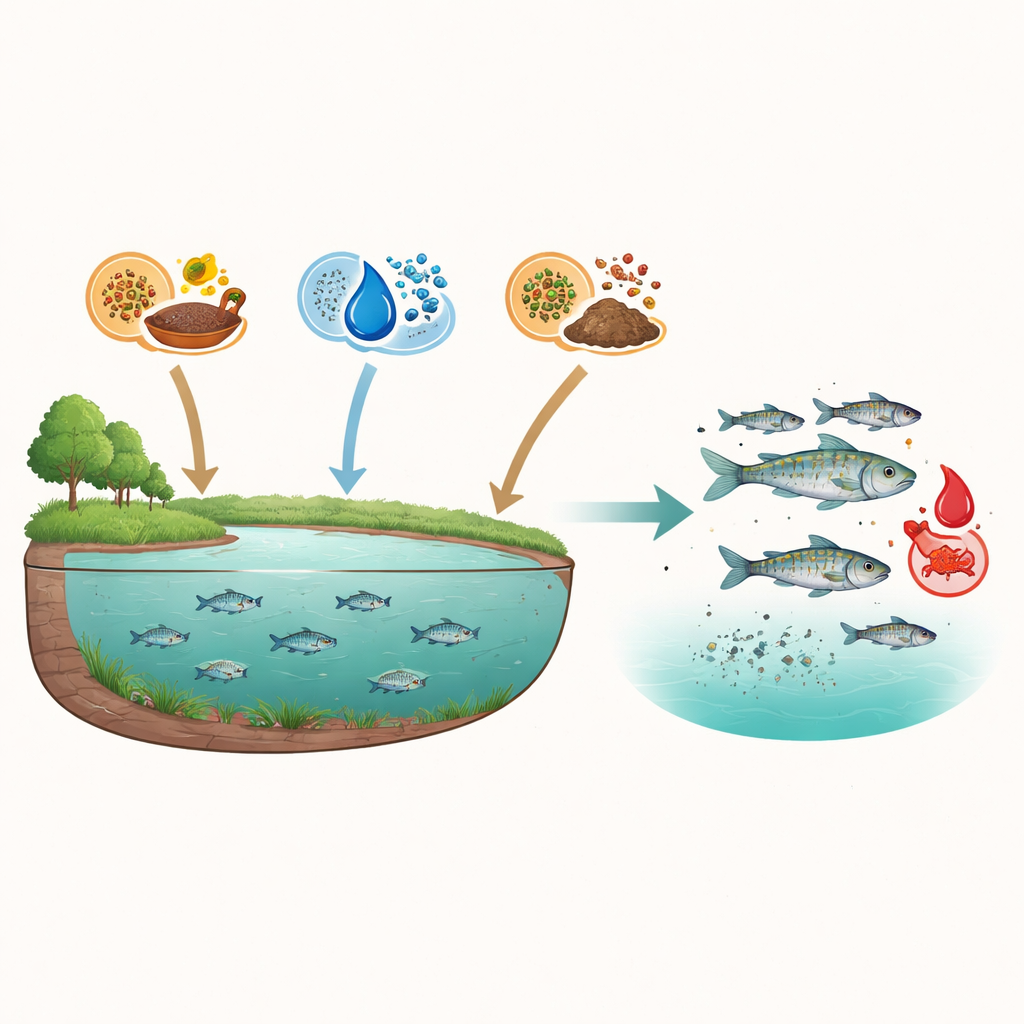
Thai silver barb is a small, fast-growing carp that has become a mainstay on dinner tables in Bangladesh. It is valued for its mild taste, high protein content, and ability to thrive in crowded ponds alongside other fish. Yet soaring feed prices and reliance on chemicals such as antibiotics, steroids, and various additives are squeezing farmers’ profits and raising concerns about drug resistance and food safety. Probiotics—“good” microbes that can be mixed into feed, water, or pond soil—have been suggested as a gentler way to boost growth, improve water quality, and strengthen fish health, but many products on the market were designed for brackish-water shrimp, not freshwater fish.
Putting Probiotics to the Test
The researchers ran a 90-day trial in 15 small earthen ponds, stocking each with 350 young Thai silver barbs. They compared four probiotic strategies against a control group that received no probiotics. One group received a gut probiotic mixed directly into the feed, another a probiotic added to the pond water, a third a soil probiotic spread over the pond bottom, and a fourth a half-dose mixture of all three routes. Apart from these differences, all fish were fed the same commercial diet, and the team carefully tracked growth, survival, feed use, water conditions, gut bacteria, blood measures, and the microscopic structure of the intestine.
Faster Growth and Cleaner Living
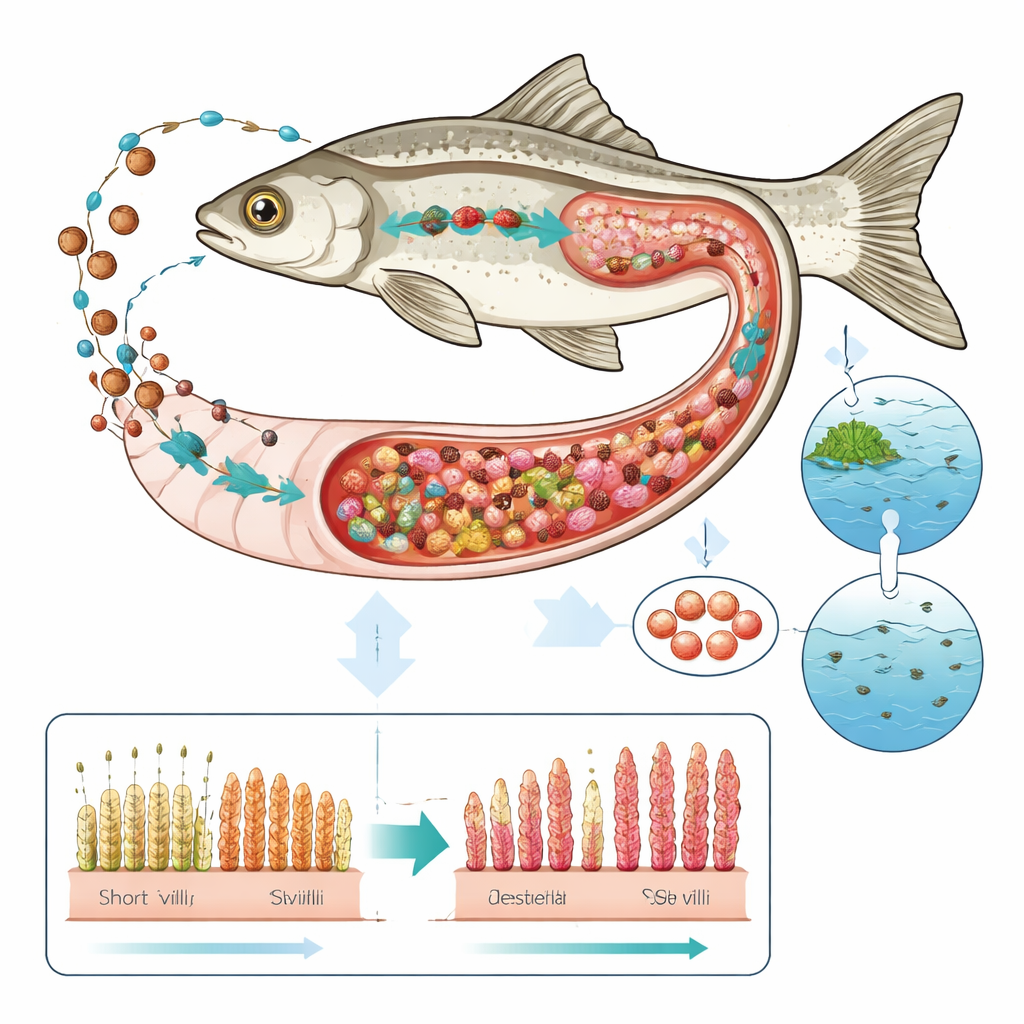
All probiotic treatments helped the fish grow better than the control group, but the gut probiotic added to feed stood out. Fish receiving this treatment more than doubled the net weight gain and relative growth rate compared with fish raised without probiotics. They converted feed into body mass more efficiently and showed slightly higher survival, meaning more saleable fish per pond. The ponds themselves also benefited: pH stayed in a favorable range for culture, and harmful ammonia stayed lower in the gut-probiotic ponds than in those treated with a soil probiotic alone, suggesting that the microbes helped stabilize the pond environment. Inside the fish, probiotic-fed groups carried more beneficial bacteria in their intestines and showed longer, denser intestinal folds under the microscope, a sign of improved digestion and nutrient absorption.
Signals of Stronger Fish Health
Beyond faster growth, probiotic-treated fish displayed blood patterns consistent with better health. Those given the gut probiotic had the highest counts of red and white blood cells, which are important for oxygen transport and immune defense, and the lowest values for a measure related to the amount of hemoglobin per cell. Glucose and hemoglobin levels remained within normal ranges across all groups, suggesting that the fish were not under strong stress. Statistical analyses that examined all measurements together grouped the gut-probiotic and mixed-probiotic fish as the strongest performers, while the no-probiotic fish formed a separate, weaker cluster. This pattern supports the idea that changing the community of microbes in and around the fish can ripple through growth, immunity, and overall condition.
What This Means for Farmers
In simple terms, this work shows that adding the right probiotics—especially those delivered in feed—to ponds growing Thai silver barb can help fish grow bigger on the same feed, live in cleaner water, and show signs of stronger health. Products originally designed for shrimp ponds can work in freshwater, but not all are equally effective, and soil-based probiotics alone may be less suitable for managing waste in these systems. For farmers, gut-focused or combined probiotics could become practical tools to reduce fertilizer, antibiotics, and other costly inputs. The authors caution that more research is still needed on disease resistance and immune defenses, but the message is clear: carefully chosen probiotics can be powerful, eco-friendly allies in producing more nutritious fish with fewer chemical crutches.
Citation: Shovon, S.S., Zahan, T., Shoyeb, R. et al. Evaluation of commercial probiotics for growth, health, and biometric indices of Thai silver barb (Barbonymus gonionotus). Sci Rep 16, 10418 (2026). https://doi.org/10.1038/s41598-026-37975-0
Keywords: aquaculture probiotics, Thai silver barb, fish gut health, sustainable fish farming, pond water quality