Clear Sky Science · en
Falcarindiol alleviates airway inflammation and oxidative stress in asthma through Nrf2 pathway activation
Why a vegetable compound matters for asthma
Asthma affects hundreds of millions of people, causing bouts of wheezing, coughing, and shortness of breath. Many patients rely on steroid medicines that can have side effects when used for years. This study explores whether a natural molecule found in common vegetables such as carrots and celery, called falcarindiol, could calm inflamed airways and protect lung cells by turning on the body’s own defense systems.
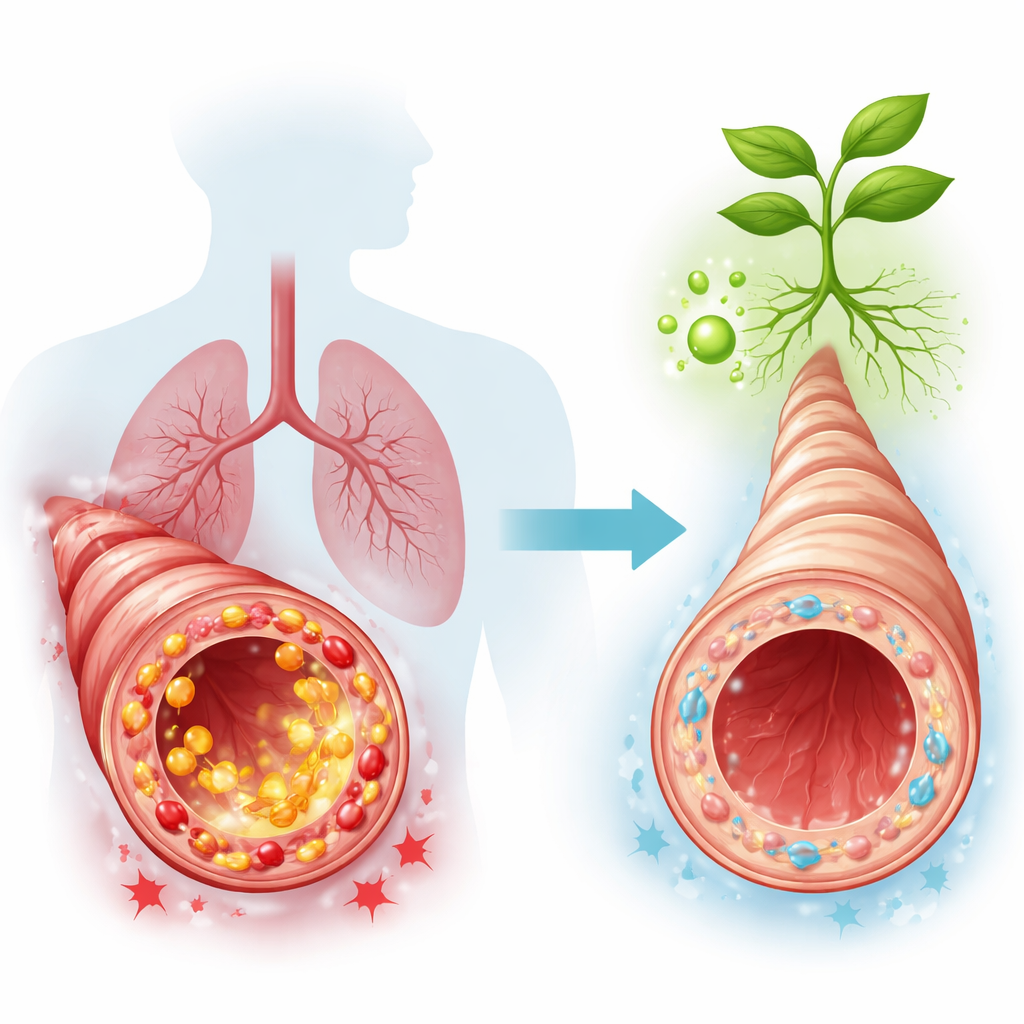
Asthma as irritated, overreactive airways
In asthma, the tubes that carry air to the lungs become swollen, clogged with mucus, and overly sensitive. Certain immune cells rush into the airway wall and release chemical signals that tighten the airway muscles and promote more inflammation. At the same time, the lungs are exposed to high levels of harmful, unstable molecules collectively known as “oxidative stress,” which further damages tissue and keeps the disease smoldering. Because of this double hit—runaway inflammation plus oxidative stress—researchers are keen to find treatments that can address both problems at once.
A plant molecule put to the test
The researchers tested falcarindiol in a well-established mouse model of allergy-driven asthma and in cultured human airway cells. In mice, they triggered asthma-like disease by repeatedly exposing the animals to egg-white protein, which causes strong immune reactions in the lungs. Some of these mice then received falcarindiol by mouth at two different doses, while others received a standard steroid drug for comparison. The team examined lung tissue under the microscope, measured allergy-related antibodies and inflammatory chemicals in blood and lung fluid, and evaluated how easily the mice could breathe when challenged with a drug that narrows airways.
Calmer airways and less damage
Falcarindiol-treated mice showed markedly healthier lungs. Their airway walls were thinner, there was far less buildup of mucus-producing cells, and many fewer inflammatory cells crowded the air passages. Levels of allergy antibodies and key signaling proteins that drive asthma were reduced, and the animals’ breathing remained steadier during airway challenge. At the same time, markers of oxidative stress in lung tissue dropped, while the activity of protective antioxidant enzymes rose. In several measures, the higher falcarindiol dose worked about as well as the steroid treatment.
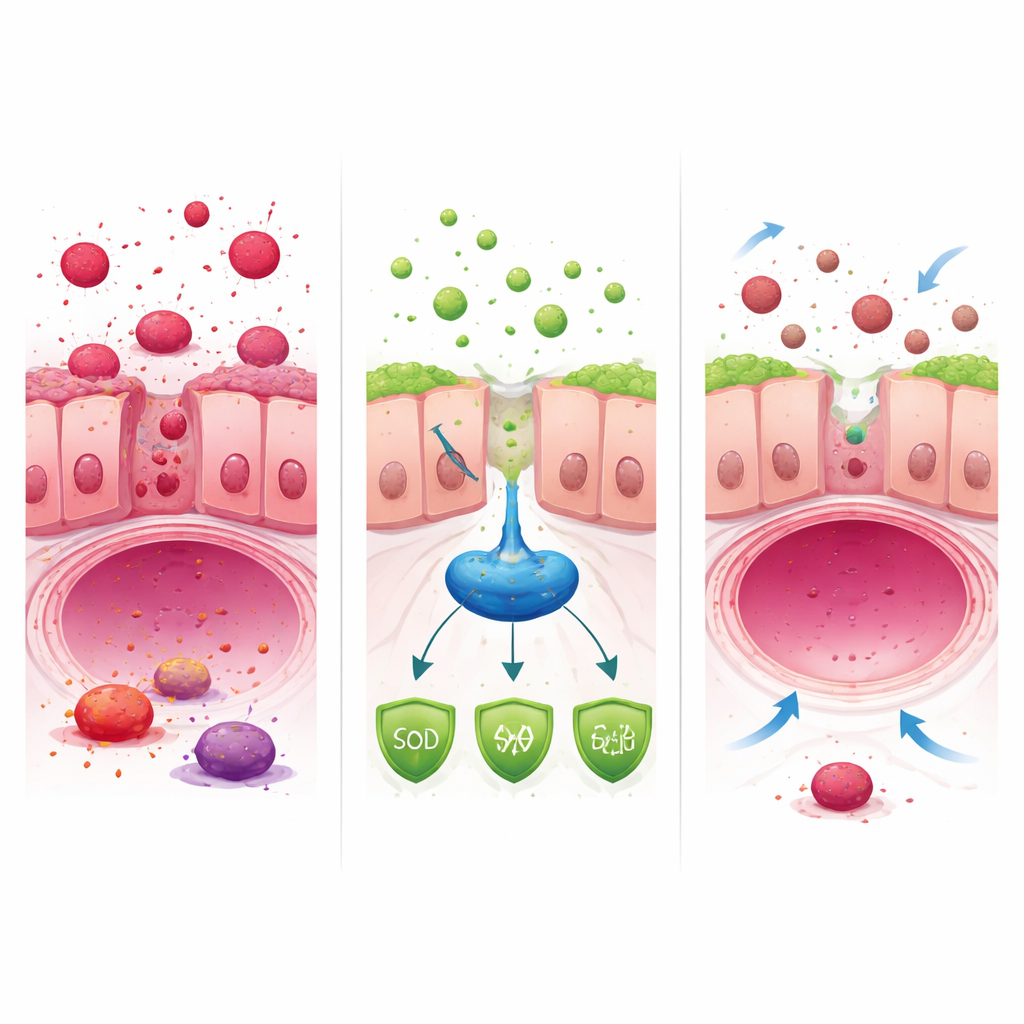
Protecting and repairing the airway lining
The inner surface of the airway is lined by a layer of delicate cells that form the first barrier against inhaled irritants. In both the mouse lungs and human airway cells grown in the lab, asthma-like conditions caused many of these cells to die and stopped others from dividing and repairing the tissue. Falcarindiol reversed this pattern: fewer cells underwent programmed cell death, and more re‑entered a healthy growth and repair cycle. The compound also lowered the release of inflammatory chemicals and restored antioxidant defenses in the cultured cells, echoing what was seen in live animals.
Switching on an internal defense switch
A central focus of the study was a protein called Nrf2, which acts as a master switch for many of the body’s antioxidant and cell‑protective genes. The authors found that asthma-like conditions tended to keep this switch turned down, while falcarindiol flipped it back on, boosting downstream protective proteins. To prove this was essential, they either blocked Nrf2 with a drug in human cells or reduced its levels in mice using gene-silencing tools. Under these conditions, falcarindiol largely lost its ability to protect lung cells, cut inflammation, or ease oxidative stress, strongly suggesting that its benefits depend on this internal defense pathway.
What this could mean for people with asthma
Altogether, the work shows that falcarindiol can ease many key features of asthma in experimental models by activating the body’s own cellular shield against stress and by calming overactive immune responses. While this research is still at an early, preclinical stage, it points to the possibility of future asthma treatments based on safe, plant‑derived molecules that work with, rather than against, the body’s natural repair systems.
Citation: Jiang, X., Lai, S., Lin, Z. et al. Falcarindiol alleviates airway inflammation and oxidative stress in asthma through Nrf2 pathway activation. Sci Rep 16, 10140 (2026). https://doi.org/10.1038/s41598-026-37962-5
Keywords: asthma, oxidative stress, falcarindiol, natural compounds, lung inflammation