Clear Sky Science · en
Genome-wide identification and characterization of CaM and CML gene family in chickpea (Cicer arietinum L.)
Why tiny signals in chickpea matter
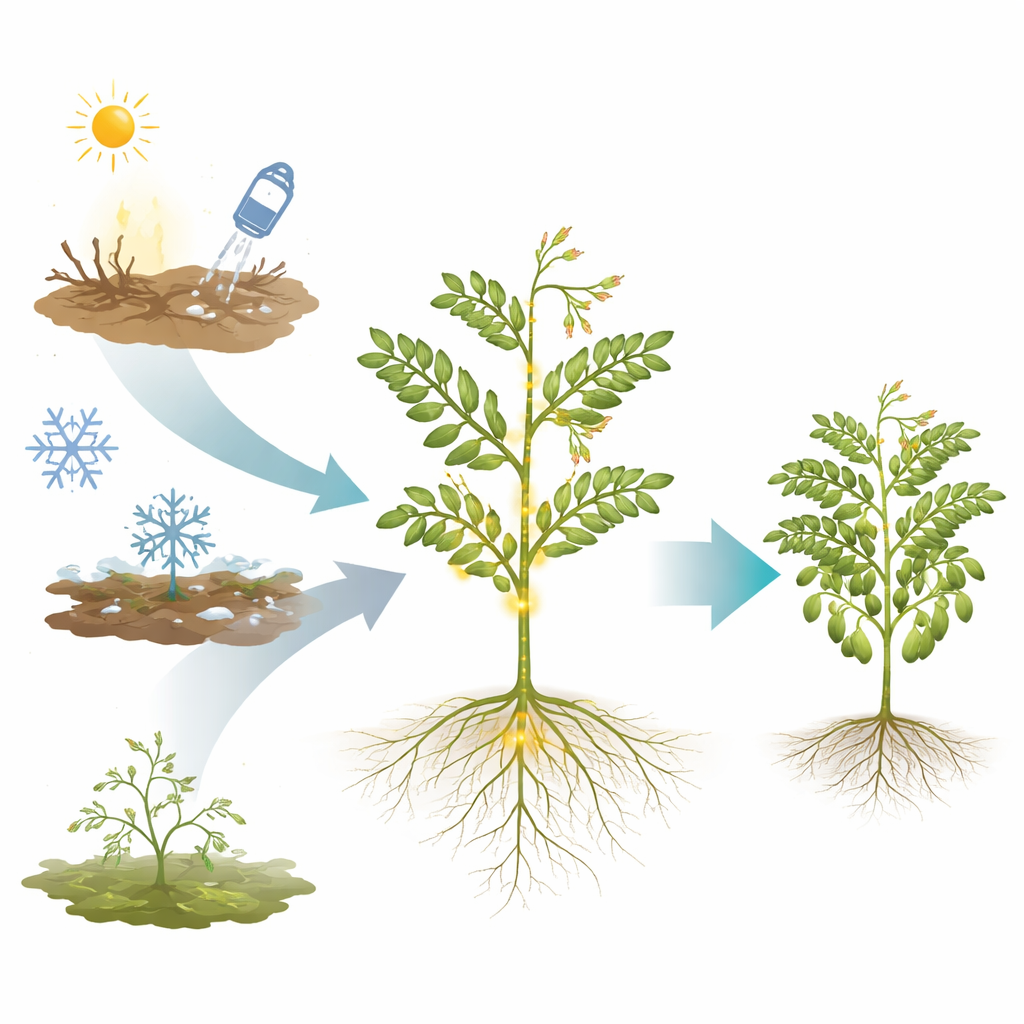
Chickpeas are more than a staple in hummus and stews; they are a cornerstone crop for food security in many parts of the world. Yet their yields are highly vulnerable to drought, salinity, and cold. This study explores how chickpea plants sense and respond to such hardships through a special set of "calcium-sensing" genes. Understanding these hidden networks could help plant breeders develop hardier varieties that keep producing even as the climate becomes more erratic.
How plants listen to calcium whispers
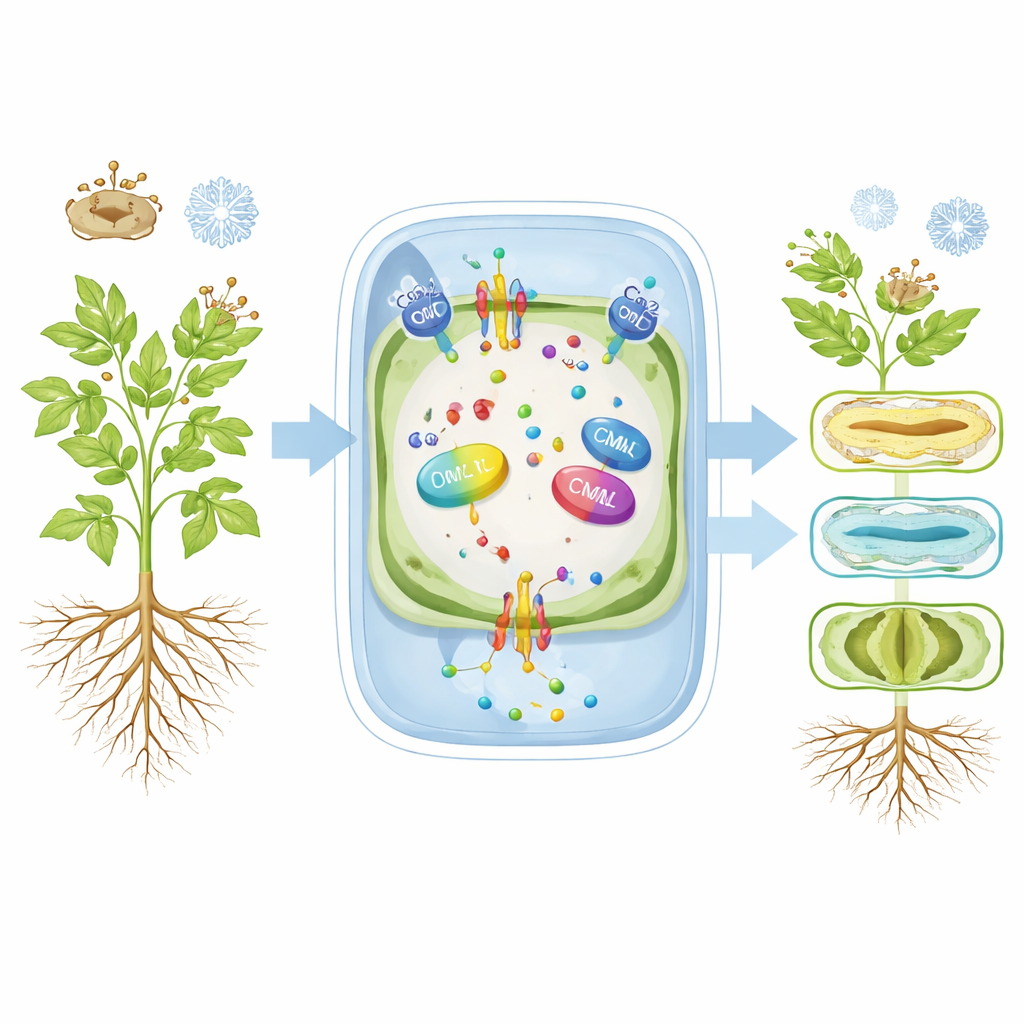
Inside plant cells, calcium ions act like tiny messengers, spiking in concentration when a plant is stressed by dry soil, salty conditions, or low temperatures. To make sense of these signals, cells rely on sensor proteins that change shape when they bind calcium and then switch other proteins on or off. Two key groups of such sensors are calmodulins (CaMs) and calmodulin-like proteins (CMLs). While these families have been cataloged in other crops, chickpea’s version of this toolkit had not been mapped in a complete and systematic way.
Taking a genome-wide tour of calcium sensors
The authors used the latest chickpea genome sequence and large online plant databases to search for all genes that encode CaM and CML proteins. They pinpointed 29 genes in total: six CaMs and twenty-three CMLs. All of the proteins carried four copies of a classic calcium-grabbing structural feature, confirming that they are genuine calcium sensors. By comparing the detailed layouts of these genes—where the coding segments and non-coding segments lie—and by aligning their protein sequences, the team showed that most chickpea CML genes are structurally simple, while CaM genes are more complex. Evolutionary analyses indicated that these genes have been conserved by “purifying selection,” meaning harmful changes are weeded out, underscoring their importance for plant survival.
Where and when these genes switch on
To see what these genes actually do in the plant, the researchers mined existing transcriptome datasets—large collections of gene activity measurements—from many chickpea tissues and developmental stages. Different CaM and CML genes showed distinct expression patterns in roots, shoots, leaves, flower buds, and young pods. Some were especially active in flowers and developing seeds, hinting at roles in reproduction, while others were more active in roots and young seedlings, pointing to roles in early growth and nutrient uptake. This tissue-by-tissue variation suggests that each member of the gene family has a specialized job, rather than all acting as generic calcium sensors.
Stress tests: drought, salt, and cold
The team then examined how these genes behave under environmental stress using multiple independent datasets. Under drought at different reproductive stages, many CaM and CML genes sharply increased or decreased their activity in roots, revealing a finely tuned response rather than a simple on–off switch. Under desiccation, salinity, and cold, a few CML genes were consistently turned up in both roots and shoots, marking them as strong candidates for helping chickpea cope with harsh conditions. Analysis of nearby DNA “switches” in the promoters of these genes showed an abundance of elements known to respond to light, plant hormones, drought, and low temperature, further linking the calcium-sensing network to stress and growth control.
What this means for future chickpea crops
Taken together, the study provides the first complete inventory and basic blueprint of calcium-sensing CaM and CML genes in chickpea. It shows that these genes form a conserved but diversified family, with different members tuned to specific tissues, stages of flower and pod formation, and types of environmental stress. For non-specialists, the key message is that chickpea’s ability to survive drought or cold depends in part on how well these calcium sensors detect trouble and adjust growth and water use. By identifying which genes are most responsive and where they act, this work lays a foundation for breeding or engineering chickpea plants that maintain yield and nutritional value even under challenging climate conditions.
Citation: Swain, B., Gupta, P. & Yadav, D. Genome-wide identification and characterization of CaM and CML gene family in chickpea (Cicer arietinum L.). Sci Rep 16, 12131 (2026). https://doi.org/10.1038/s41598-026-37931-y
Keywords: chickpea, calcium signaling, calmodulin, drought tolerance, gene family