Clear Sky Science · en
Fractional-order epidemic modeling with a deep neural network framework
Why this research matters to everyone
When a new infectious disease appears, health officials rush to answer a few urgent questions: How fast will it spread, how many people will need treatment, and what mix of care and prevention will bring it under control? This study builds a more realistic mathematical lens for viewing such outbreaks, one that remembers what happened in the past and uses advanced artificial intelligence to track how an infection moves through a community.
Following people through stages of illness
The authors divide a population into four simple groups: people who can catch the disease, those who are currently sick and infectious, those receiving treatment, and those who have recovered and are temporarily protected. People move between these groups as they become infected, receive care, or get better. The model also recognizes that health systems can become strained, so the chance of infection or treatment does not grow without limit as case numbers rise. Instead, the model lets infection and treatment “saturate,” reflecting crowded clinics and changes in behavior when many people are sick. 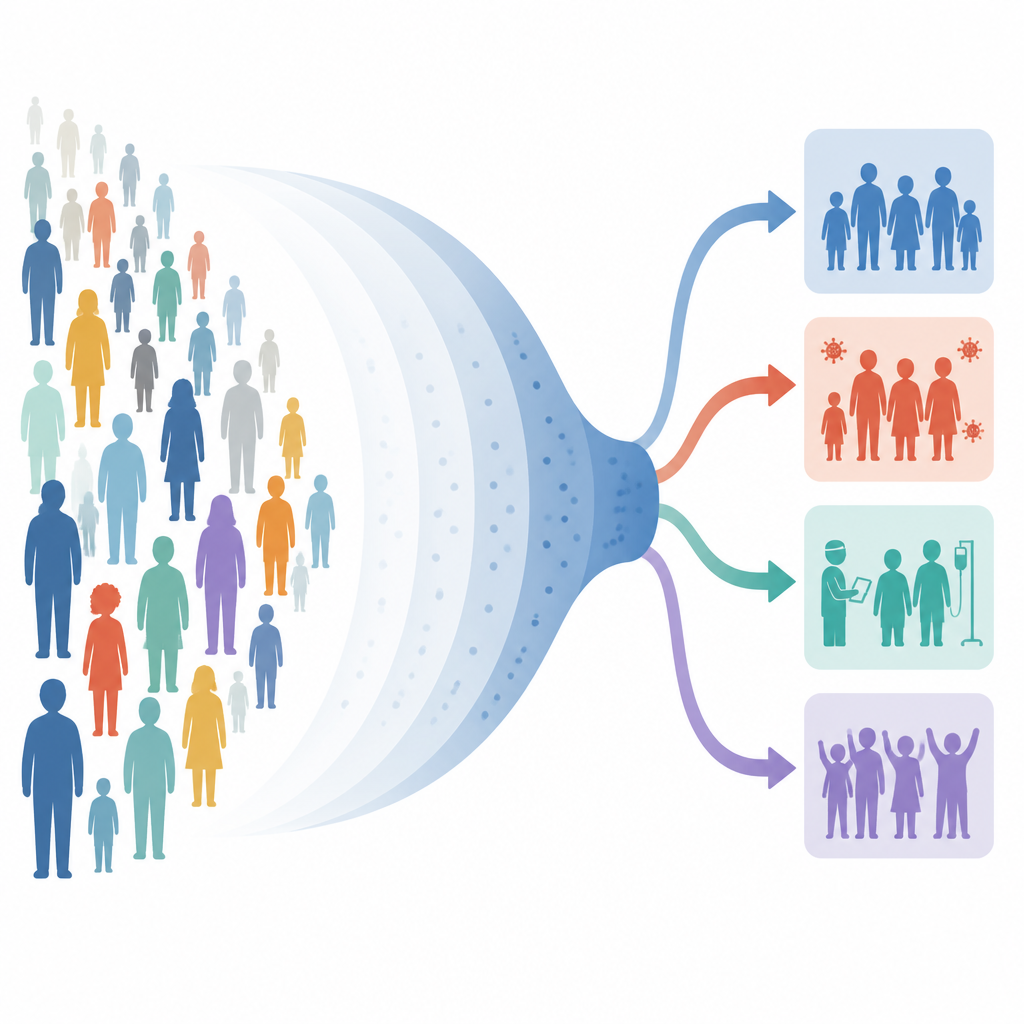
Letting the outbreak remember its past
Most traditional outbreak models assume that only the present situation matters, like a snapshot taken at a single moment. This work instead uses a “fractional” description of change that allows the system to keep a kind of memory. Past levels of infection and treatment continue to influence what happens now and in the future. This memory can slow down or speed up how quickly the disease fades away or settles into a long term presence. By analyzing this model, the researchers identify two key patterns: one in which the disease eventually disappears, and another in which it persists at a steady level, with ongoing new infections and treatments.
Finding the tipping point for control
A central number in any epidemic study is the basic reproduction number, which estimates how many new infections are likely to arise from a single sick person in a mostly unprotected population. The authors derive this threshold for their memory based model and show how it depends on infection rates, natural recovery, death, and treatment success. If this number stays below one, the disease free state is stable: infections die out over time. If it rises above one, the system moves toward an endemic state, where infection remains part of everyday life. The study also provides mathematical tests that confirm when each of these outcomes is stable under the influence of memory effects.
Using deep learning as a fast solver
Because memory based equations are hard to solve directly, the team first uses a specialized numerical method designed for systems that depend on their past. They then train a deep neural network, tuned with a technique called Bayesian regularization, to imitate these detailed calculations. Once trained, this network can quickly reproduce the behavior of the full model for different levels of memory, offering a fast stand in for repeated simulations. Careful checks using error plots, regression analysis, and function fitting show that the neural network closely tracks the numerical results across all tested scenarios. 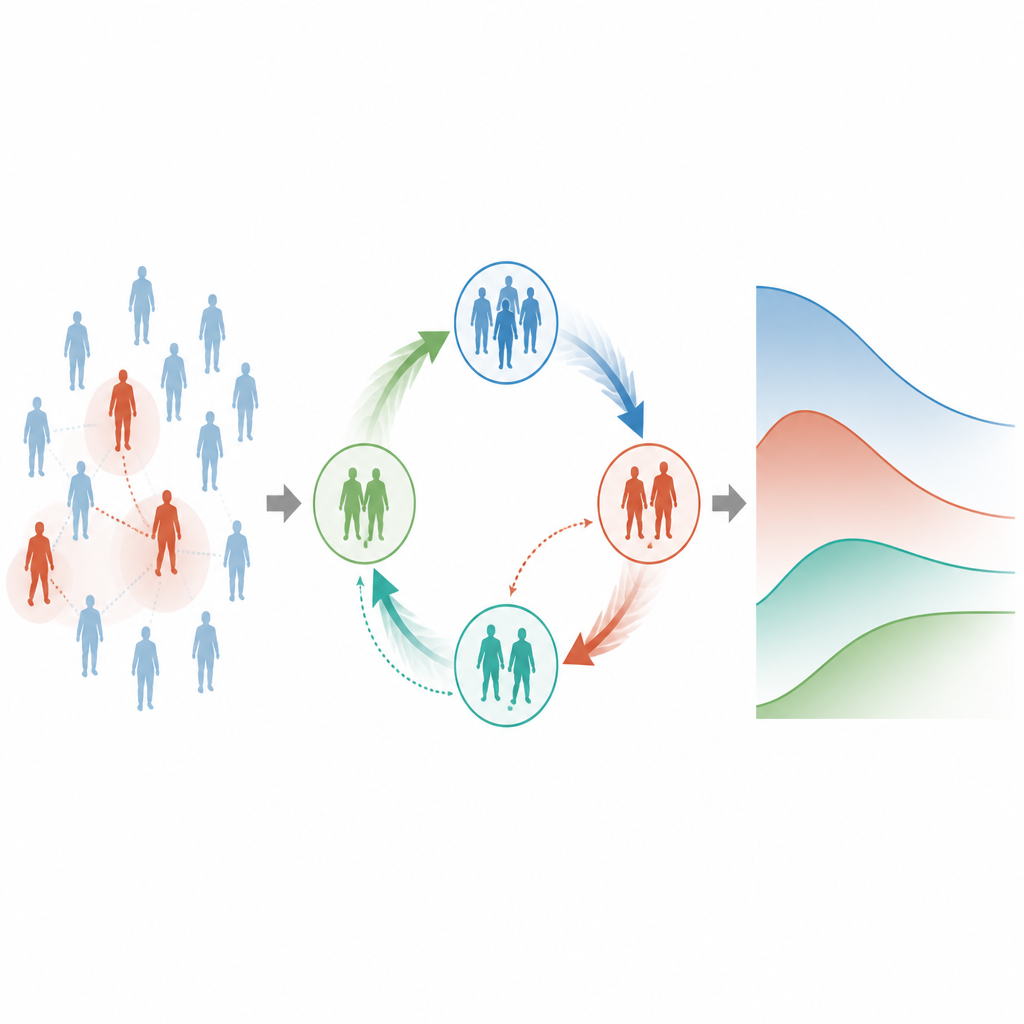
What the study’s findings mean in plain terms
Taken together, the work shows that including the “memory” of past infections and treatments can noticeably change how an epidemic rises, falls, or settles into a long term pattern. It also demonstrates that a well trained deep neural network can reliably stand in for slower numerical methods when exploring these complex behaviors. While the study does not offer direct medical advice, it provides a more nuanced framework for thinking about how disease history, treatment delays, and limited resources interact, helping researchers and planners better explore which strategies may steer an outbreak toward eventual decline rather than ongoing persistence.
Citation: Jangir, P., Agarwal, G. & Nisar, K.S. Fractional-order epidemic modeling with a deep neural network framework. Sci Rep 16, 15025 (2026). https://doi.org/10.1038/s41598-026-37775-6
Keywords: epidemic modeling, fractional calculus, infectious diseases, deep neural networks, Bayesian regularization