Clear Sky Science · en
Bone marrow stromal cells enhance chondrocyte function and autophagy via mTOR signaling
Why Jaw Joint Wear Matters
Opening your mouth to talk, chew, or yawn depends on a small but complex joint in front of each ear, called the temporomandibular joint (TMJ). When this joint wears down—a condition known as temporomandibular joint osteoarthritis (TMJOA)—people can suffer from pain, clicking sounds, and difficulty moving the jaw. Current treatments mainly ease symptoms but cannot truly rebuild the damaged joint. This study explores whether special repair cells from bone marrow can help protect and restore the cartilage in this joint, and how an internal "self-cleaning" system inside cells might be harnessed to slow or even reverse joint damage. 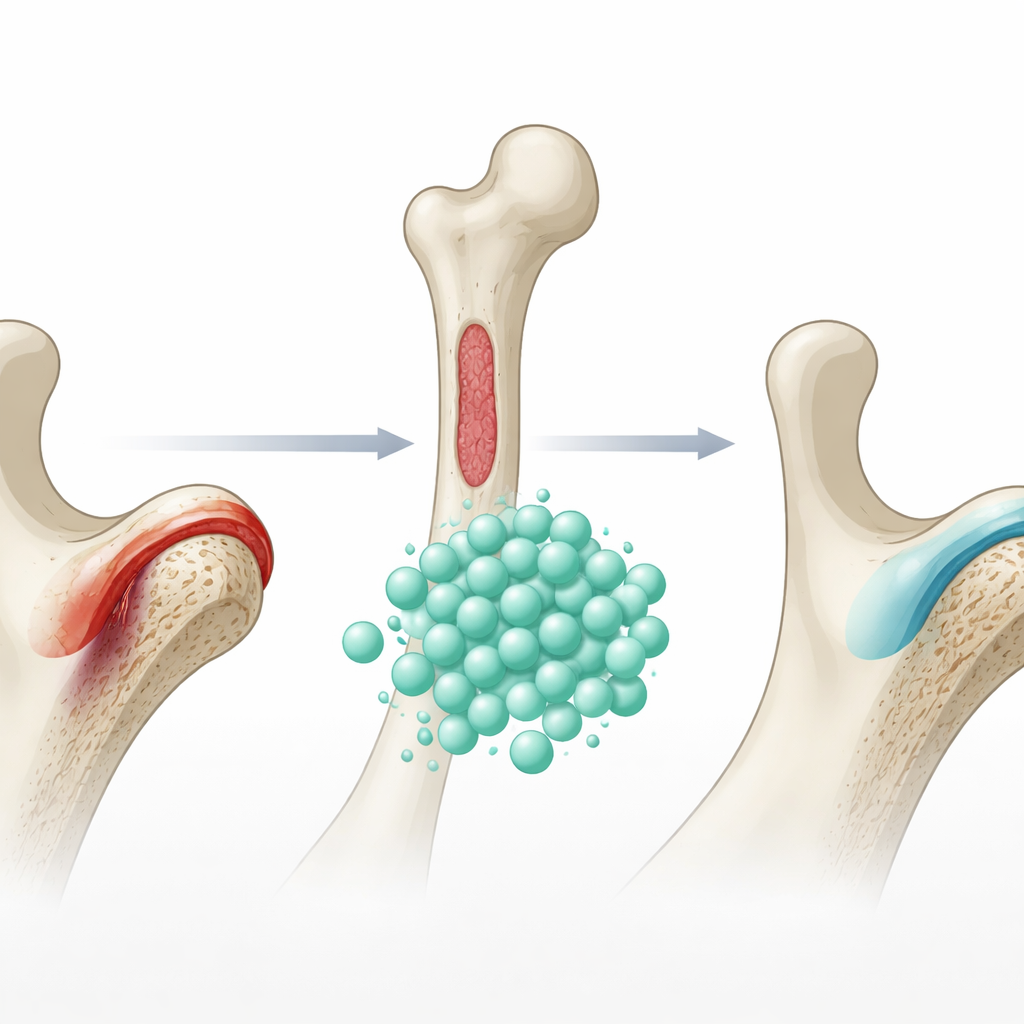
Repair Cells From Within the Bone
Bone marrow stromal cells are versatile cells that live inside our bones and can develop into different tissue types, including bone, fat, and cartilage. The researchers first isolated these cells from the jaw region of young rats and confirmed their identity using standard laboratory tests. When they grew the cells under bone-forming conditions, they produced mineral deposits. Under fat-forming conditions, they accumulated oil droplets. These behaviors confirmed that the cells had the flexible, regenerative traits needed for use as a potential therapy for worn joints.
Helping Joint Cells Grow and Move
The team next asked how these bone marrow stromal cells would influence cartilage cells from the jaw joint, called condylar chondrocytes. They grew the two cell types together in shared culture systems that allowed chemical signals to pass back and forth without direct contact. Under these conditions, the cartilage cells divided more quickly, formed more and larger colonies over time, and migrated more effectively to close artificial “wounds” in a laboratory dish. The cartilage cells also produced more mineralized nodules and showed gene activity patterns linked with healthy bone and cartilage building, suggesting that the presence of stromal cells nudged them toward repair and reinforcement of the joint surface.
Turning On the Cell’s Self-Cleaning Mode
Beyond stimulating growth, the stromal cells also seemed to boost a crucial survival process inside cartilage cells known as autophagy—essentially a cellular recycling system that breaks down damaged proteins and structures. When the two cell types were grown together, markers of this recycling process increased, while the activity of a key growth controller called mTOR decreased. mTOR acts like a central switchboard that, when highly active, tends to suppress recycling and push cells to grow instead. By dialing down mTOR activity in the cartilage cells, the stromal cells appeared to help them clear out internal damage and maintain balance, which is vital in a joint constantly exposed to mechanical stress. 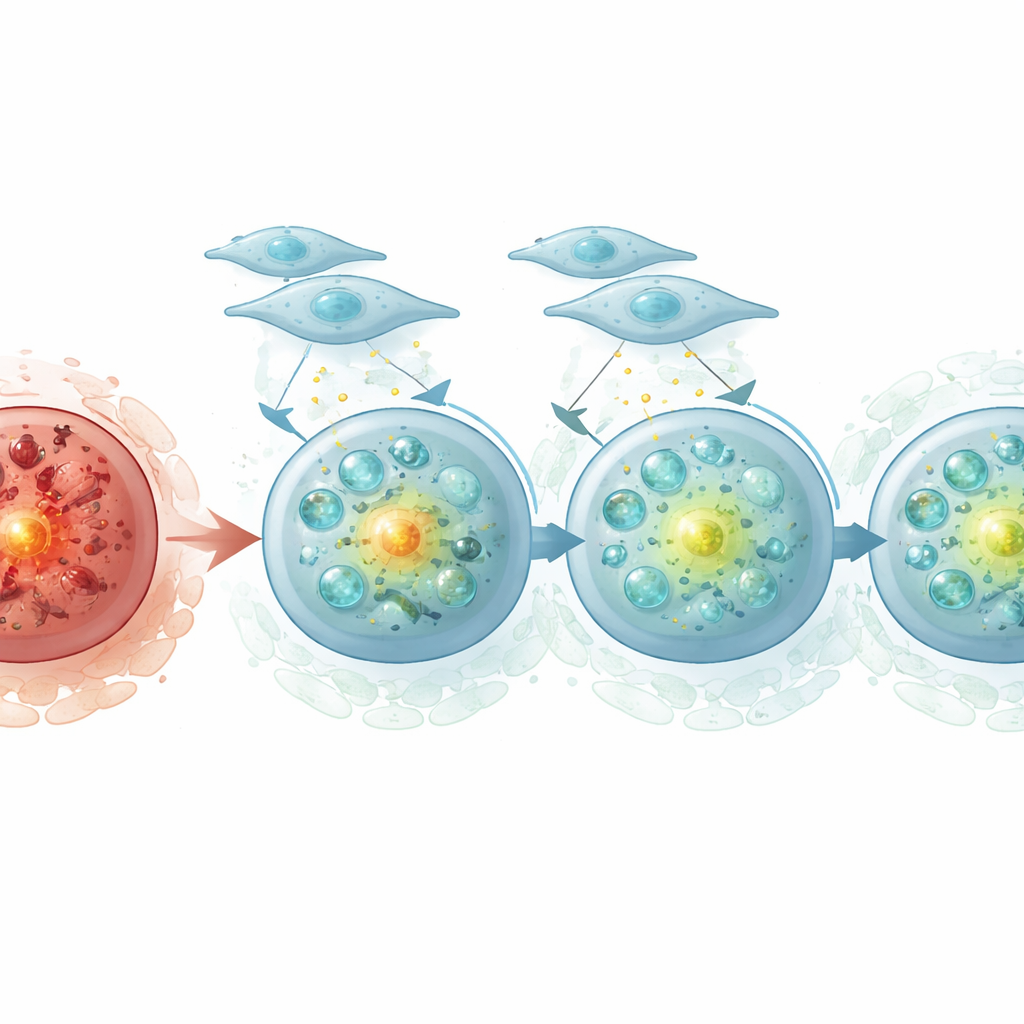
Testing the mTOR Control Knob
To see whether this mTOR switch truly governed the recycling boost, the researchers used two drugs: rapamycin, which dampens mTOR, and a peptide called SPQ, which activates it. When mTOR was blocked with rapamycin, cartilage cells proliferated even more and showed a stronger recycling signature, mirroring and amplifying the effects of stromal cell co-culture. When mTOR was stimulated with SPQ, the opposite happened: cell growth fell and recycling markers dropped. Together, these experiments support the idea that bone marrow stromal cells help cartilage cells by tuning down mTOR and turning up their internal cleanup machinery.
What This Could Mean for Sore Jaws
For people living with painful jaw joints, these findings point toward a future in which treatment does more than mask symptoms. Bone marrow stromal cells, or the signals they release, might one day be used to encourage local cartilage cells to multiply, move into damaged areas, strengthen underlying bone, and keep themselves healthy through better internal recycling. Because this work was done in dishes using normal rat cells, more studies in disease-like conditions and animal models are needed. Still, the results highlight the mTOR pathway as a promising handle for controlling joint cell health and suggest that cell-based or drug-based therapies targeting this pathway could help slow or repair TMJ wear over the long term.
Citation: Yang, Y., Zheng, Z. Bone marrow stromal cells enhance chondrocyte function and autophagy via mTOR signaling. Sci Rep 16, 11431 (2026). https://doi.org/10.1038/s41598-026-37739-w
Keywords: temporomandibular joint osteoarthritis, bone marrow stromal cells, cartilage regeneration, autophagy, mTOR signaling