Clear Sky Science · en
Artificial neural networks (ANN) and response surface methodology (RSM) for optimizing antioxidant and α-amylase inhibitory compound extraction from Ballota limbata
Why this plant and this study matter
Many people look to plants for gentler ways to support health, especially for problems linked to blood sugar and long-term damage from unstable molecules in the body. This study focuses on Ballota limbata, a traditional medicinal herb, and asks a practical question: how can we pull its helpful ingredients out of the leaves in a way that is fast, efficient, and kind to the environment?
From village remedy to lab investigation
Ballota limbata has long been used in folk medicine for eye troubles, infections, wounds, and calming effects. Modern analysis shows that its leaves are rich in plant chemicals called phenolics and flavonoids, which can neutralize harmful reactive molecules and may help slow the breakdown of starch into sugar in the gut. Those two actions are important because they relate to oxidative stress and to how quickly blood sugar rises after a meal, both central issues in diseases such as diabetes. The challenge is that different parts of the plant respond differently to heat, time, and solvent, so finding the right way to extract these fragile compounds is not straightforward.
Two ways to make a concentrated plant extract
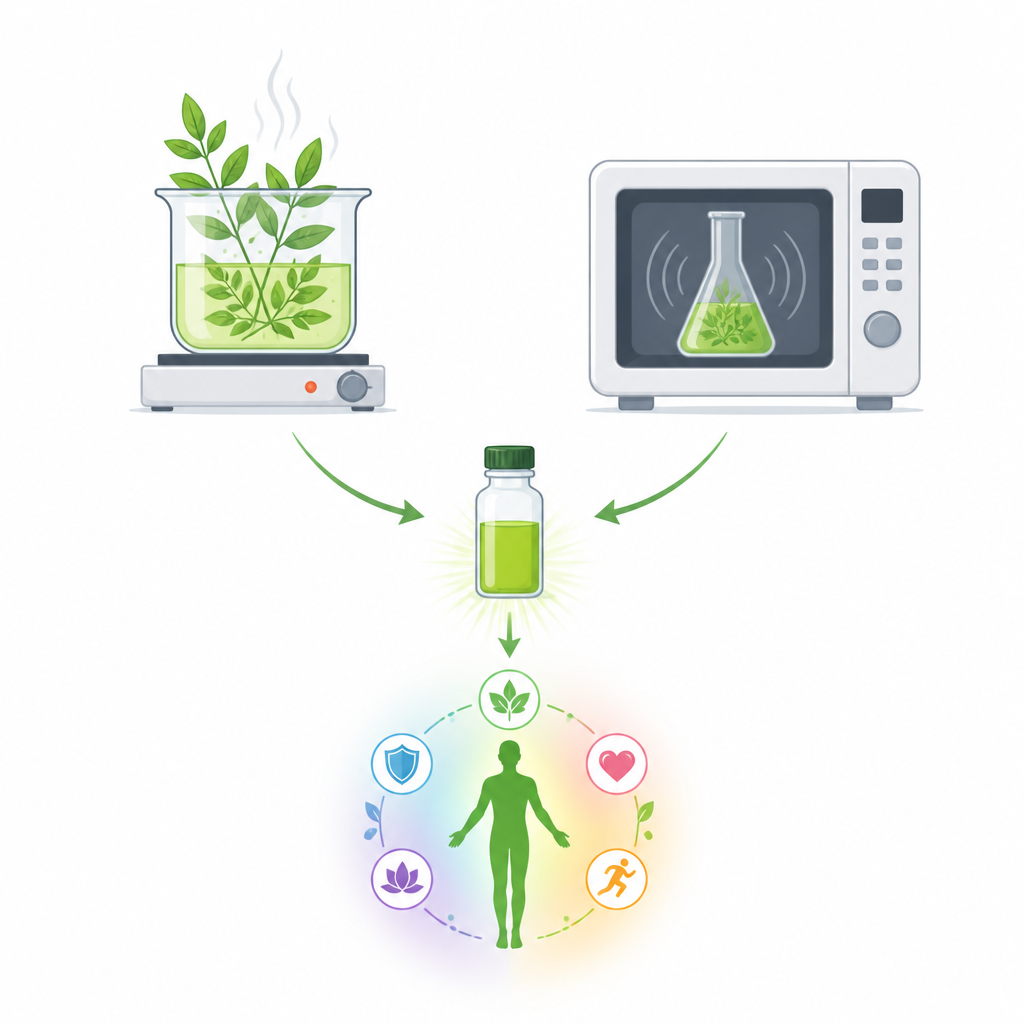
The researchers compared two common ways of making extracts from dried Ballota limbata leaves, both using a water and alcohol mixture as solvent. In heat-assisted extraction, the leaf powder sits in warm solvent for up to two and a half hours in a shaking bath. In microwave-assisted extraction, the same kind of mixture is heated very quickly from the inside out using microwave energy, finishing in seconds rather than hours. By first changing one factor at a time – such as temperature, extraction time, or how much solvent is used per gram of leaf – the team narrowed down the most promising ranges for each method. They then used planned sets of experiments to see how several factors together affected the amount of antioxidants and the ability of the extracts to slow the enzyme that helps digest starch.
Letting smart models search for the sweet spot
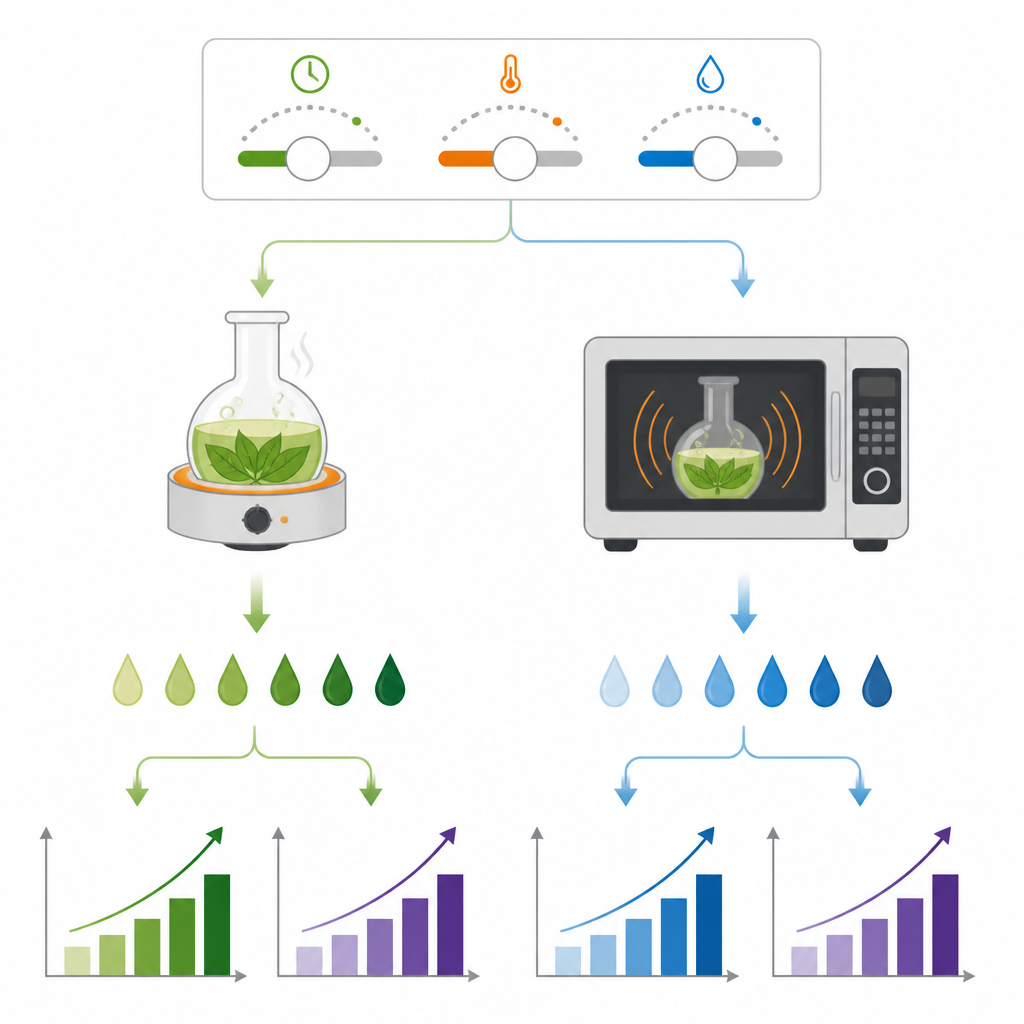
Running dozens of slightly different extraction tests can be wasteful, so the team relied on mathematical tools to guide them. One, called response surface methodology, fits a curved surface through the data to predict which combination of temperature, time, and solvent ratio will give the best results. The other, an artificial neural network, is a computer model inspired by brain wiring that learns patterns directly from the data without assuming a simple shape. Both tools were trained on the same experimental results and then asked to predict new ones. In nearly every case, the neural network matched reality more closely, with smaller errors and tighter agreement between predicted and measured antioxidant levels and enzyme blocking activity.
Speed versus yield in getting useful plant compounds
When the extractions were pushed to their predicted best settings, both methods produced Ballota limbata leaf extracts with strong antioxidant power and clear ability to slow the alpha amylase enzyme that breaks down starch. Traditional heating produced slightly higher totals of phenolics, stronger radical scavenging activity, and greater enzyme inhibition, but only after 150 minutes at a gentle 57 °C. Microwaves produced similar amounts of flavonoids and respectable antioxidant activity in just 20 seconds at 220 W. In both cases, using a relatively high amount of solvent per gram of leaf was crucial for drawing out the active compounds, while too much heat or too long a treatment tended to damage them.
What this means for future foods and remedies
To a non-specialist, the key message is that Ballota limbata leaves are a promising source of natural molecules that can both mop up damaging reactive species and help soften blood sugar spikes, and that there is now a clear recipe for getting them out of the plant efficiently. Gentle heating in liquid gives the highest levels of activity, while microwave treatment offers a much faster, more energy-saving route that still delivers potent extracts. By showing that smart computer models can reliably fine-tune these conditions, the study lays groundwork for turning a traditional herb into standardized extracts for future functional foods, supplements, and other plant-based products aimed at managing oxidative stress and supporting metabolic health.
Citation: Namra, Iftikhar, H., Aydar, A.Y. et al. Artificial neural networks (ANN) and response surface methodology (RSM) for optimizing antioxidant and α-amylase inhibitory compound extraction from Ballota limbata. Sci Rep 16, 15703 (2026). https://doi.org/10.1038/s41598-026-37738-x
Keywords: Ballota limbata, antioxidant extraction, microwave-assisted extraction, alpha amylase inhibition, green chemistry