Clear Sky Science · en
Neural tracking at theta predicts drumming-induced altered states of consciousness
Why steady drumming can change how the world feels
Many cultures use repetitive drumming to help people slip into trance-like states filled with vivid imagery, distorted time, and a sense of detachment from the outside world. This study asks a simple but deep question: can a particular rhythm of drumming nudge the brain into such altered states of consciousness on its own, and does the brain’s response to that rhythm reveal who is most susceptible to these experiences?
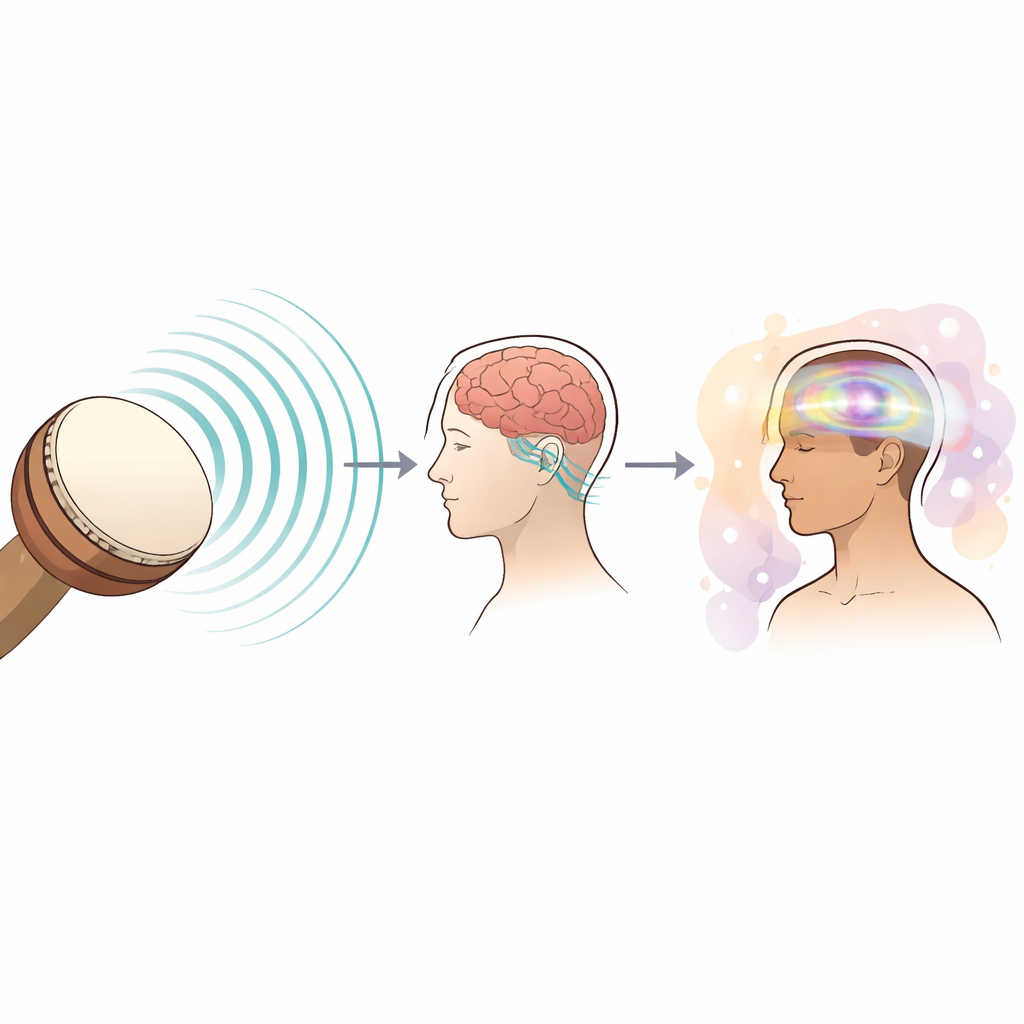
The beat that speaks to the brain
The researchers focused on a rhythm often heard in traditional ceremonies: about four beats per second, which falls in what neuroscientists call the theta range of brain activity. Theta rhythms have been linked to meditation, hypnosis, and other unusual mental states. Forty volunteers with no special experience in trance or spiritual practices listened, with eyes covered, to three kinds of computer-generated drum patterns: a slow beat (1.5 beats per second), the theta-like beat (4 beats per second), and a faster beat (9.5 beats per second). Each rhythm played for ten minutes in separate blocks while the volunteers’ brain activity was recorded using an EEG cap.
Listening from the inside
After each drumming session, participants filled out a questionnaire about how altered their experience felt—covering elements like mental imagery, sense of self, and detachment from the surroundings—and then estimated how long the drumming had lasted. Time distortion is a common feature of altered states, so the researchers treated these estimates as an additional, more indirect measure. This design allowed them to compare not only how different rhythms felt subjectively, but also how strongly the brain’s electrical activity “locked onto” each beat pattern over time.
How the brain follows the drum
To capture how faithfully the brain followed the drum rhythm, the team used an advanced measure of rhythmicity that focuses on the timing, or phase, of the brain’s electrical waves rather than just their overall strength. In simple terms, they asked: does the brain’s activity keep a steady, drum-like pulse at the same rate as the sound? They found clear evidence that the brain tracked both the slow and the theta-like beats, but not the fastest pulse, which was masked by the brain’s own strong resting rhythms when the eyes are closed. This confirmed that the nervous system can synchronize with certain rhythmic sounds over long stretches of time.
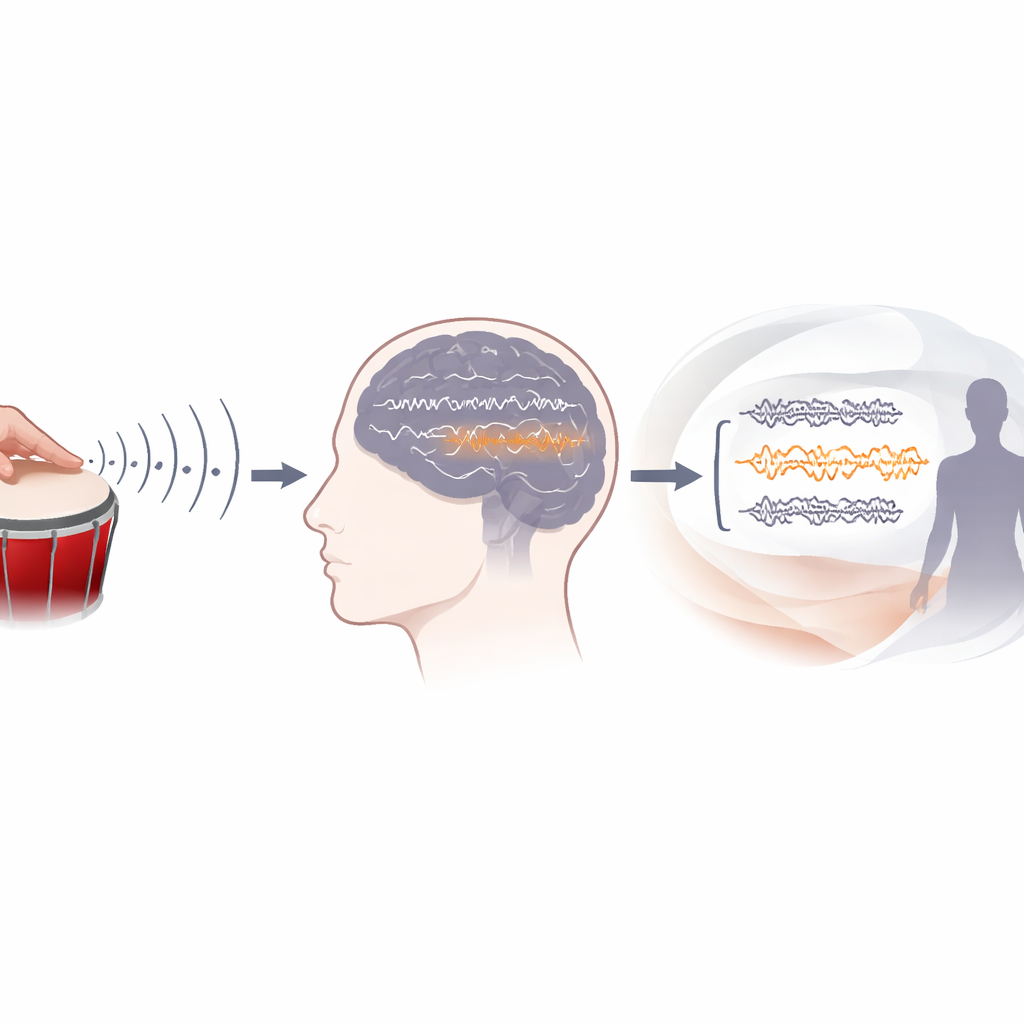
When tracking the beat changes the mind
Surprisingly, the four-beat-per-second drum pattern did not, on average, produce stronger reports of altered states than the other rhythms. However, when the researchers looked at individual differences, a striking pattern appeared: people whose brains more strongly tracked the theta-like rhythm reported more intense altered experiences during that condition. Even more intriguingly, the same individuals tended to report higher levels of altered experience across all drumming rhythms. By contrast, tracking of the slower beat or the fast beat showed no such relationship, and none of the tracking measures reliably predicted how distorted people’s sense of time was. This suggests a special link between the brain’s ability to follow theta-like rhythms and a general susceptibility to altered states.
What this means for consciousness and ritual
The findings point to a two-way relationship between rhythmic brain activity and unusual conscious experiences. Theta rhythms do not just accompany altered states; in some people, externally driving the brain at this pace may help bring those states about. The fact that sensitivity to theta-range drumming predicts how altered people feel, even across different rhythms, hints that this brain response could serve as a biological marker for how readily someone can enter such states. In practical terms, steady drumming might be used as a non-drug tool to explore and perhaps eventually harness altered states—for example, in therapy or cognitive training—while illuminating why time-honored rituals built around simple drums may have such powerful psychological effects.
Citation: Gordon, Y., Karvat, G., Dagan, N. et al. Neural tracking at theta predicts drumming-induced altered states of consciousness. Sci Rep 16, 10204 (2026). https://doi.org/10.1038/s41598-026-37700-x
Keywords: altered states of consciousness, theta brain rhythms, rhythmic drumming, EEG neural tracking, trance and meditation