Clear Sky Science · en
Sustained release and efficacy of Kn2-7-loaded chitosan nanoparticles under low pH conditions
Why This Matters for Women's Health
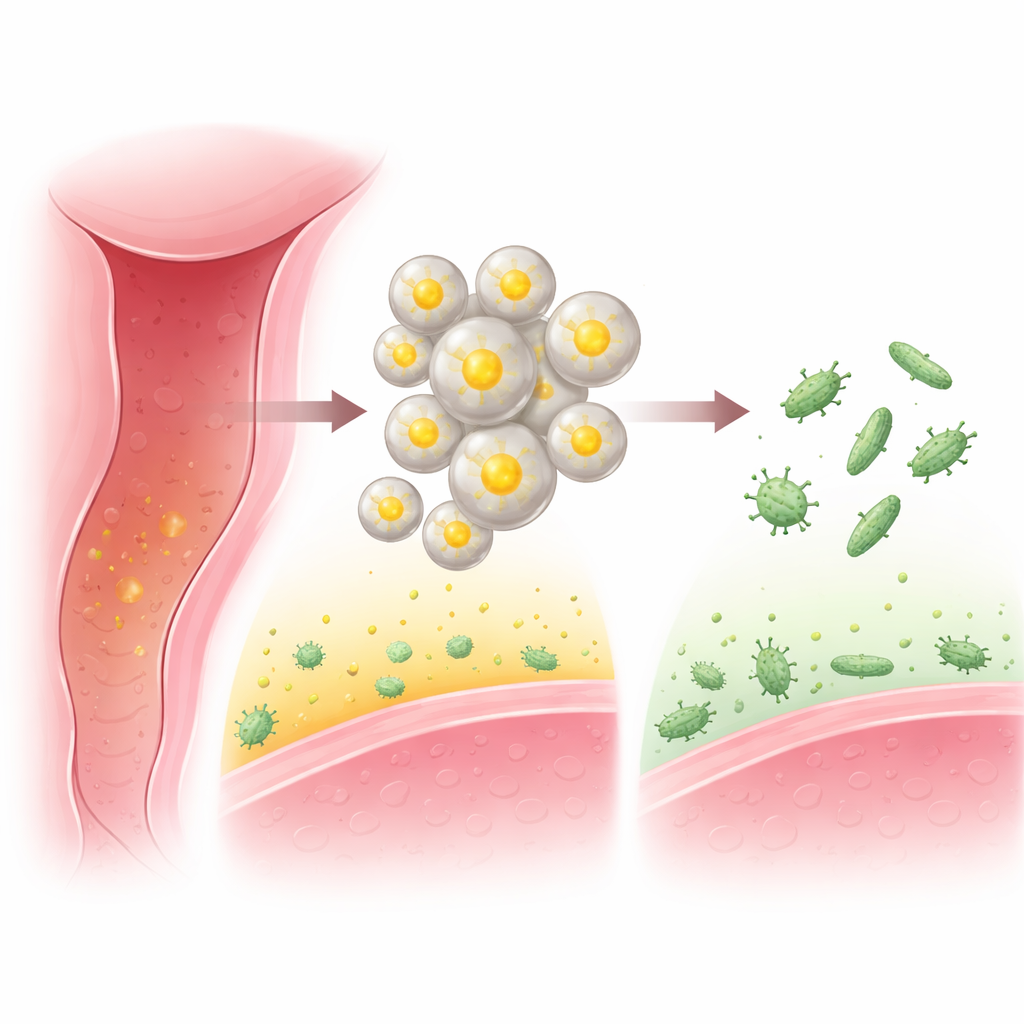
Many sexually transmitted infections (STIs) start in the vagina, yet it is surprisingly hard to get protective medicines to work well in this environment. The natural acidity and thick mucus that help keep the vagina healthy can also break down delicate drugs before they reach invading germs. This study explores a clever way to shield a promising germ‑killing molecule so it can survive in this harsh setting and keep working over time.
The Challenge of Treating Hidden Infections
STIs such as HIV, herpes, and gonorrhea can cause serious long‑term problems, especially for women and newborns. One hopeful strategy is to use "microbicides"—substances applied in the vagina or rectum before sex to block infection at the entry point. But there is a catch: many microbicides are fragile proteins or peptides that lose their shape and power in acidic fluids below pH 5. In addition, cervical mucus forms a thick barrier that can trap or dilute medicines so they never reach the germs in effective amounts. Past microbicide gels, films, and rings have often failed in clinical trials because they could not deliver enough active drug for long enough without causing side effects.
Tiny Carriers Built from a Natural Material
The researchers turned to chitosan, a sugar‑based material already used in foods and cosmetics, to build tiny spherical carriers known as nanoparticles. These particles are only a few hundred nanometers across—far smaller than a human cell—which helps them move through mucus and settle in hard‑to‑reach spaces. The team loaded them with Kn2‑7, a short peptide originally derived from scorpion venom that can kill a wide range of bacteria and shows promise against viruses such as HIV. On its own, Kn2‑7 is easily damaged by acid, but when trapped inside chitosan nanoparticles it can be shielded from the surrounding fluid.
Adding a Smart Coating for Acid Resistance
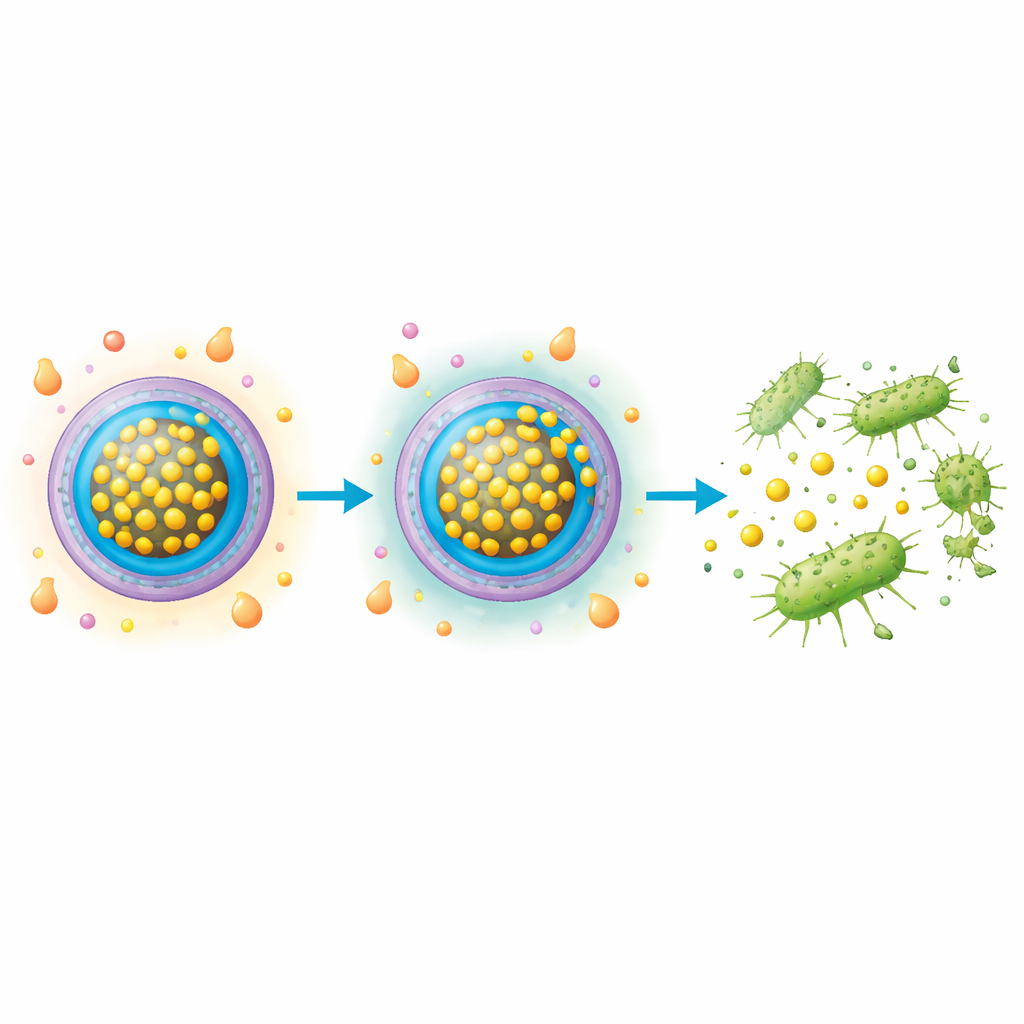
Simply loading Kn2‑7 into chitosan was not enough, because the particles tended to fall apart and release their cargo too quickly in low pH. To fix this, the scientists added a thin outer layer of another polymer, poly(acrylic acid), using a step‑by‑step coating method. This extra skin helped hold the particles together and made them more stable in conditions that mimic the vaginal environment. Laboratory measurements showed that the coated particles had high loading and encapsulation of Kn2‑7, and their size and surface charge changed in ways consistent with successful coating. When placed in slightly acidic solutions similar to vaginal fluid, the particles released Kn2‑7 in an initial burst followed by a slower, sustained release over 24 hours, with more drug released at the more acidic setting.
Keeping Germ‑Killing Power in a Harsh Environment
To test whether the protected peptide still worked, the team exposed the coated, Kn2‑7‑loaded nanoparticles to Staphylococcus aureus, a common and sometimes drug‑resistant bacterium used here as a stand‑in for vaginal pathogens. At normal pH, free Kn2‑7 could stop bacterial growth at low doses. But at acidic pH similar to that of the vagina, free Kn2‑7 lost its power entirely, even at much higher amounts. In contrast, the Kn2‑7‑loaded, coated nanoparticles were able to block bacterial growth at acidic pH using about the same dose that free Kn2‑7 needed at neutral pH. Empty particles without Kn2‑7 had no meaningful effect on the bacteria, showing that the killing came from the peptide, not from the carrier itself.
What This Could Mean for Future Protection
This work shows that chitosan‑based nanoparticles, strengthened with a smart outer coating, can protect a fragile antimicrobial peptide in an acidic environment and release it in a controlled way while preserving its germ‑killing activity. In plain terms, the particles act like tiny armored capsules that carry a powerful but delicate weapon safely through a harsh landscape until it reaches invading microbes. While more testing is needed—including studies of how these particles move through mucus, how they interact with vaginal tissue, and how they work against a wider array of germs—this approach points toward new microbicide products, such as gels or condom coatings, that could better prevent STIs at their point of entry.
Citation: Phathekile, B., Sibuyi, N.R.S., Meyer, S. et al. Sustained release and efficacy of Kn2-7-loaded chitosan nanoparticles under low pH conditions. Sci Rep 16, 12317 (2026). https://doi.org/10.1038/s41598-026-37673-x
Keywords: vaginal microbicide, nanoparticle drug delivery, antimicrobial peptide, chitosan, sexually transmitted infections