Clear Sky Science · en
ETNeXt: integrated feature engineering and classification framework for BLDC motor fault detection
Listening to Machines for Early Warnings
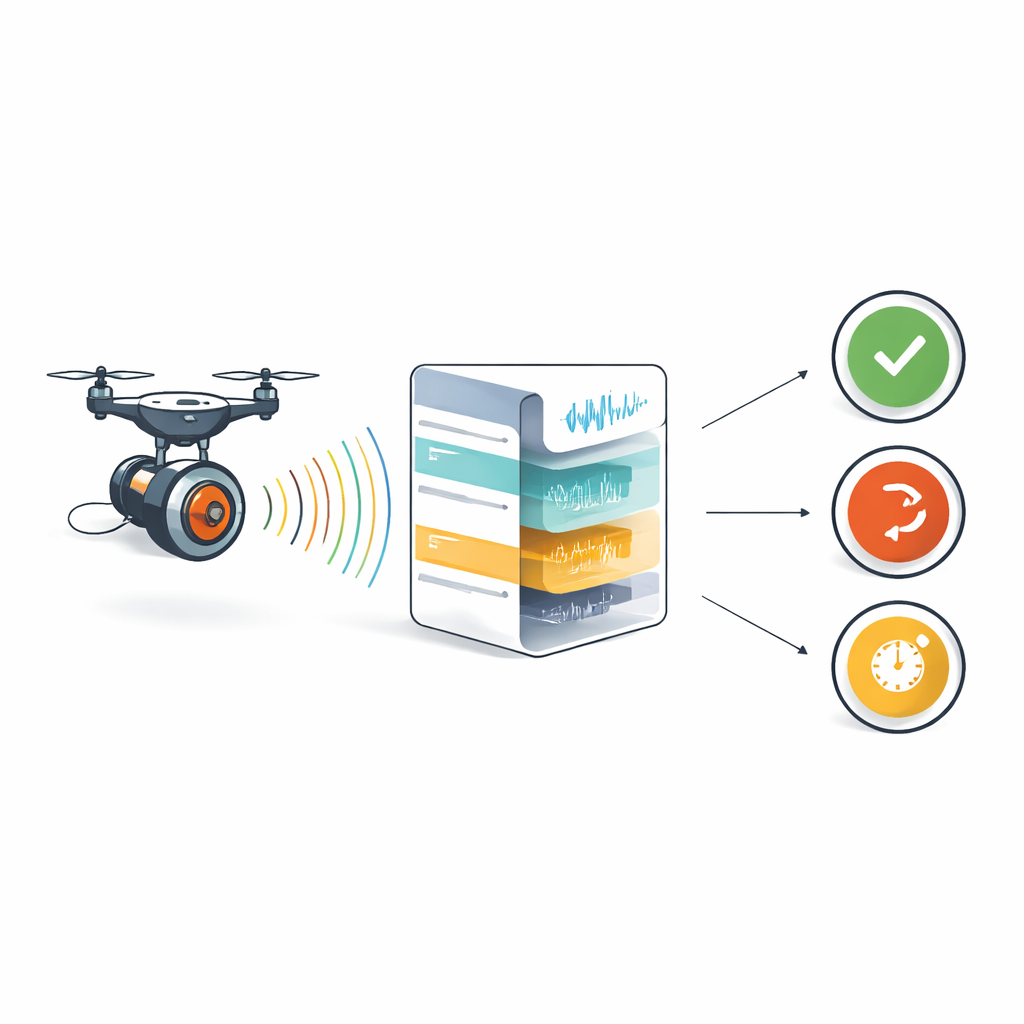
Modern factories, electric cars, and delivery drones rely on brushless DC (BLDC) motors that are small, powerful, and usually very quiet. When something starts to go wrong inside these motors, they often give themselves away through subtle changes in sound long before they fail outright. This paper introduces ETNeXt, a new way to “listen” to motors and automatically spot trouble early using short audio recordings, allowing maintenance crews to fix issues before they become costly breakdowns.
Why Motor Sounds Matter
BLDC motors are everywhere—from industrial robots and conveyor belts to household appliances and unmanned aerial vehicles. Their popularity comes from their efficiency and reliability, but they are not immune to wear and tear. Bearings can degrade, rotors can go out of balance, and heavy loads can strain components. Traditional monitoring methods often rely on electrical measurements or vibration sensors and may miss early, subtle signs of trouble. Sound, on the other hand, is easy to capture with a simple microphone and contains rich clues about how smoothly a motor is running. The challenge is turning these noisy, real-world recordings into dependable, real-time fault alerts without needing super‑powerful computers.
Turning Raw Noise into Useful Clues
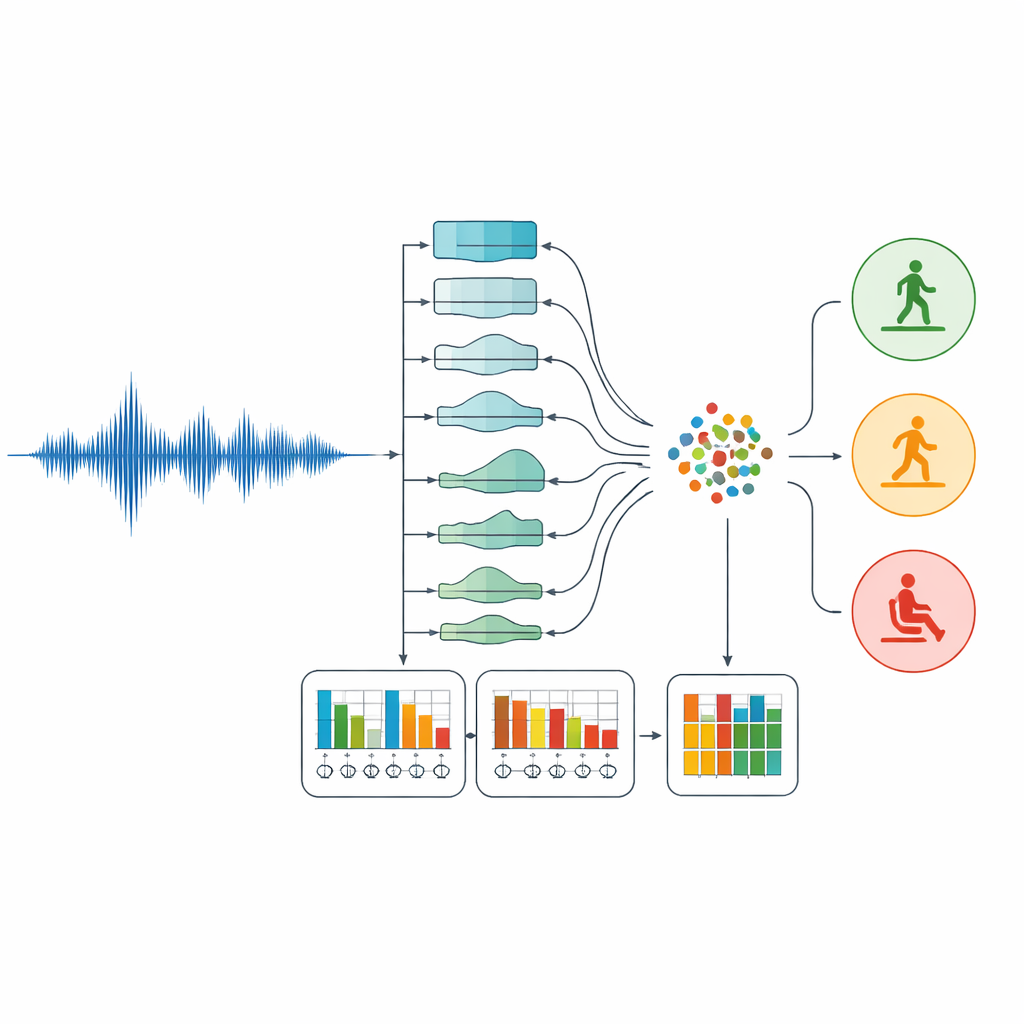
ETNeXt tackles this challenge by reshaping each three‑second motor recording into a large set of numerical fingerprints that capture how the sound behaves over time and across frequencies. First, the method breaks the sound into seven layers of detail using a mathematical tool called a wavelet transform, which separates slow, smooth trends from quicker, sharper changes. Then, for each layer, ETNeXt applies a triad of simple rules that examine tiny windows of the signal and ask whether the sound is rising, falling, or staying about the same. These local patterns are counted up into compact histograms—essentially color‑by‑numbers summaries of how often each type of micro‑pattern appears. Stacked across layers, this process yields thousands of candidate features that together describe the “texture” of the motor’s sound.
Letting the Data Choose What Matters
Not all of those thousands of features are equally informative. To avoid wasting computation and to keep the system fast enough for real‑time use, ETNeXt includes a self‑organizing selection stage. Two complementary techniques, one that learns which features best separate examples that sound different and another that scores how strongly each feature is tied to the motor’s health category, work together to rank the candidates. From this ranking, the framework consistently trims the description of each sound clip down to just a few dozen of the most telling numbers. These distilled features are then fed into two straightforward pattern recognizers—a refined nearest‑neighbor method and a curved decision boundary method—whose predictions are tested repeatedly on different slices of the data to guard against overfitting.
How Well the Method Works in Practice
The authors evaluated ETNeXt on a public dataset of 2,021 labeled audio clips from BLDC motors running in three states: healthy, mechanically damaged, and heavily loaded. Despite background noises such as talking, factory ambience, and white noise, the system correctly classified nearly every clip, reaching perfect accuracy with one of its classifiers and just under that with the other. It also maintained similarly impressive performance when tested on a completely different collection of motor recordings that included bearing and propeller faults. Importantly, the entire pipeline remains lightweight: it runs on an ordinary computer without needing specialized graphics hardware and is compact enough to be deployed on small edge devices near the machines themselves.
From Lab Method to Everyday Safeguard
In simple terms, this work shows that a smart, carefully engineered way of counting tiny sound patterns can rival or even surpass more fashionable deep‑learning systems, while demanding far less computing power. ETNeXt turns short snippets of motor noise into early‑warning signals about wear, overload, or emerging faults, all in near real time. If integrated into industrial equipment, electric vehicles, or drones, such listening systems could cut unplanned downtime, improve safety, and extend machine lifetimes—quietly working in the background whenever a motor is running.
Citation: Celik, B., Taskin, E., Akbal, A. et al. ETNeXt: integrated feature engineering and classification framework for BLDC motor fault detection. Sci Rep 16, 11820 (2026). https://doi.org/10.1038/s41598-026-37590-z
Keywords: motor fault detection, acoustic monitoring, predictive maintenance, edge computing, machine condition monitoring