Clear Sky Science · en
BTG3 suppresses oral squamous cell carcinoma progression by inhibiting PI3K/AKT signaling and EMT
Why a mouth cancer study matters
Oral cancer can start as a small sore in the mouth, yet often goes unnoticed until it becomes life‑threatening. This study looks for a natural “brake” inside mouth cells that can keep such cancers in check. Understanding this inner safety system could lead to earlier diagnosis and more targeted treatments for people at risk of oral squamous cell carcinoma, the most common type of mouth cancer.
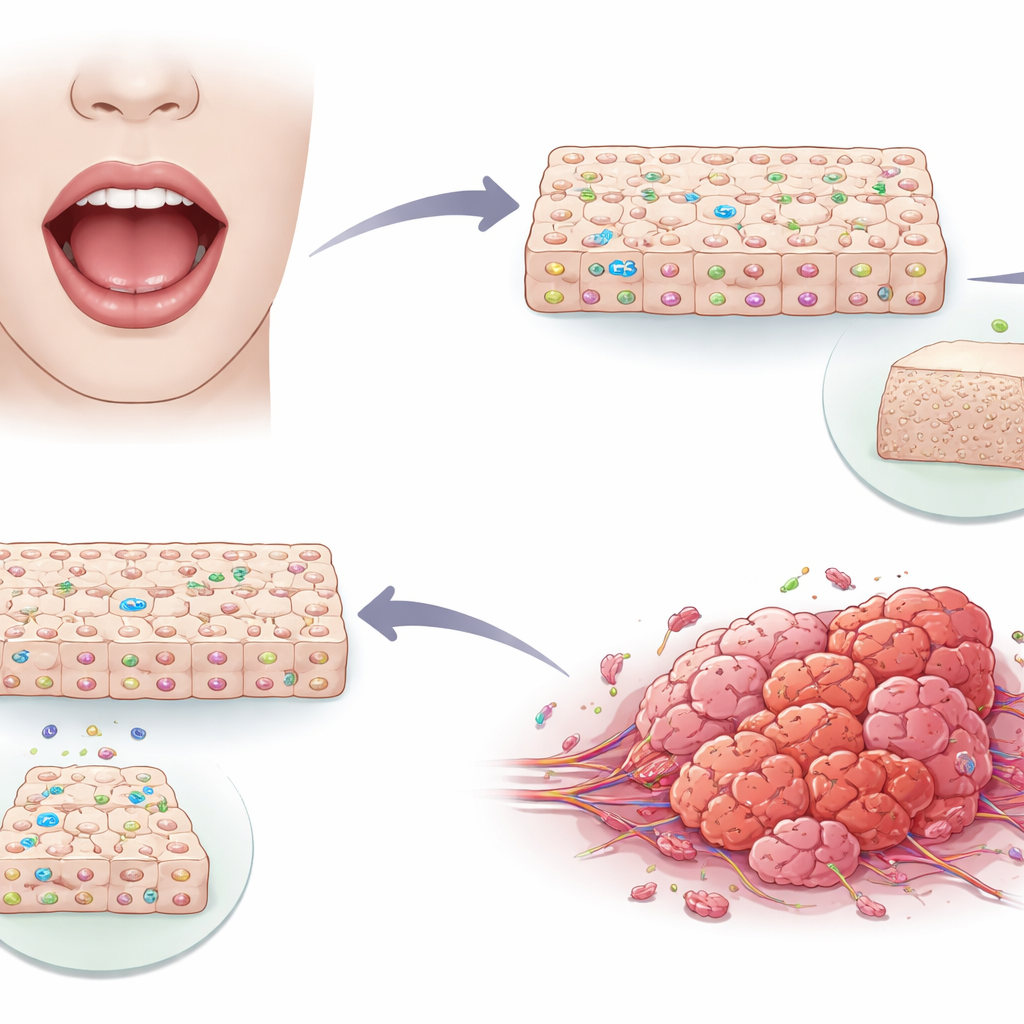
A natural brake inside mouth cells
The researchers focused on a protein called BTG3, which acts like a built‑in brake on cell growth in several other cancers. Until now, its role in mouth cancer was unclear. By analyzing public gene databases and examining patient samples, the team found that BTG3 levels were consistently lower in oral cancer tissue than in nearby healthy mouth tissue. People whose tumors retained higher amounts of BTG3 tended to live longer and were less likely to see their cancer return, suggesting that this protein helps protect against aggressive disease.
Slowing runaway cell growth
To test how BTG3 affects cancer behavior, the scientists used two established oral cancer cell lines grown in the lab. When they artificially increased BTG3 in these cells, their growth slowed and more cells stalled in the “waiting” phase of the cell cycle, before copying their DNA. In contrast, when BTG3 was reduced, cells multiplied faster and were less likely to pause before dividing. In practical terms, BTG3 acts like a traffic light that forces rapidly dividing cells to stop and wait, rather than racing unchecked through repeated rounds of division.
Blocking spread and shape‑shifting
Cancer becomes most dangerous when cells break away from the original tumor and spread. The team showed that extra BTG3 made oral cancer cells less able to move across a surface and to squeeze through a membrane that mimics surrounding tissue—two standard lab tests of cancer spread. They also examined markers of a process called epithelial‑mesenchymal transition, in which compact, well‑behaved cells loosen their contacts, change shape, and gain the ability to migrate. With more BTG3, cells showed higher levels of a “stick‑together” protein and lower levels of a “break‑away” protein, indicating that BTG3 helps keep cells in a more settled, less invasive state. When BTG3 was knocked down, these trends flipped and the cells looked more primed to invade.
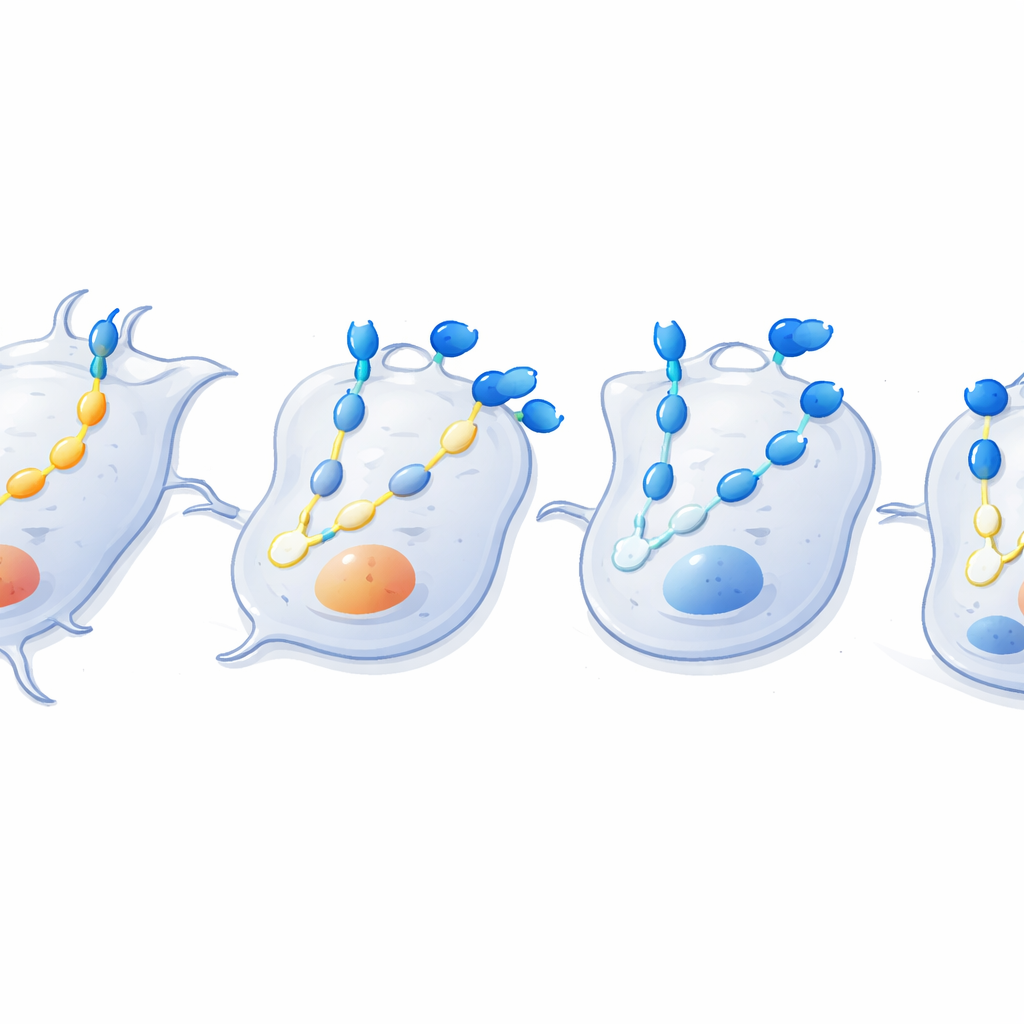
Shutting down a key growth signal
The study also probed a major growth‑control communication line inside cells known as the PI3K/AKT pathway, which is often overactive in many cancers. In mouth cancer cells with extra BTG3, the activated forms of the PI3K and AKT proteins dropped, even though the total amount of these proteins stayed the same. Removing BTG3 had the opposite effect, boosting the activated versions and suggesting that BTG3 works, at least in part, by turning down this powerful growth signal. In essence, BTG3 seems to sit upstream of a central control hub, dampening the instructions that tell cancer cells to grow, move, and survive.
What this could mean for patients
Taken together, the findings paint BTG3 as a crucial guardian in the lining of the mouth. When BTG3 is present, cells divide more slowly, hold their shape and position, and receive weaker growth‑and‑spread signals. When BTG3 is lost or silenced, these restraints are lifted, allowing oral cancer to grow faster and become more invasive. While this work was done mainly in cell cultures and still needs confirmation in animal models and larger patient groups, it raises the possibility that BTG3 levels could help predict how a person’s mouth cancer will behave and might one day be boosted or mimicked as part of more precise therapies.
Citation: Zhang, S., Chen, X., Liang, Z. et al. BTG3 suppresses oral squamous cell carcinoma progression by inhibiting PI3K/AKT signaling and EMT. Sci Rep 16, 13809 (2026). https://doi.org/10.1038/s41598-026-37518-7
Keywords: oral cancer, BTG3, tumor suppressor, cell signaling, metastasis