Clear Sky Science · en
Privacy-preserving vaccine supply chain management leveraging blockchain and self-sovereign identity
Why Vaccine Journeys Need a Digital Makeover
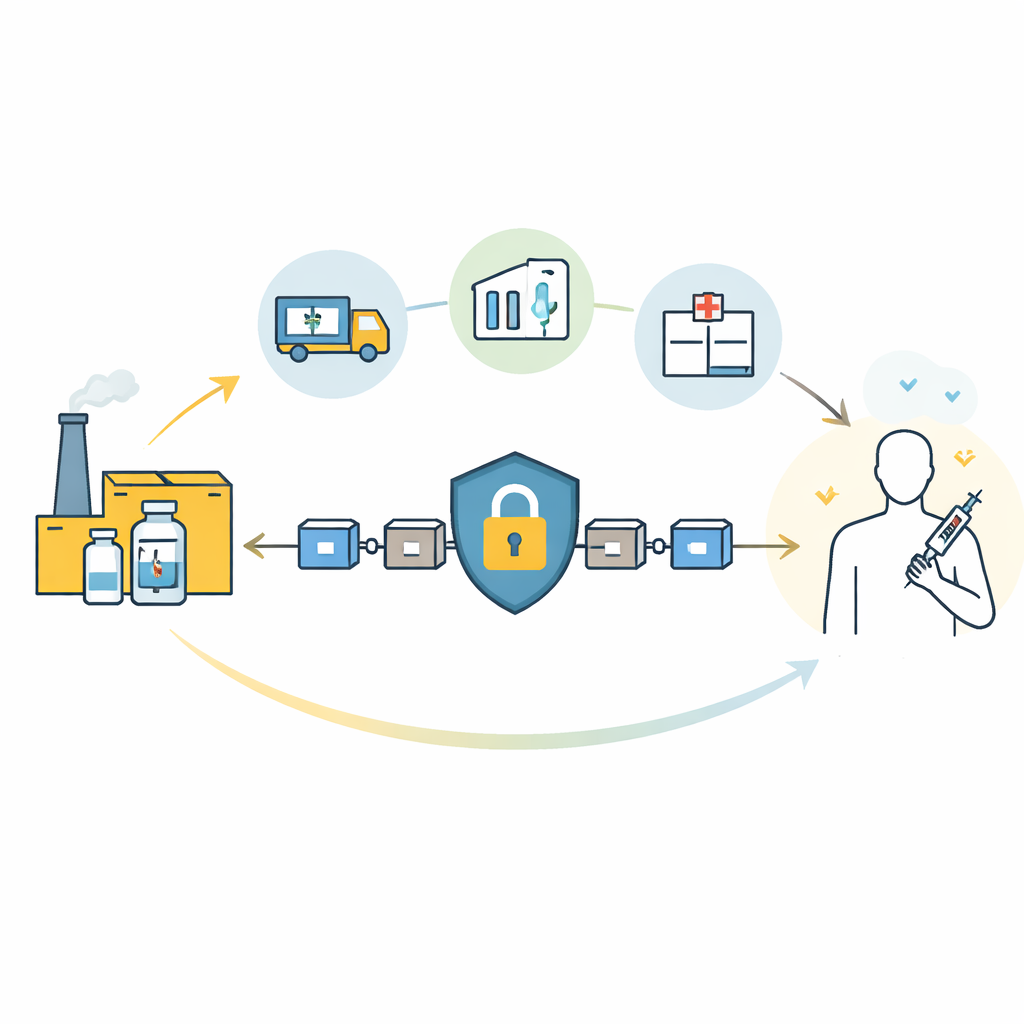
When a vaccine is injected into someone’s arm, few of us think about the long, fragile journey the vial took to get there. Yet along that path, doses can be faked, spoiled, or misrecorded, putting both health and public trust at risk. This paper explores how two emerging digital ideas—blockchain and self‑sovereign identity—can work together to create a safer, more transparent, and more private way to track vaccines from factory to patient, without turning people’s health data into an open book.
The Growing Problem of Fake and Mishandled Shots
The authors begin by describing how the COVID‑19 pandemic exposed weak links in vaccine and drug supply chains. Counterfeit medicines have already been rising worldwide, and vaccines are especially tempting targets because demand is high and quality is hard to verify by eye. At the same time, vaccines must be kept within strict temperature ranges to remain effective, which means any break in the "cold chain"—from factory freezers to transport to clinic refrigerators—can silently ruin doses. Existing tracking systems often rely on central databases, manual paperwork, and loosely checked identities, making it hard to quickly spot fakes, trace where something went wrong, or prove that a particular batch was handled correctly.
What Blockchain and Digital Identity Bring to the Table
The paper surveys recent attempts to use blockchain—a shared digital ledger maintained by many computers—to improve drug and vaccine tracking. Blockchain’s strength lies in its tamper‑resistant record of events: once a shipment is logged, it cannot quietly be altered later. This helps with transparency and counterfeit detection. But earlier systems usually treated identity in a simple way, tying actions to fixed accounts or central user registries. That makes it hard to protect privacy, to work smoothly across borders and organizations, and to give different people only the minimum data they need. To solve this, the authors introduce self‑sovereign identity (SSI), a newer approach where each participant—manufacturer, transporter, clinic, even patient—holds digital credentials in their own "wallet" and can prove their role without handing over unnecessary personal details.
How the Proposed System Tracks Every Step
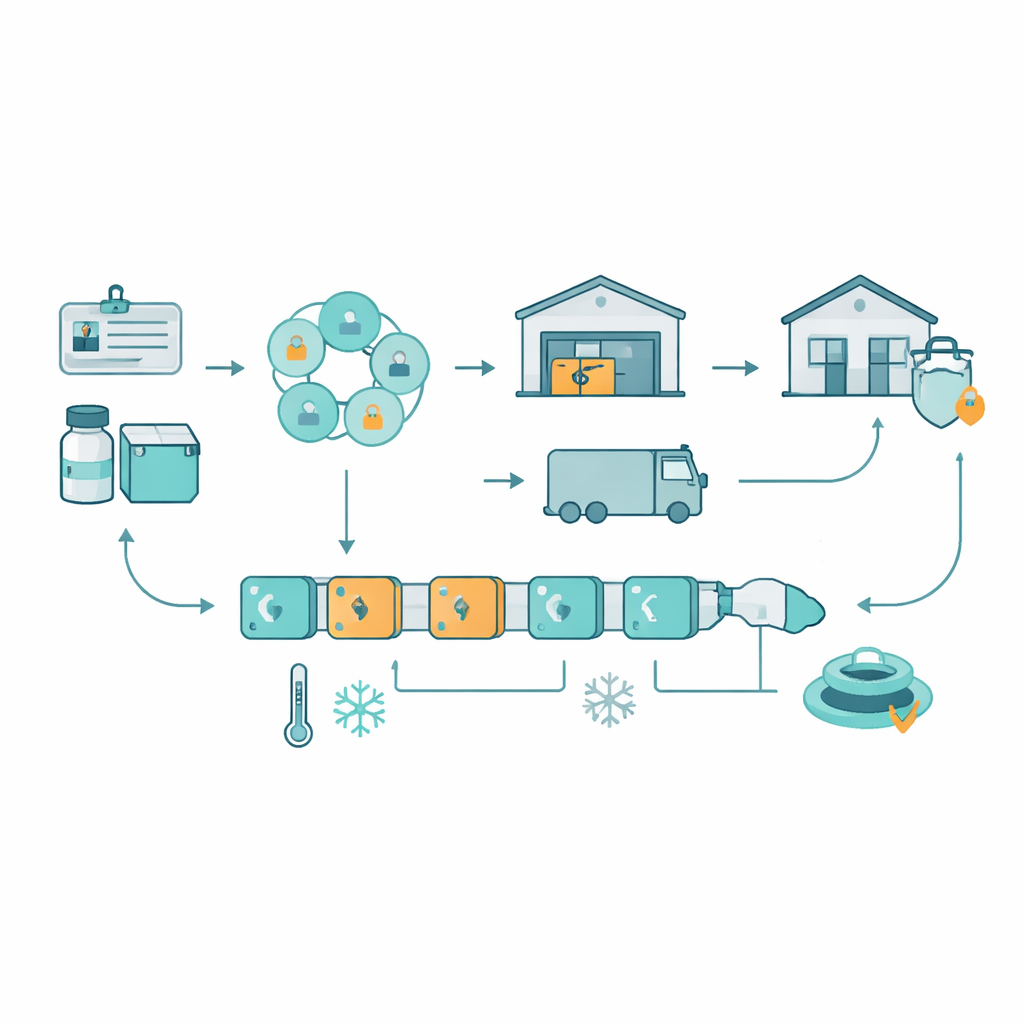
The heart of the work is a detailed framework that weaves SSI and blockchain into the entire vaccine journey. The vaccine maker assigns each batch key details like lot number, expiry date, and required temperature, then stores only cryptographic fingerprints of this information on the blockchain. Physical movement—by air, truck, warehouse, and clinic—is monitored with internet‑connected sensors that watch temperature and location. At every handoff, the sender and receiver first prove, using SSI credentials, that they are authorized to handle the batch. This verification happens off the blockchain to keep sensitive data private. Once a check passes, a short record of the event—who transferred what to whom, when, and under what conditions—is anchored on the blockchain as an unchangeable log. Patients’ doses are recorded in a similarly privacy‑aware way, so that later investigators or insurers can trace a problem without exposing full medical files.
Proving It Works in the Real World
To move beyond theory, the authors implement and test their design. They simulate thousands of supply‑chain events and measure how long it takes to compute security checks, add records to the ledger, and confirm them across a network of machines. They compare a standard Ethereum‑style blockchain with a leaner, permissioned setup tuned for healthcare. The findings show that the customized approach can handle frequent vaccine events within tens of milliseconds on the blockchain side and a few hundred milliseconds end‑to‑end—fast enough for practical use—while using less energy and fewer "gas" resources than typical public chains. Crucially, most personal or operational data never leave off‑chain storage; only compact proofs and event markers go onto the ledger, helping the system align with privacy rules like GDPR and HIPAA.
Looking Ahead to Safer, Fairer Vaccine Delivery
For readers, the bottom line is that this work outlines a way to make vaccine supply chains both more trustworthy and more respectful of privacy. By combining a shared, tamper‑proof log with digital identities that people and organizations control themselves, the framework makes it harder for fake or mishandled doses to slip through unnoticed, while still keeping health and identity details out of public view. The authors acknowledge remaining hurdles—such as scaling to global volumes, connecting different networks, and keeping costs manageable—but argue that their design offers a strong foundation. If developed further, such systems could help ensure that future vaccines, and other critical medicines, arrive where they are needed, in good condition, and with a clear, verifiable trail of accountability.
Citation: Chaurasia, B.K., Tiwari, N. & Pateria, N. Privacy-preserving vaccine supply chain management leveraging blockchain and self-sovereign identity. Sci Rep 16, 14581 (2026). https://doi.org/10.1038/s41598-026-37402-4
Keywords: vaccine supply chain, blockchain, self-sovereign identity, drug counterfeiting, cold chain monitoring