Clear Sky Science · en
Metal-organic frameworks with linear and branched polyol backbones for dye removal
Why cleaning colored water matters
Colorful dyes make clothes and consumer goods more attractive, but when those same dyes end up in rivers and drinking water they can harm ecosystems and human health. Many of these molecules are tough to break down and slip through standard treatment plants. This study explores a new type of powdered filter material that can pull both positively and negatively charged dyes out of water, with an eye toward safer and more sustainable wastewater treatment. 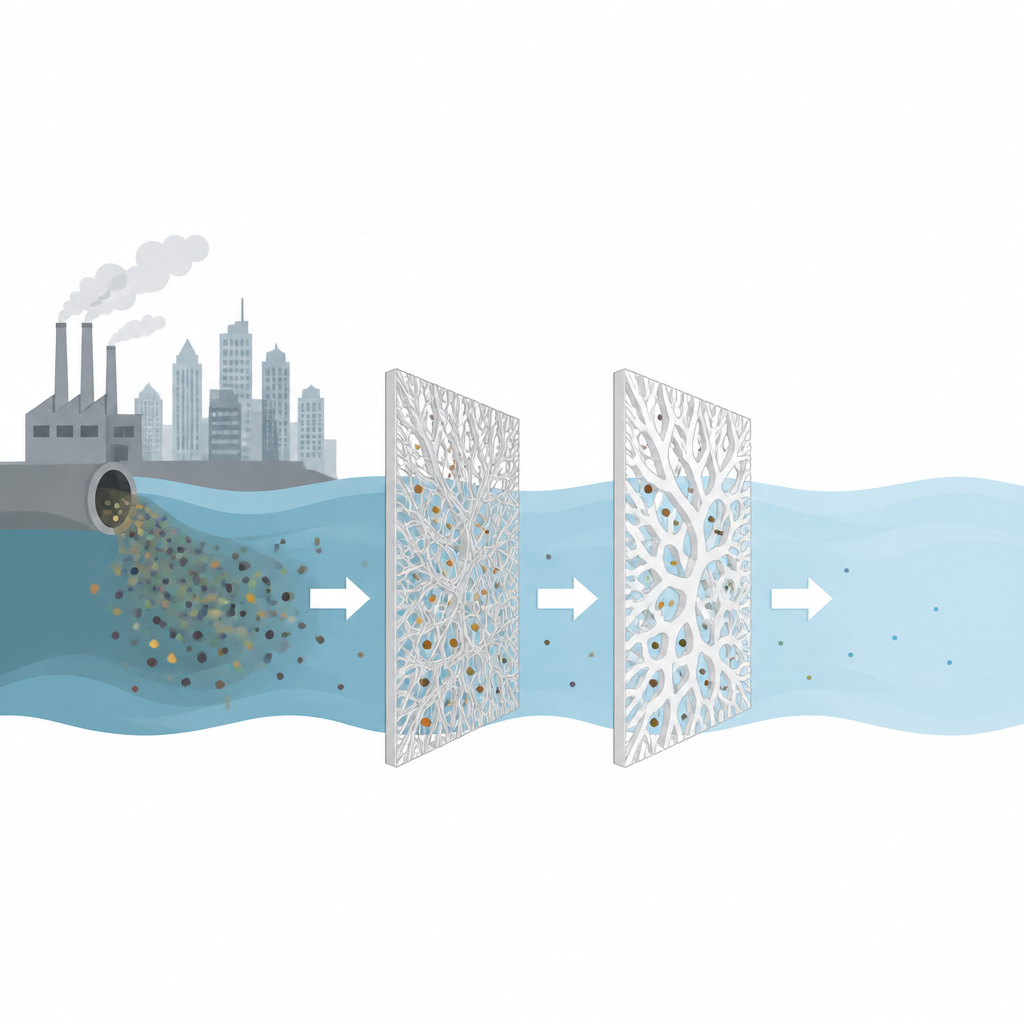
Building sponge like solids from metals and polymers
The researchers focused on metal organic frameworks, or MOFs, a family of materials made by linking metal atoms with organic molecules into a porous, sponge like network. MOFs are famous for having a huge internal surface area where pollutants can stick. However, many of them are brittle or unstable in water. To improve this, the team blended MOFs with common polyol polymers: polyvinyl alcohol, a flexible synthetic polymer already used in many products, and hyperbranched polyglycerol, a tree like molecule loaded with reactive sites. By chemically attaching special linker molecules to these polymers and then combining them with iron salts, they created two new composites called PVA MOF and hPG MOF.
Checking the structure of the new filters
To make sure these hybrid materials formed as planned, the team used a suite of laboratory tools that probe both chemical structure and shape. Infrared and nuclear magnetic resonance spectroscopy confirmed that the polymers had been successfully modified and connected to the iron centers. X ray diffraction showed that the materials had some of the structural fingerprint of a known iron MOF but, as expected for polymer rich solids, lacked long range crystal order. Electron microscopy revealed sheet like particles that crumple or flatten depending on the surrounding liquid, while surface area and pore size measurements confirmed that both versions contain networks of nanometer scale channels where dye molecules can be captured.
How the powders pull dyes from water
The team tested three common dyes in water: two positively charged (Methylene Blue and Rhodamine B) and one negatively charged (Fluorescein). Tiny amounts of each MOF powder were stirred into dye solutions of different strength, acidity, and temperature. Both materials removed large amounts of all three dyes, with maximum capacities around 125 to 135 milligrams of dye per gram of solid. Careful analysis showed that dye molecules form a single layer on a relatively uniform surface rather than packing into thick stacks. The rate data fit a model in which actual chemical bonding and electron sharing between the dyes and the surface play a key role, not just weak physical sticking. Changes in pH revealed that surface charge matters, but other forces, such as hydrogen bonding and stacking of flat dye rings against aromatic parts of the framework, also help draw molecules into the pores. 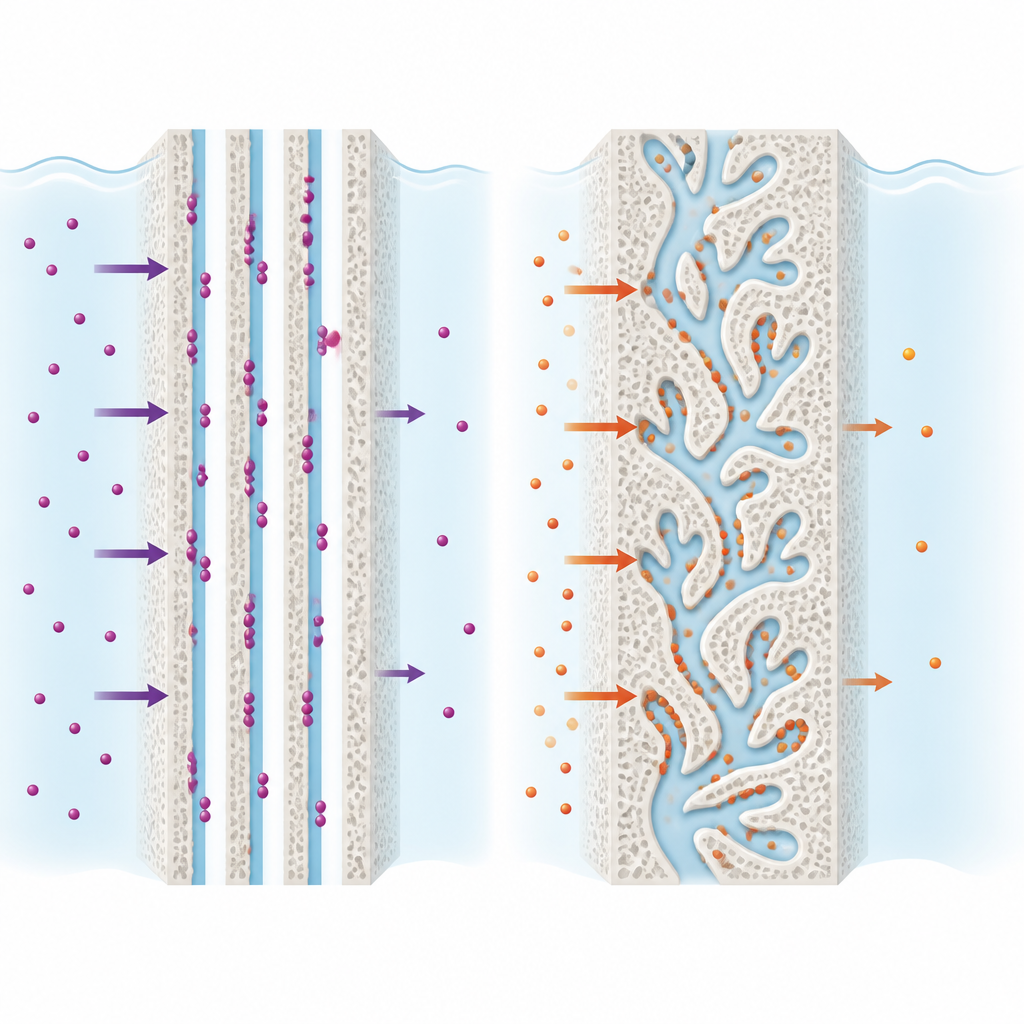
Which material performs best and under real conditions
Although both composites worked well, the hyperbranched version, hPG MOF, generally captured more dye and held up better after repeated use. When the powders were cycled through adsorption and cleaning steps three times, hPG MOF kept most of its removal power while PVA MOF lost much of its effectiveness, suggesting that the branched architecture gives a more robust and accessible network of binding sites. The researchers also tested the materials in real water samples from municipal supplies and local surface waters that contain many other dissolved substances. Even in these more complex mixtures, both powders were able to pull out the test dyes efficiently, with hPG MOF again showing the strongest and most consistent performance.
What this means for cleaner water
In simple terms, the study shows that carefully designed metal polymer sponges can act as reusable dye traps, grabbing different types of charged dye molecules from contaminated water and holding onto them in a thin, ordered layer. The branched polyglycerol based version combines strong dye uptake with good stability and reusability, making it a promising candidate for advanced treatment steps in dye rich waste streams. While further work is needed to improve durability and shape the powders into forms better suited for large treatment plants, the results point toward practical new tools for reducing the colorful but harmful footprint of industrial dyes in the environment.
Citation: Gazvineh, S., Adeli, M. & Nemati, M. Metal-organic frameworks with linear and branched polyol backbones for dye removal. Sci Rep 16, 16555 (2026). https://doi.org/10.1038/s41598-026-37325-0
Keywords: wastewater treatment, dye removal, metal organic frameworks, polymer composites, water purification