Clear Sky Science · en
A novel spray-dried milk extracellular vesicles formulation with long-term immunomodulatory activity and functional stability
Milk as More Than Just Food
Most of us think of milk as a source of calcium and protein, but it also carries tiny natural packages that can influence how our immune system behaves. These packages, called extracellular vesicles, help calm inflammation in the gut and may one day be turned into gentle treatments for conditions like inflammatory bowel disease. The challenge is that these fragile structures usually have to be kept in deep freezers, which is impractical for real-world medical use. This study shows how scientists turned milk’s helpful microscopic cargo into a shelf-stable powder that stays active at room temperature for well over a year.
Tiny Messengers Hidden in Milk
Milk contains countless nanosized bubbles made of fat-like membranes that enclose proteins and genetic material. These natural messengers can survive harsh conditions in the digestive tract and deliver their cargo to cells lining the gut and to immune cells. Earlier work suggested that milk vesicles can tone down inflammation and support gut balance in both laboratory models and animals. However, to use them as a practical health product, they must be stored and shipped without needing expensive freezers or suffering damage from repeated thawing. The authors set out to design a simple, robust way to dry these vesicles into a powder while keeping their structure and calming effects intact.
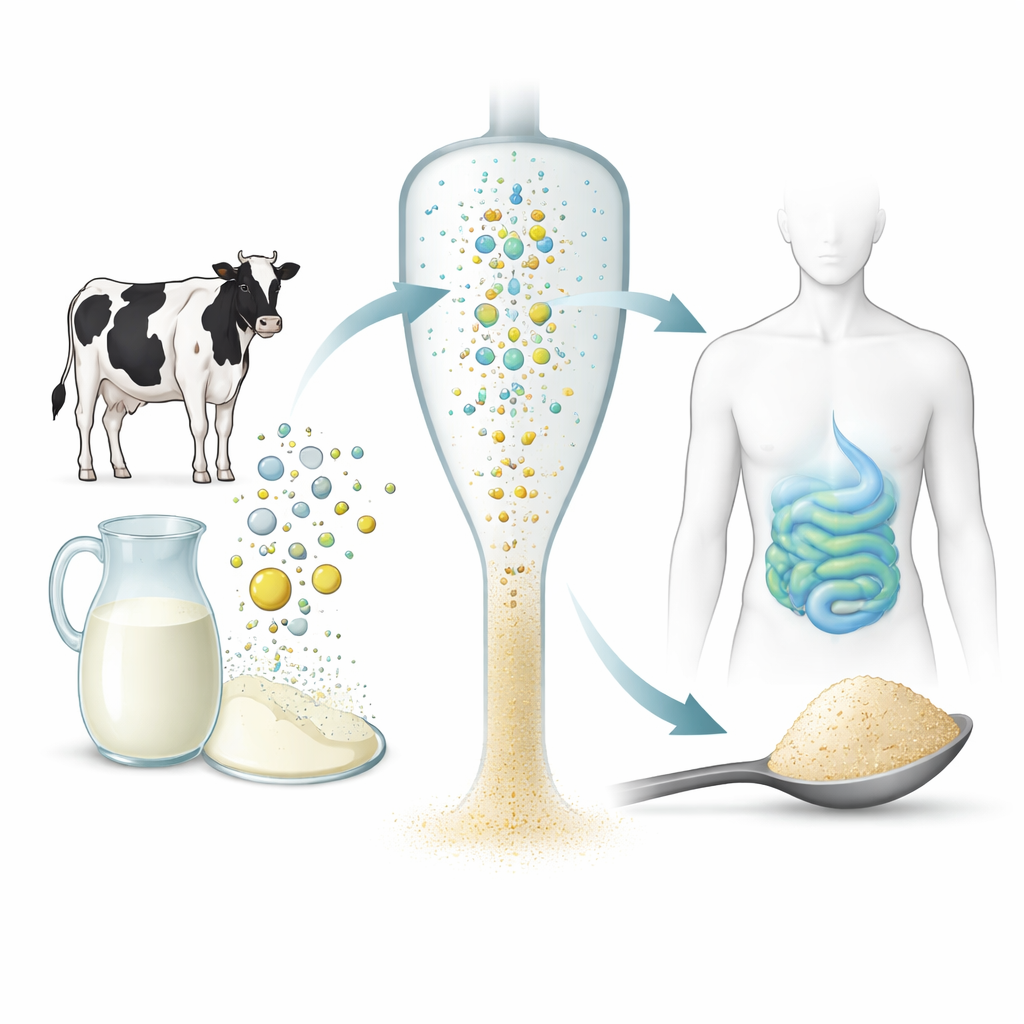
Turning Liquid Milk Into Healing Powder
The researchers first isolated vesicles from raw cow’s milk using a series of centrifugation steps to remove fat, cells, and debris, ending with an enriched fraction of vesicles suspended in a salt solution. They then mixed this suspension with two common food and pharmaceutical ingredients: mannitol, a sugar alcohol, and leucine, an amino acid. These ingredients act like a protective scaffold, helping form solid particles and shielding the vesicles from heat and moisture. Using an industrially familiar method called spray drying, the team sprayed the mixture into a stream of warm air, instantly turning droplets into tiny dry particles, or microparticles, that trap the vesicles inside.
Do the Vesicles Survive the Journey?
To check whether the drying process damaged the vesicles, the team compared the dried samples to the original liquid ones. Under electron microscopes, the dry powder appeared as slightly collapsed spheres of about 11–20 micrometers in diameter, with little clumping even after 18 months on the shelf. When the powder was rehydrated, the vesicles that emerged looked similar in size and shape to fresh ones, with only a slight increase in larger clusters. Measurements of protein, RNA, and DNA content showed no meaningful loss, and key molecular markers typical of vesicles were still present. Even the tiny amounts of bacterial contaminants (endotoxins), which can spark inflammation, remained low and did not trigger an immune response in unstimulated cells.
Putting the Powder to the Test
The crucial question was whether these rehydrated vesicles could still calm inflammation. The scientists used a human immune cell line grown in the lab and first confirmed that both liquid and spray-dried vesicles were well tolerated at realistic doses, with minimal impact on cell survival. They then triggered an inflammatory response in the cells using standard chemical signals that cause a surge in genes encoding pro-inflammatory molecules. When treated with either fresh vesicles or powder-derived vesicles stored for 6 or 18 months, the cells sharply reduced the activity of these inflammatory genes. In some longer treatments, vesicles from the stored powder even outperformed the fresh ones. Control tests showed that the mannitol and leucine alone had no such effect, confirming that the calming action came from the milk vesicles themselves.
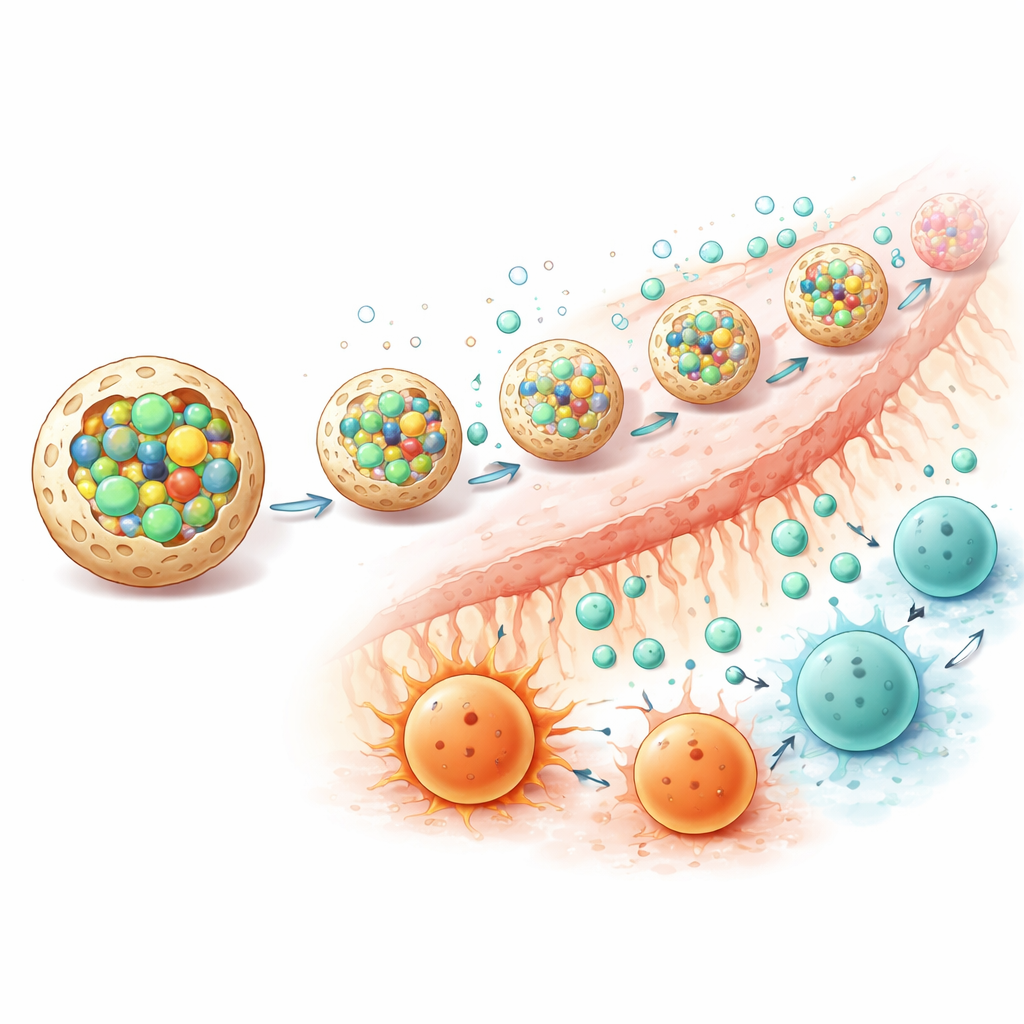
From Dairy By-Product to Future Gut Support
This work demonstrates that milk’s natural anti-inflammatory messengers can be captured in a simple dry powder that remains functionally stable for at least a year and a half at room temperature. For non-specialists, the key message is that a familiar food source can be transformed into a practical, long-lasting ingredient that may one day help ease gut inflammation or support immune health, possibly as a supplement, functional food additive, or future medicine. While further testing in animals and humans is still needed, the approach offers a way to add value to dairy products and opens the door to affordable, shelf-stable therapies based on the body’s own microscopic couriers.
Citation: Mecocci, S., Rampacci, E., Stincardini, C. et al. A novel spray-dried milk extracellular vesicles formulation with long-term immunomodulatory activity and functional stability. Sci Rep 16, 14495 (2026). https://doi.org/10.1038/s41598-026-37320-5
Keywords: milk extracellular vesicles, spray-dried powder, gut inflammation, oral delivery, immune modulation