Clear Sky Science · en
Pilot degradation study of gamma irradiated ciprofloxacin in its primary packaging material for space pharmaceutical applications
Why Space-Age Medicine Matters
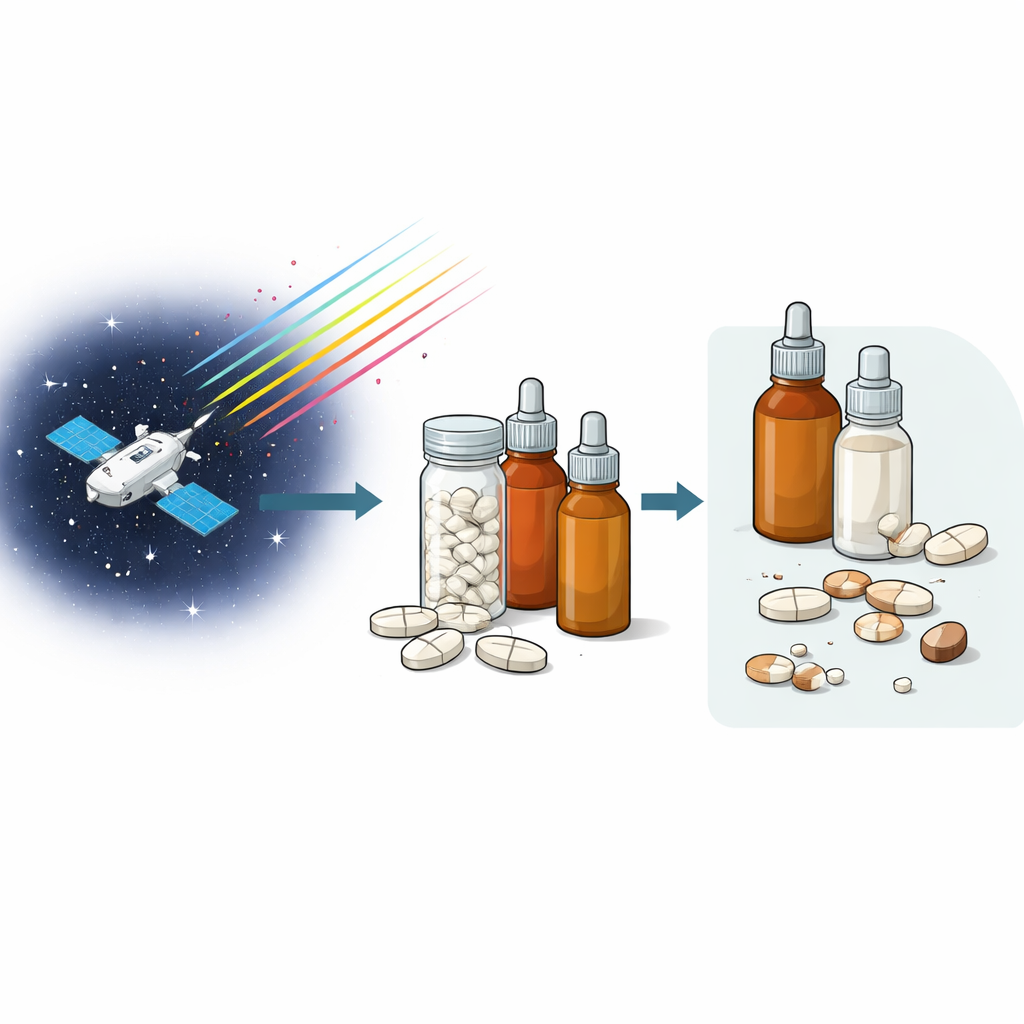
As human space travel stretches from quick trips to years-long voyages to the Moon and Mars, astronauts will need medicines that stay safe and effective far from Earth. On our planet, drugs sit in climate-controlled pharmacies and are easy to replace when they expire. In deep space, however, constant radiation and long storage times can quietly damage medicines inside their bottles. This study asks a simple but crucial question: what happens to a widely used antibiotic, ciprofloxacin, when it is exposed to space‑like radiation, and can its usual plastic packaging really protect it?
A Closer Look at a Workhorse Antibiotic
Ciprofloxacin is a common antibiotic, used on the International Space Station in both tablets and liquid eye or ear drops. The researchers focused on it because it is known to be sensitive to light and because liquid medicines are generally less stable than solid pills. They tested the drug in several forms: pure powder, water solutions at two strengths, and real commercial eye/ear drop products, either in their plastic dropper bottles or removed from the bottles. To mimic space conditions, they exposed these samples to controlled doses of gamma radiation, a deeply penetrating form of high‑energy light related to the radiation that builds up inside spacecraft, and compared the results with standard light‑based (UV and visible) stress tests used on Earth.
What Radiation Did to the Drug
Even simple visual checks showed that radiation left its mark. Clear ciprofloxacin solutions gradually turned light brown as the gamma dose increased, especially at higher drug concentration and in the commercial liquid products. The solid powder and medicines kept in their bottles did not change color, but X‑ray measurements revealed that the crystal structure of the solid drug was damaged at higher gamma doses, becoming more disordered and amorphous. Chemically, high‑performance liquid chromatography and mass spectrometry allowed the team to separate and identify tiny amounts of new by‑products formed when the drug broke down. Interestingly, gamma rays and bright light did not produce exactly the same set of breakdown molecules: two by‑products appeared only after gamma exposure, while one appeared only after light exposure, showing that space‑type radiation can drive different chemical pathways than standard photostability tests reveal.
Packaging: Help for Light, Not for Gamma Rays
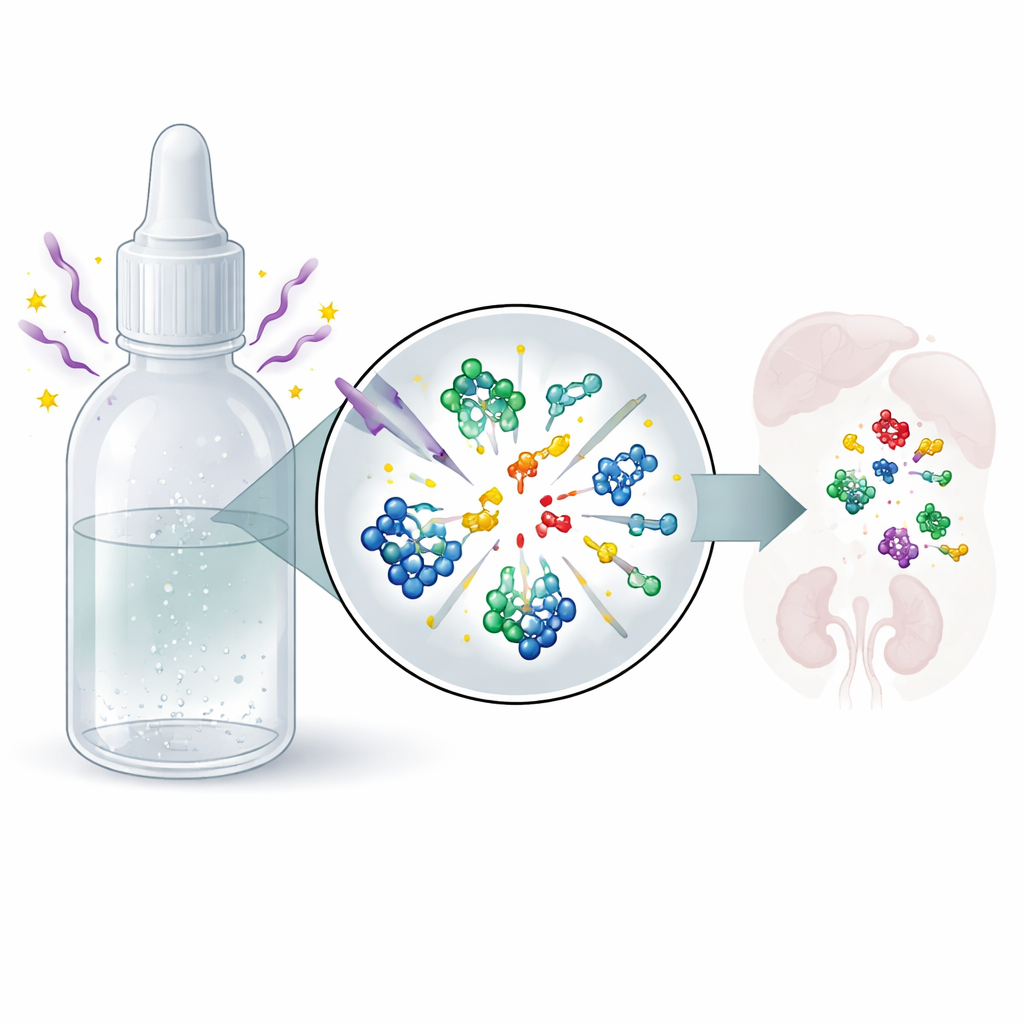
Because medicines in space are stored for years, packaging is often the first line of defense against damage. The study tested ciprofloxacin eye/ear drops in their original low‑density polyethylene plastic bottles, as well as outside the bottles. For light exposure, the bottles worked well: no measurable degradation occurred while unprotected liquids did break down. For gamma radiation, however, the story was different. Whether the liquid formulation was in the bottle or not, similar levels of breakdown occurred at a given dose, and the same key by‑products appeared. In other words, the plastic shielded the drug from light but not from penetrating gamma rays, which passed through the container and still triggered chemical changes inside.
What the New Molecules Might Mean for Health
The amounts of each breakdown product were tiny, but in long missions even small changes could matter. Because isolating these new molecules in bulk is difficult, the authors turned to computer models that estimate how compounds might behave in the body. These simulations suggested that most ciprofloxacin by‑products have toxicity profiles broadly similar to the original drug, with a consistent concern for effects on the lungs and kidneys that already accompanies this antibiotic class. One particular gamma‑specific by‑product showed a somewhat higher predicted risk for long‑term toxicity and several products were flagged as possibly mutagenic, pointing to the need for deeper biological testing, especially under the altered physiology of spaceflight, where organs, immune responses, and drug handling can change.
What This Means for Future Missions
This pilot study shows that relying only on Earth‑based light tests and everyday plastic bottles is not enough to guarantee that medicines will remain trustworthy on long space journeys. Gamma‑like radiation can push drugs such as ciprofloxacin down unique chemical pathways, even when the liquid is kept in its original container, and can disrupt the solid form at doses far below those used for industrial sterilization. For mission planners, this means that drug choice, formulation (liquid versus solid), and packaging materials must be reconsidered with space radiation in mind. The work is an early but important step toward new testing rules, smarter packaging, and possibly redesigned formulations that will keep vital antibiotics safe and effective for astronauts heading into deep space.
Citation: Patel, M., Mehta, P., Khan, S. et al. Pilot degradation study of gamma irradiated ciprofloxacin in its primary packaging material for space pharmaceutical applications. Sci Rep 16, 12758 (2026). https://doi.org/10.1038/s41598-026-37307-2
Keywords: space pharmaceuticals, drug stability, gamma radiation, ciprofloxacin, astronaut health