Clear Sky Science · en
Cognitive biotypes identified through ECG-derived workload and behavioral accuracy
Why some minds work hard while others work smart
Why do some people sail through demanding mental tasks while others feel drained or stumble, even when they try just as hard? This study tackles that everyday puzzle by looking inside the body—at heart signals—while people perform brain-challenging games. By combining performance scores with moment‑to‑moment measures of effort from the heart, the researchers uncover distinct “types” of cognitive response to stress that could one day guide personalized training, health monitoring, and even wearable technologies.
Measuring mental effort through the heartbeat
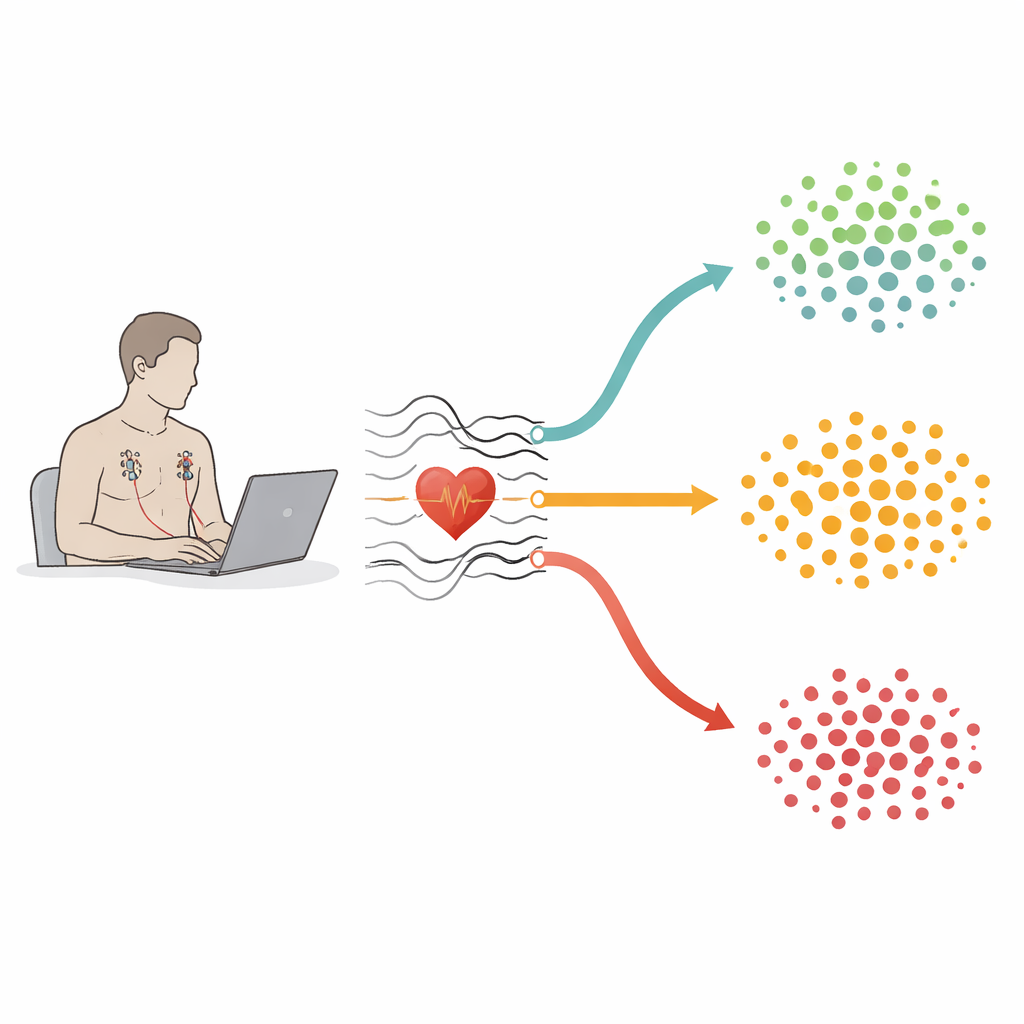
When we tackle something mentally tough—juggling numbers, switching between rules, or holding information in mind—our nervous system reacts automatically. Heart rate and its subtle beat‑to‑beat changes shift in patterns that reflect how hard our brain is working. The team used a wearable electrocardiogram (ECG) sensor to capture these changes while 100 young adults completed three short computer tasks: rapid counting, switching between simple rules, and remembering locations in a grid. Each task was presented at easy, medium, and hard levels. A previously validated computer model transformed the ECG data into a continuous “workload” value, updated every second, indicating how much mental effort the body was investing beyond a relaxed baseline.
Three hidden styles of performing under pressure
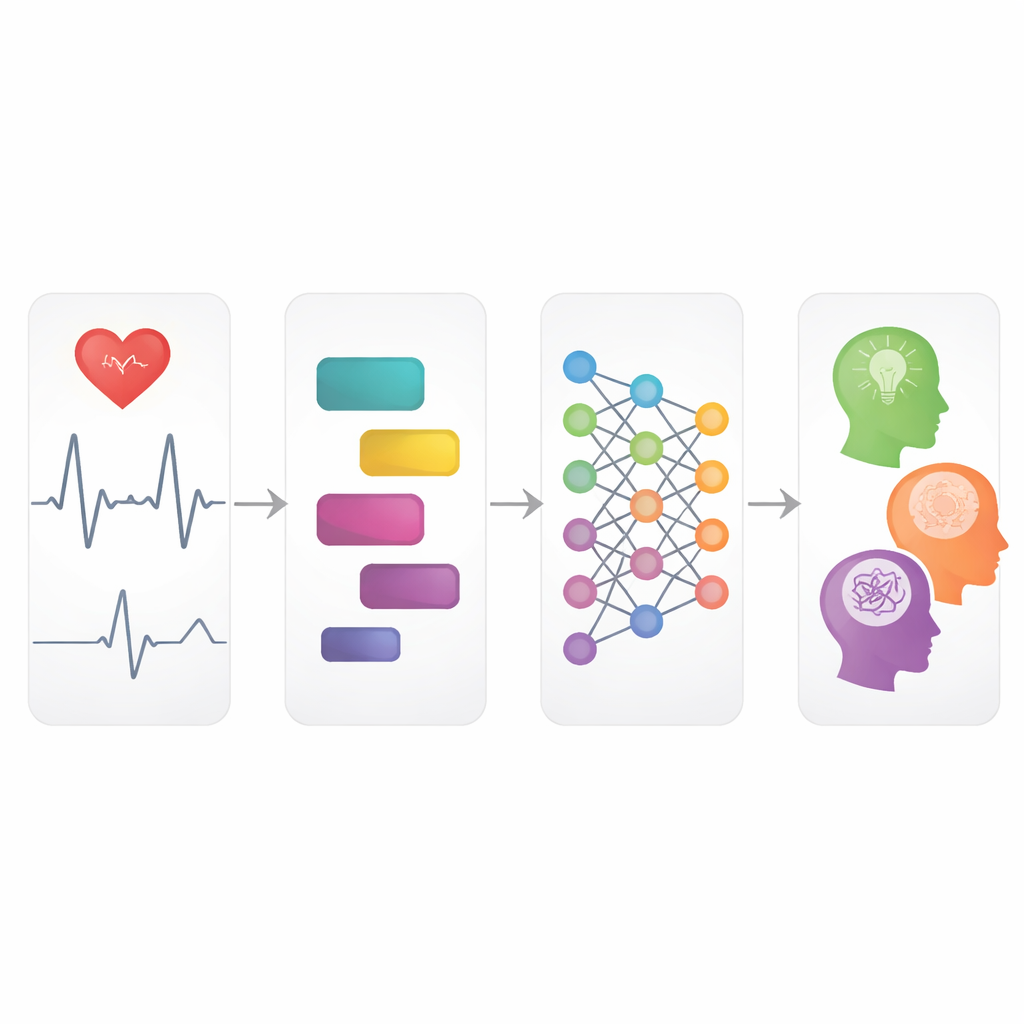
To see whether stable patterns emerged across people, the researchers combined two pieces of information for each task and difficulty level: how accurate a participant was and how high their ECG‑based workload became. They then applied a clustering method that groups similar patterns together. Instead of the four groups they expected, the data consistently revealed three major cognitive biotypes. One group showed high accuracy with relatively low physiological effort, suggesting an efficient, “work smart” style. A second group achieved average‑to‑high accuracy but only by ramping up workload, reflecting a “push hard” style. The third group showed generally low accuracy with low‑to‑moderate workload, hinting at either disengagement or a blunted bodily response to challenge rather than simply being overwhelmed.
How people feel versus what their bodies show
After each block of trials, participants rated how demanding, rushed, stressful, and successful the task felt. These self‑reports were compared with the objective workload readings and actual performance. The key question was: Do people in different biotypes perceive their own effort and success accurately? The answer was mixed. The “push hard” group, who worked intensely to maintain performance, showed the largest gap between how mentally and temporally demanding tasks felt and what their heart signals indicated. They seemed to overestimate how pressured they were. The low‑accuracy group, despite their difficulties, did not differ much from the efficient group in this respect, suggesting similarly modest mismatches between subjective and objective workload.
The surprising underconfidence of top performers
One of the most striking findings involved how successful people thought they were. Members of the efficient, high‑accuracy group tended to underestimate how well they had actually done. Their bodies and scores signaled strong performance at relatively low cost, yet their self‑ratings of success lagged behind reality. This pattern echoes the well‑known phenomenon in which highly capable individuals doubt their own abilities. In contrast, the other two groups also underestimated success, but to a smaller degree. Taken together, these mismatches between feelings and facts point toward differences in how well people sense and interpret signals from their own bodies and behavior—a capacity sometimes called bodily awareness.
What these mental “types” could mean for daily life
The discovery of three distinct cognitive biotypes suggests that people differ not just in how well they perform under mental strain, but also in the physiological cost they pay and in how accurately they read their own internal state. Over time, high workload for a given level of performance has been linked to greater risk for health problems, while blunted responses may signal difficulty adapting to stress. The authors argue that simple, scalable measures like ECG‑based workload could help tailor training, work demands, or stress‑reduction strategies to an individual’s style—reducing strain for those who push too hard, boosting engagement for those who under‑respond, and perhaps helping high‑performing but underconfident individuals align their self‑perception with their true abilities.
Citation: Conklin, S., Kargosha, G., Tu, J. et al. Cognitive biotypes identified through ECG-derived workload and behavioral accuracy. Sci Rep 16, 9934 (2026). https://doi.org/10.1038/s41598-026-37107-8
Keywords: cognitive workload, heart rate, stress response, performance under pressure, wearable sensors