Clear Sky Science · en
TTEA: designing a quantum-ready and energy-conscious encryption model for secure IoT environments
Why tiny gadgets need big protection
From smart thermostats and fitness bands to hospital sensors and factory robots, more and more everyday objects are quietly joining the internet. These tiny gadgets collect sensitive information yet run on slivers of power and memory. The paper behind this summary tackles a growing problem: how to keep all that data safe, even from future quantum computers, without draining batteries or overloading the simplest devices.
A new way to lock data on small devices
The authors introduce the Two-Stage Encryption Approach, or TTEA, a new method for scrambling data that is designed specifically for small, low-power electronics. Classic tools like AES or RSA are very secure but heavy; simpler ciphers such as TEA or Speck are light enough for tiny chips but have known weaknesses. TTEA aims to blend the best of both worlds: it keeps the locking process compact and fast while closing off the shortcuts attackers have found in older designs.
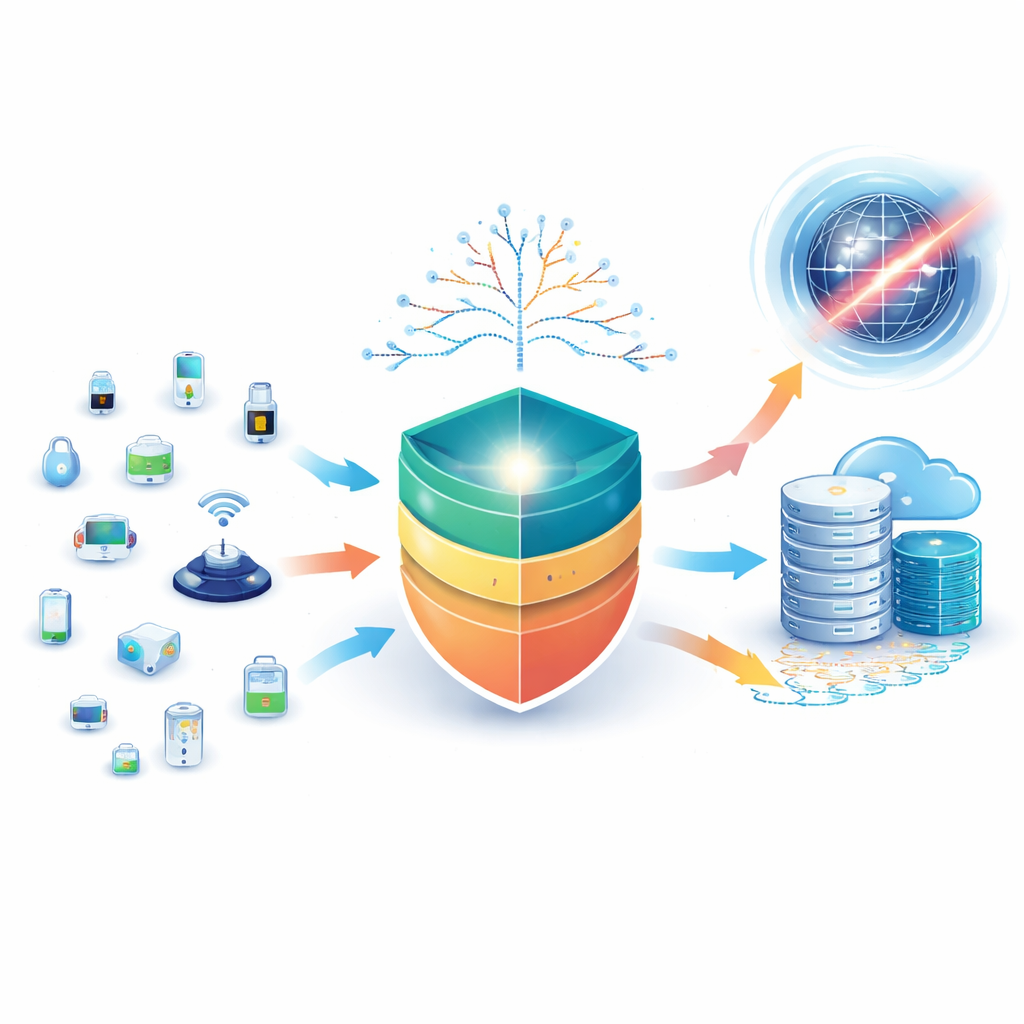
How the smart lock builds and uses its keys
TTEA begins by building strong digital keys from modest raw material. It mixes several streams of computer-generated randomness and then passes them through a carefully crafted transformation step that juggles bits in a complex, hard-to-reverse pattern. Depending on how much battery power a device has at a given moment, the system can choose to use a richer or leaner set of these internal keys, trimming work when energy is scarce and adding extra mixing when resources are plentiful. Once the keys are ready, each piece of data goes through a compact sequence of substitutions and combinations that spread the influence of every input bit across the output, making patterns extremely hard to spot.
Working with the network instead of against it
Protecting data is only half the challenge in the so‑called Internet of Things. These gadgets also share a limited wireless channel and often operate in clusters that pass messages toward a central gateway. The paper pairs TTEA with an energy-aware clustering method called REABCO, which helps decide which nodes should act as local leaders that handle heavier work. REABCO constantly weighs each device’s remaining battery, position, and role in the network, then adjusts who leads and how much security effort is spent where. In effect, the encryption engine and the network layout make coordinated choices, so that no single sensor is overworked and overall energy use stays low.
Ready for tomorrow’s quantum hackers
Looking ahead, the authors also worry about computers powerful enough to crack today’s public‑key systems. Rather than building an entirely new lock, they bolt TTEA onto a modern, quantum-resistant method for setting up shared secrets, known as CRYSTALS‑Kyber. In a typical session, a more capable device such as a gateway or cloud server handles the heavy lifting needed for this advanced key exchange. Once a robust long-term secret has been established, the lightweight TTEA cipher takes over to protect everyday traffic, giving long‑term safety without asking tiny sensors to run expensive math all the time.
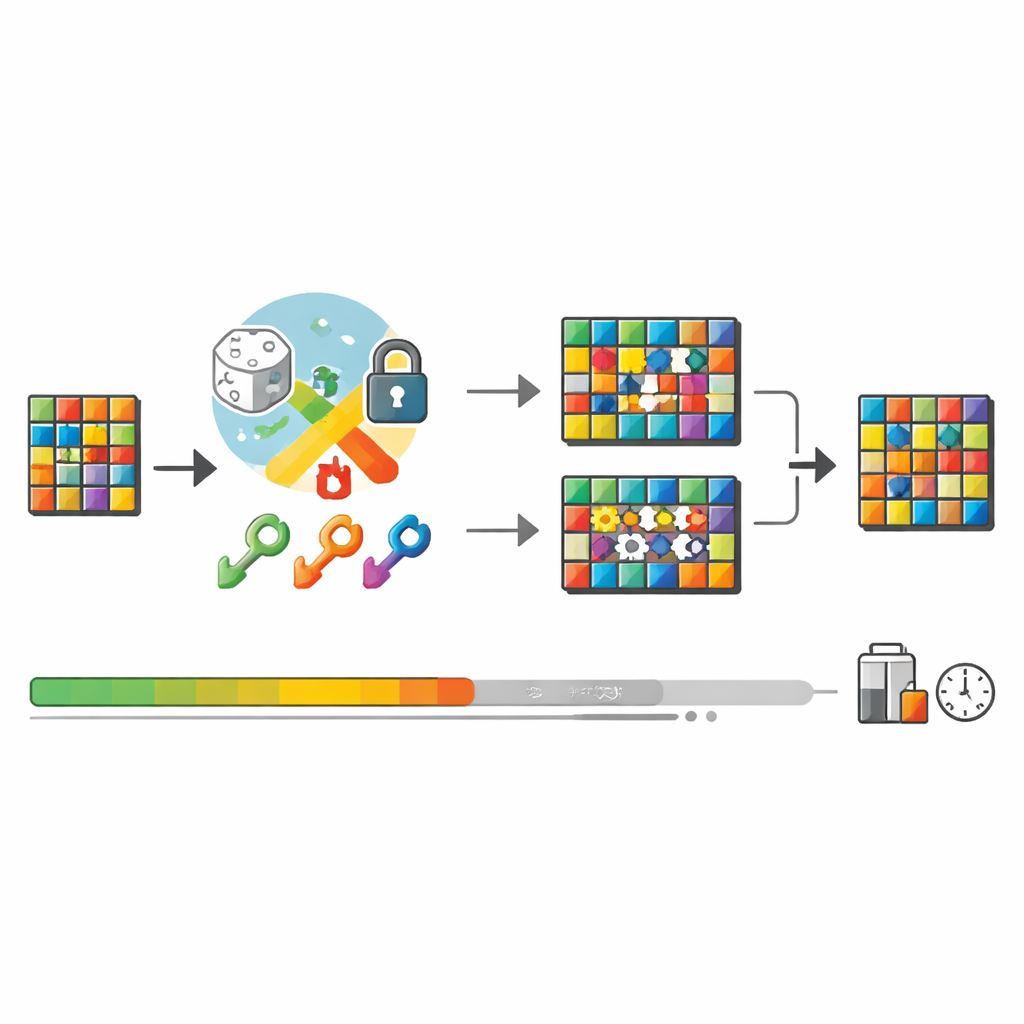
Measured gains in speed and battery life
The researchers tested TTEA on popular hobbyist and industrial boards, including Arduino, ESP32, and Raspberry Pi. Across these platforms, TTEA encrypted data up to about 20 percent faster than well‑known lightweight rivals and cut power draw by nearly 40 percent compared with TEA. Its memory footprint was noticeably smaller as well, leaving more room on cramped chips for the device’s main job—be it measuring heart rate or monitoring a pipeline. Statistical checks of the scrambled outputs showed that TTEA’s ciphertexts are very close to ideal randomness, and that tiny changes to the input flip nearly half the output bits, a hallmark of strong protection.
What this means for everyday connected things
In plain terms, the study shows that it is possible for cheap, battery‑powered devices to talk securely for long periods without constant recharging, while also being prepared for the age of quantum computers. TTEA’s combination of lean data locking, smart key management, and cooperation with the surrounding network offers a practical blueprint for securing large swarms of sensors. Although other tools may still be better suited to extremely tiny chips or specialized tasks, this work points toward a future in which billions of everyday gadgets can stay both efficient and safe.
Citation: Abdelaal, M.A., Moustafa, A.I., Saleh, H. et al. TTEA: designing a quantum-ready and energy-conscious encryption model for secure IoT environments. Sci Rep 16, 9926 (2026). https://doi.org/10.1038/s41598-026-36998-x
Keywords: Internet of Things, lightweight encryption, energy-efficient security, post-quantum cryptography, wireless sensor networks