Clear Sky Science · en
Nonlinear association between sleep duration and thyroid hormone levels in patients with thyroid cancer
Why sleep length matters for thyroid patients
Many people living with thyroid cancer focus on surgery, scans, and pills, but may overlook something they can change every night: how long they sleep. This study asks a simple but important question—could sleeping too little or too much disturb thyroid hormones in people who have already been treated for thyroid cancer? Because these hormones help control weight, energy, and heart health, even small shifts may affect how patients feel day to day and how well they recover in the long run.
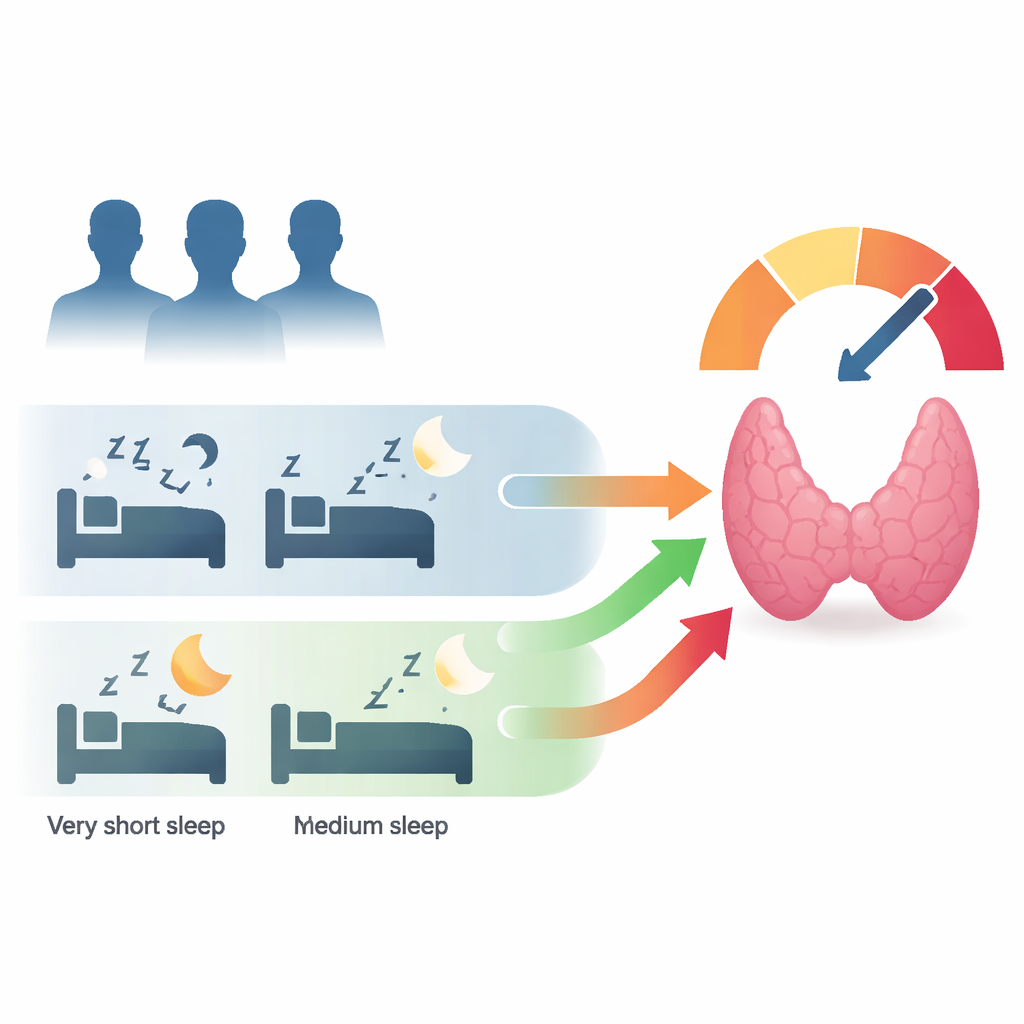
A closer look at sleep and hormones
The researchers analyzed data from 1,204 adults with confirmed thyroid cancer across several large hospitals in China. All participants had completed their main cancer treatment and were being seen during routine follow-up visits, when their thyroid status was relatively stable. Each person reported how many hours they typically slept per night over the past month, and their blood was tested in the morning for three key thyroid hormones: TSH, which signals the thyroid, and T3 and T4, which are the hormones the thyroid releases to regulate metabolism. The team also collected detailed information on age, sex, body weight, blood pressure, smoking exposure, and long-term illnesses like high blood pressure and diabetes, so they could separate the effect of sleep from these other factors.
Too little and too much sleep both look risky
Participants were grouped into three categories: short sleep (six hours or less), normal sleep (seven to eight hours), and long sleep (nine hours or more). When the researchers compared these groups, they saw a striking pattern. People who slept either too little or too much tended to have higher TSH levels, suggesting that their bodies were signaling for more thyroid hormone. At the same time, short sleepers in particular showed slightly lower levels of T3 and T4. These differences remained even after adjusting for age, sex, body mass index, smoking, alcohol use, and major medical conditions, which means sleep duration itself seemed to play an important role.
A U-shaped pattern with a sweet spot
Instead of assuming that more sleep is always better, the scientists specifically tested for a curved, or non-linear, relationship. Using advanced statistical models and smoothed curves, they found that about seven hours of nightly sleep appeared to be a tipping point. When sleep dropped below this mark, TSH rose and T3 and T4 fell more sharply. Beyond seven hours, the changes in hormone levels were gentler but still suggested that very long sleep was not ideal. Put simply, thyroid hormone balance followed a U-shaped curve: it looked most stable in people sleeping around seven to eight hours, and more disturbed in those at either extreme.
Differences by sex, age, and body weight
The study also explored whether certain groups were more sensitive to sleep length than others. When men and women were examined separately, the U-shaped pattern in TSH was visible in both, but the swings were steeper in men. Additional analyses suggested that younger patients and those with a higher body mass index might show stronger links between unusual sleep durations and hormone shifts. Conditions such as high blood pressure and diabetes may further influence this relationship, hinting that sleep, metabolism, and thyroid control are tightly intertwined in complex ways for thyroid cancer survivors.
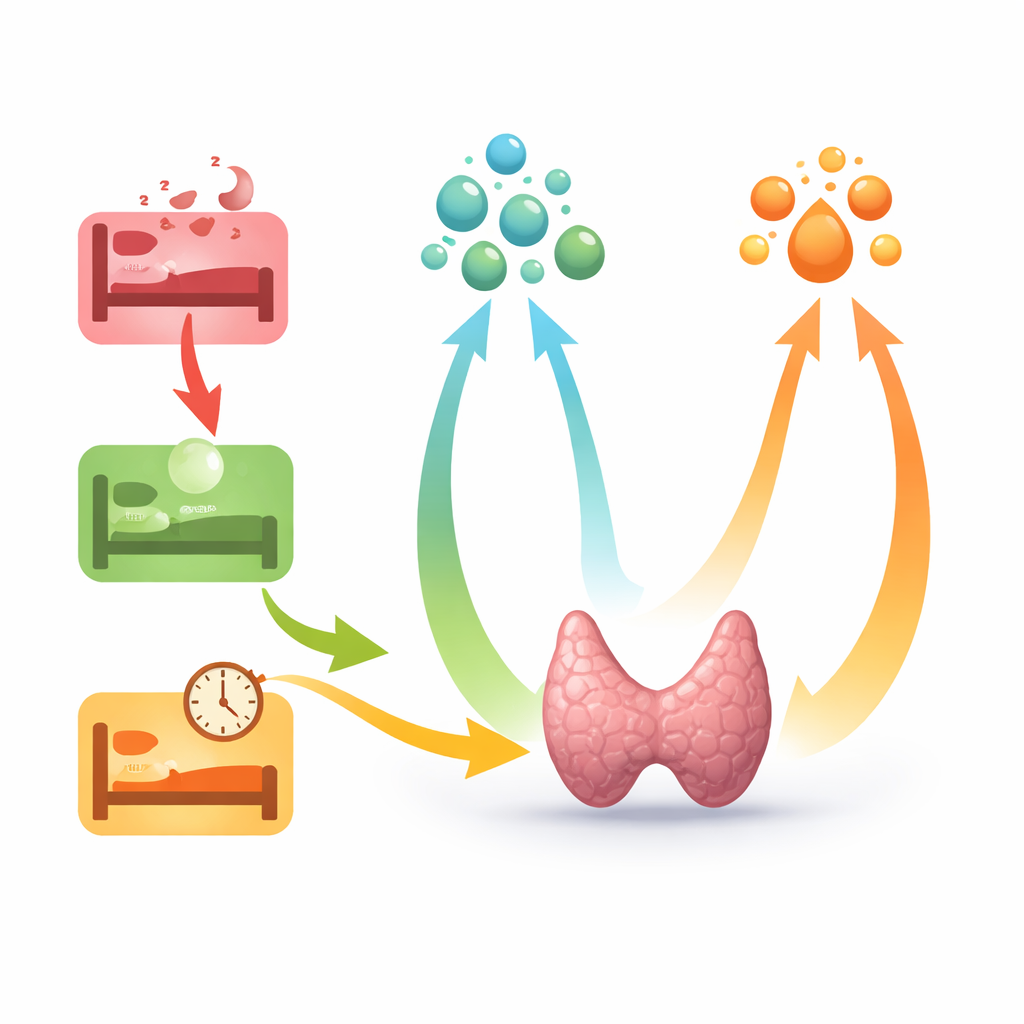
What this means for everyday life
For people who have had thyroid cancer, this research suggests that aiming for roughly seven hours of sleep a night may help keep thyroid hormones on a more even keel, while regularly sleeping much less—or much more—could nudge these hormones out of balance. The study cannot prove that changing sleep will fix hormone problems, and it was limited to Chinese patients who reported their own sleep times. Still, it highlights sleep duration as a practical daily habit that patients and clinicians can discuss alongside medication doses and follow-up tests, with the shared goal of supporting long-term health after thyroid cancer.
Citation: Zhao, W., Tan, H., Yan, Y. et al. Nonlinear association between sleep duration and thyroid hormone levels in patients with thyroid cancer. Sci Rep 16, 11100 (2026). https://doi.org/10.1038/s41598-026-36674-0
Keywords: thyroid cancer, sleep duration, thyroid hormones, endocrine health, cancer survivorship