Clear Sky Science · en
Impact of genotype and soil fertility on wheat rhizosphere microbiota under the trans-gangetic plain
Why the life around wheat roots matters
Most people think of wheat fields as seas of golden grain, but below the surface lies a teeming world of microbes that quietly help determine how much grain those fields produce. This study explores how different wheat varieties and soil conditions across India’s Indo-Gangetic plains shape the invisible communities of bacteria living around wheat roots, and what that might mean for soil health, yields, and more sustainable farming.
Looking beneath the wheat fields
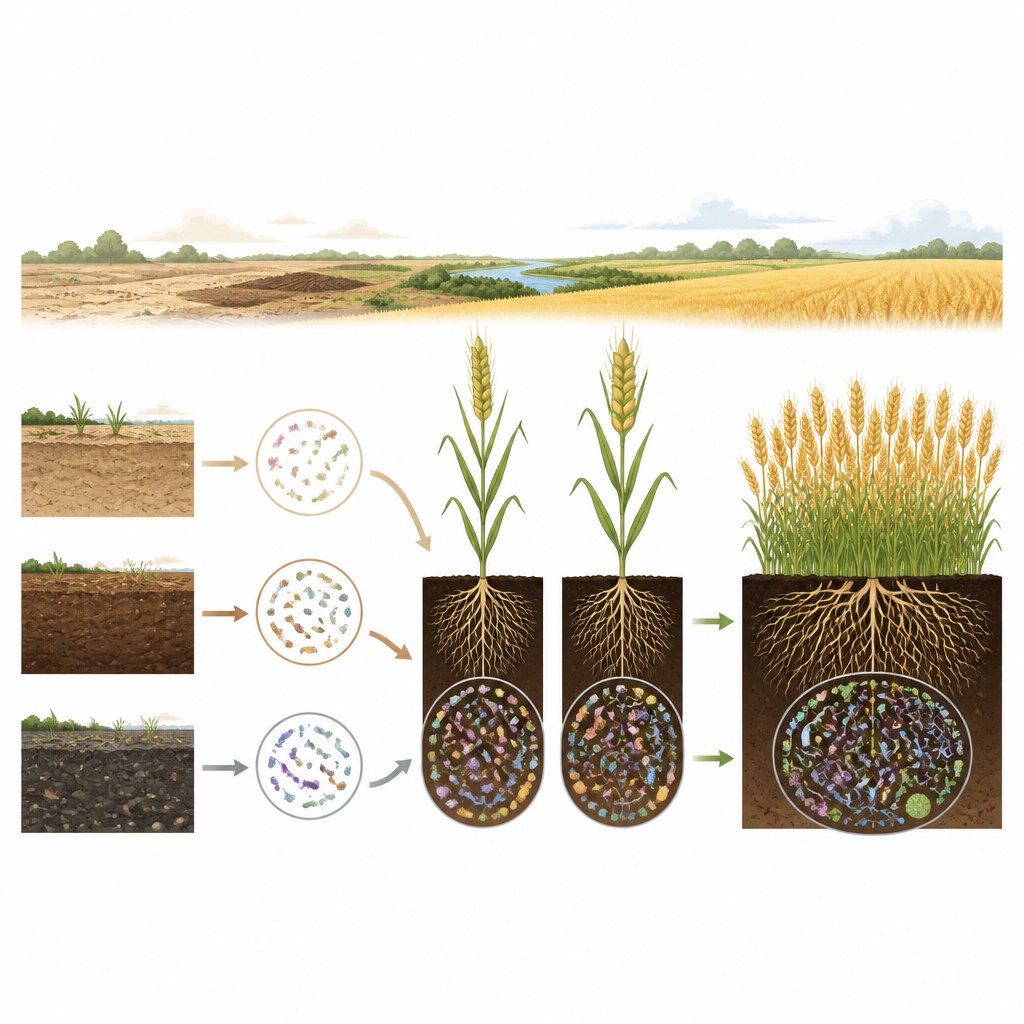
The researchers focused on the rhizosphere, the thin layer of soil clinging to plant roots where bacteria and roots constantly interact. They studied two widely grown wheat varieties, HD3086 and PBW343, using soils collected from eight districts across the trans-Indo-Gangetic plain in Punjab and Uttar Pradesh. By growing both varieties in each soil under controlled greenhouse conditions without added fertilizer, they could separate the effects of plant genetics and basic soil chemistry on the microbes. They then used DNA sequencing of bacterial marker genes to identify which bacteria were present and how diverse these communities were.
Different wheat, different underground neighbors
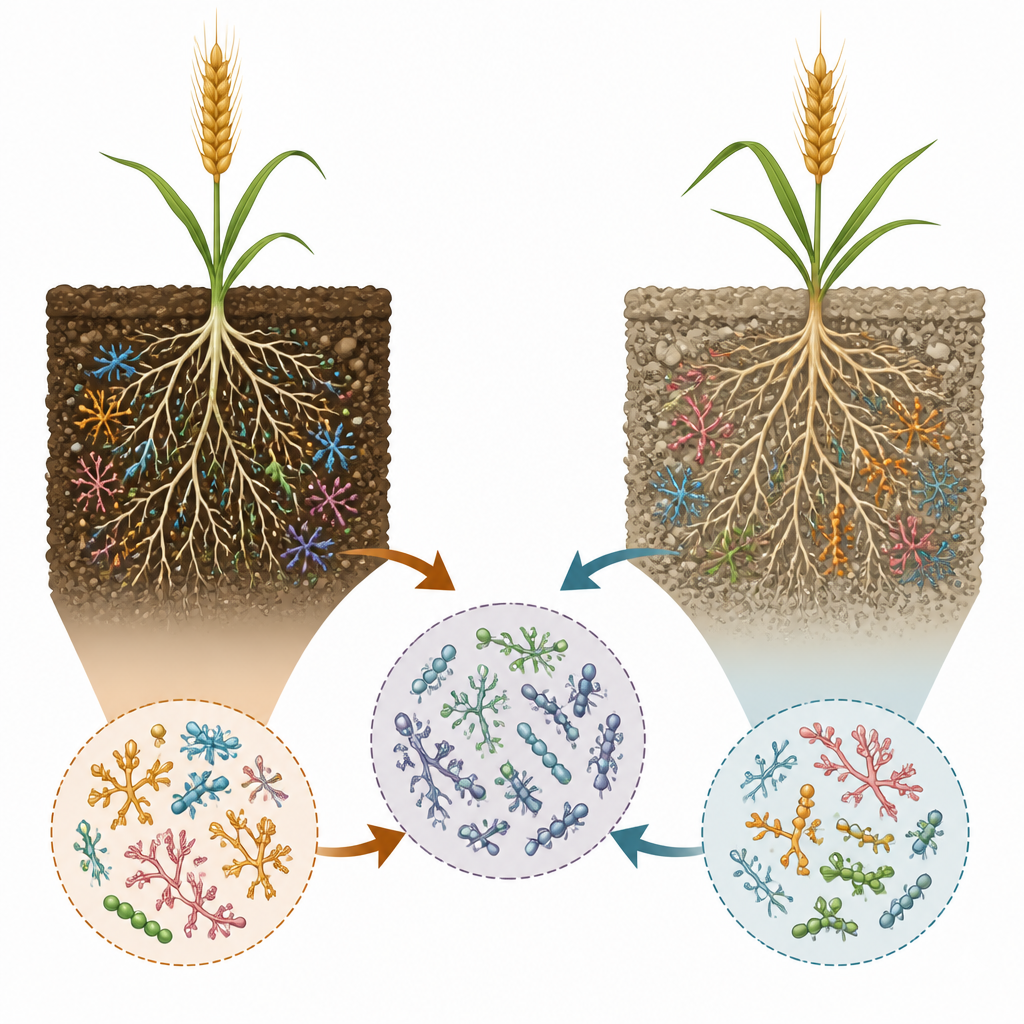
The team found that wheat variety had a clear influence on the bacterial world around its roots. Across all locations, the HD3086 variety hosted more bacterial genera than PBW343, with 421 genera detected compared with 322. About half of the genera were shared between the two, but 170 were unique to HD3086 and 71 were unique to PBW343. Even at broader groupings called phyla, four major bacterial groups differed significantly in how common they were between the varieties. Several individual genera, including well-known plant-associated bacteria such as Pseudomonas and Nitrosospira, also showed distinct patterns between the two wheats, suggesting that each variety selectively attracts and fosters its own microbial partners.
Soil chemistry and place still matter
Local soil conditions also left a strong imprint on these microbial communities. Measures of bacterial abundance and diversity varied widely across the eight districts. Some soils, such as those from Hoshiarpur and Ambala, supported especially rich and varied bacterial life, while others hosted simpler communities. Statistical tests showed that key soil properties, including pH, organic carbon, and the levels of major nutrients like nitrogen, phosphorus, potassium, and iron, were closely linked to how diverse the bacterial communities were for both wheat varieties. By contrast, the history of which crops had previously been grown in the fields (such as rice–wheat or sugarcane–wheat rotations) showed little consistent effect in this dataset.
A shared core of helpful microbes
Despite these differences, the study also uncovered a stable “core” of bacteria that appeared in every sample, regardless of soil type or wheat variety. In total, 27 bacterial genera formed this core group. Although they represented only a small fraction of all the taxa detected, they accounted for roughly two-thirds of the total bacterial abundance around the roots. Many of these core genera are already known for roles in nutrient cycling and plant support. For example, some help move nitrogen and phosphorus into forms plants can use, while others are linked with breaking down organic matter, helping roots cope with stress, or suppressing disease. The authors suggest that wheat and these core microbes may have co-evolved, forming robust partnerships that persist across changing conditions.
What this means for future wheat growing
For non-specialists, the key message is that not all wheat plants interact with soil life in the same way, and these differences matter. The study shows that wheat genetics and soil fertility together shape which microbes gather around roots, and that a relatively small set of core bacteria dominates this hidden ecosystem. Understanding and eventually managing these root-associated communities could help farmers maintain healthy soils, use fertilizers more efficiently, and breed wheat varieties that work better with their microbial allies. Rather than focusing on plants or soil in isolation, the work points toward viewing crops as part of a larger living system that includes the microscopic life at their roots.
Citation: Kumar, M., Ansari, W.A., Singh, A. et al. Impact of genotype and soil fertility on wheat rhizosphere microbiota under the trans-gangetic plain. Sci Rep 16, 14953 (2026). https://doi.org/10.1038/s41598-026-36646-4
Keywords: wheat rhizosphere, soil microbiome, Indo-Gangetic plains, core bacteria, crop varieties