Clear Sky Science · en
Above-canopy versus below-canopy nitrogen addition affects nitrate leaching and mineralization but not greenhouse gas fluxes in a sessile oak stand
Why this forest story matters
Across the world, human activities are adding extra nitrogen to the air, which eventually falls back onto forests in rain and dust. Nitrogen is a key plant nutrient, so more of it might seem like free fertilizer that helps trees grow and store carbon. But too much nitrogen can leak into streams as nitrate, upset soil life, and contribute to climate‑warming gases. This study asks a deceptively simple question with big implications: does it matter whether that extra nitrogen first touches the leafy tree canopy or lands straight on the forest floor?
Two ways to feed a forest
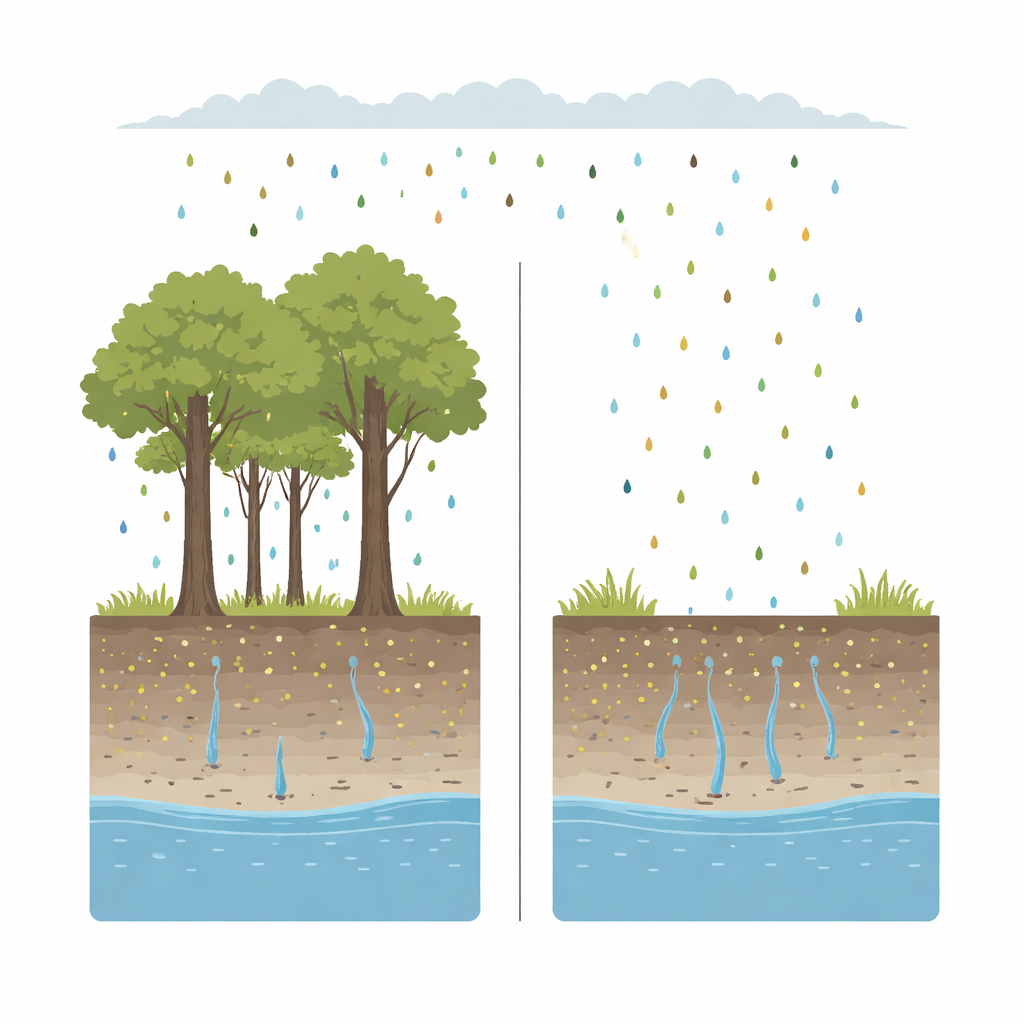
The research took place in a sessile oak forest in northern Italy, where trees grow on thin, slightly acidic soil and are thought to be somewhat limited by nitrogen. Scientists set up nine circular plots and treated them for six years. In one set of plots, no extra nitrogen was added (the control). In another, a nitrogen solution was sprayed directly onto the forest floor, mimicking the common practice of ground fertilization. In the third, the same amount of nitrogen was sprayed above the tree crowns using tall sprinklers, so that the solution had to pass through the canopy—closer to how real atmospheric deposition behaves. All plots received the same modest dose, roughly four times the local background nitrogen deposition but still within realistic ranges for polluted regions.
Watching nitrogen move through soil
To see what happened to this added nitrogen, the team followed several steps in the soil nitrogen cycle. They buried small soil cores fitted with special resins that trapped nitrogen moving downward, allowing them to measure both nitrate and ammonium leaching from the topsoil. They also measured how quickly soil microbes converted organic nitrogen into mineral forms that plants can use, a process called mineralization. Over several years and seasons, they repeatedly sampled the cores, tracking how much nitrogen accumulated, how much moved downward with water, and how fast it was being transformed by soil life.
Leaky soils versus buffered canopies
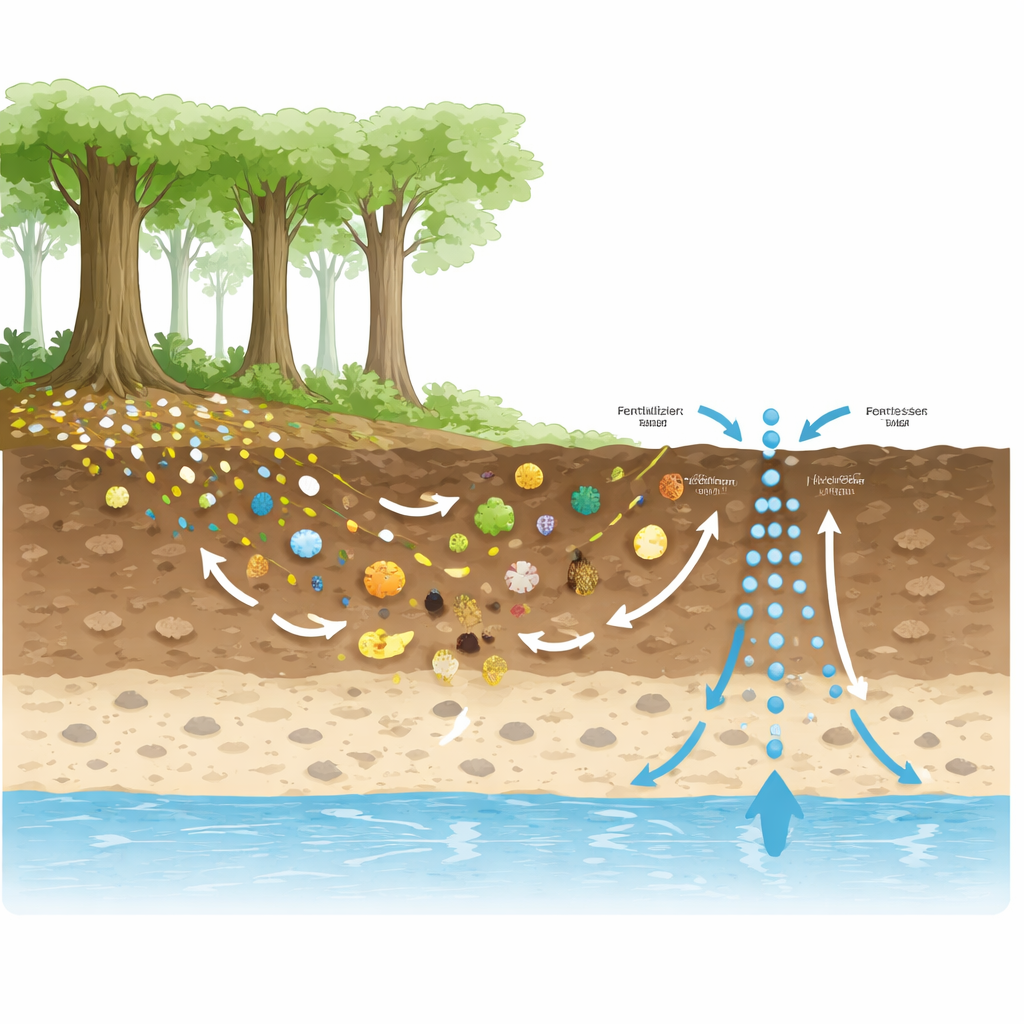
The way nitrogen was applied turned out to matter a great deal for what happened in the soil. When nitrogen was sprayed directly on the forest floor, topsoil nitrate leaching clearly increased in the later years of the experiment, and ammonium leaching also rose. At the same time, the overall rate at which microbes mineralized nitrogen in the soil decreased compared with the untreated control. In other words, more nitrogen was being washed downward and less was being recycled into plant‑available form. By contrast, when nitrogen was sprayed above the canopy, neither nitrate leaching nor mineralization differed significantly from the control. Previous work at this site has shown that canopy leaves can intercept and absorb a large share of incoming nitrogen, helping to explain why the soils under above‑canopy addition behaved much like unfertilized ground.
Greenhouse gases stay surprisingly steady
The researchers also tracked how the treatments affected three key greenhouse gases that move between soil and air: carbon dioxide, methane, and nitrous oxide. Using gas analyzers and sealed chambers, they monitored these fluxes over multiple years. Despite noticeable seasonal swings driven by temperature and moisture—higher carbon dioxide release in warm, moist conditions and steady methane uptake by the well‑aerated forest soil—the extra nitrogen, whether added above or below the canopy, did not cause consistent changes in any of the gases. Soil respiration responded mainly to how warm and wet the soil was, while methane uptake and nitrous oxide emissions remained low and highly variable across all plots.
What this means for forests and climate
The study shows that tree canopies act as an important buffer between atmospheric nitrogen and the soil below. Directly adding nitrogen to the forest floor exaggerates how much nitrate leaches from topsoil and how strongly microbial processes are altered, whereas adding the same amount above the canopy leaves soil nitrogen cycling closer to normal—at least over the first few years. At the same time, these modest nitrogen loads did not yet push the system toward clearly higher greenhouse gas emissions. For a layperson, the message is that how and where nitrogen enters a forest can strongly shape water quality and soil health, while its effects on climate‑warming gases may unfold more slowly. Long‑term studies that respect the role of the leafy canopy are essential to understand whether forests will continue to absorb nitrogen harmlessly or eventually become saturated and start leaking more pollution downstream and into the atmosphere.
Citation: Da Ros, L., Anna, B., Pietro, P. et al. Above-canopy versus below-canopy nitrogen addition affects nitrate leaching and mineralization but not greenhouse gas fluxes in a sessile oak stand. Sci Rep 16, 11800 (2026). https://doi.org/10.1038/s41598-026-36532-z
Keywords: nitrogen deposition, forest canopy, nitrate leaching, greenhouse gases, soil carbon