Clear Sky Science · en
Synergistic effect of rubber powder and nano-silica on pore structure and frost resistance of concrete
Why Cracked Concrete in Cold Mountains Matters
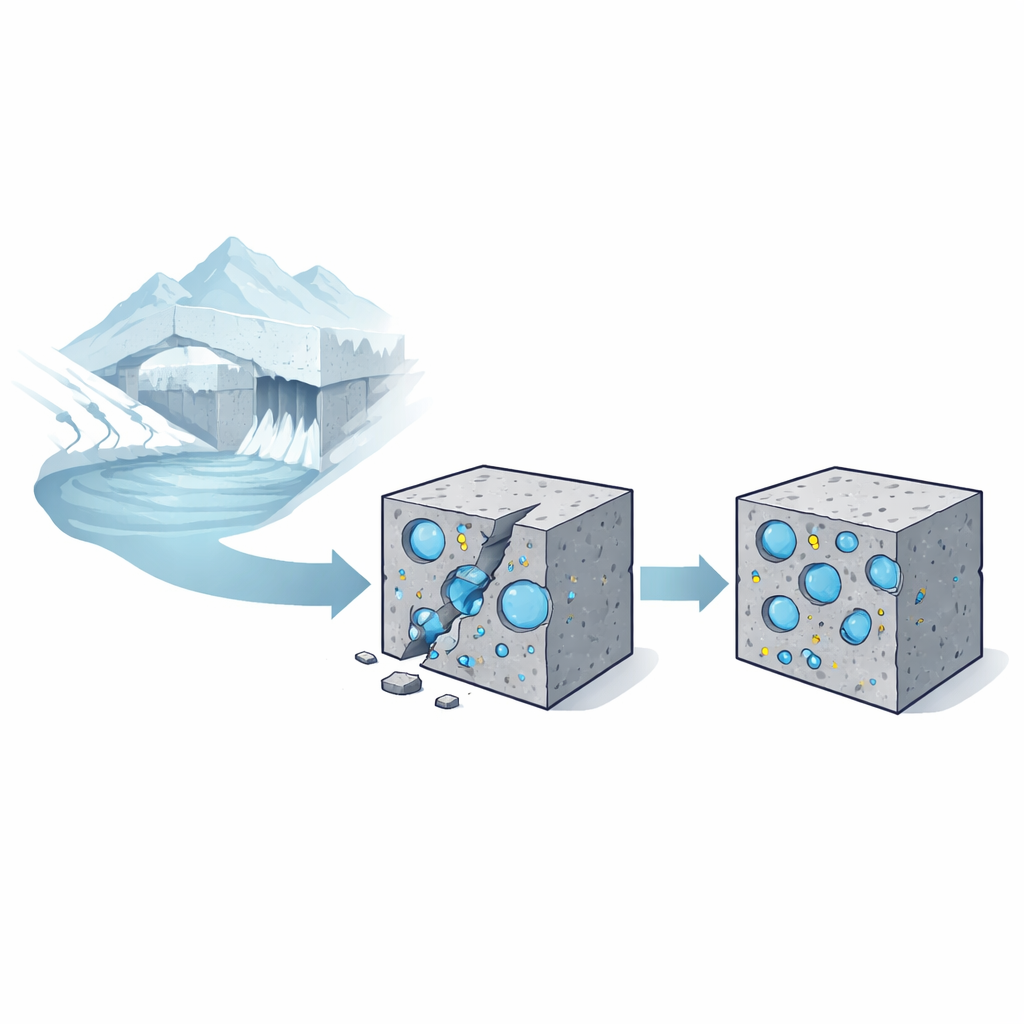
In many high mountain regions, concrete dams, spillways, and hydropower stations face hundreds of freeze–thaw cycles each year. Water seeps into tiny pores in the concrete, freezes, expands, and slowly pries the material apart. Engineers usually protect these structures by mixing in chemicals that create protective air bubbles, but these chemicals work poorly at high altitudes where air pressure is low. This study explores a different idea: using finely ground rubber from waste tires together with ultra-fine silica powder to redesign the internal “breathing space” of concrete so it can better survive extreme cold.
Turning Trash Tires into Tiny Safety Cushions
The researchers focused on how to give freezing water room to expand without ripping the concrete apart. Instead of relying only on traditional air bubbles, they mixed in very fine rubber powder made from discarded tires. Inside the hardened concrete, these rubber grains act like tiny flexible pockets—“solid pores”—that behave much like empty spaces. They do not carry much load, but they can deform and make room when ice grows. Tests showed that as more rubber powder was added, the total amount of internal voids rose sharply, similar to what happens when special air-forming chemicals are used. Importantly, these solid pores helped pack the bubbles more closely together, which lowers the stress caused when water in the pores freezes.
Fine Adjustments with Nano-Sized Silica
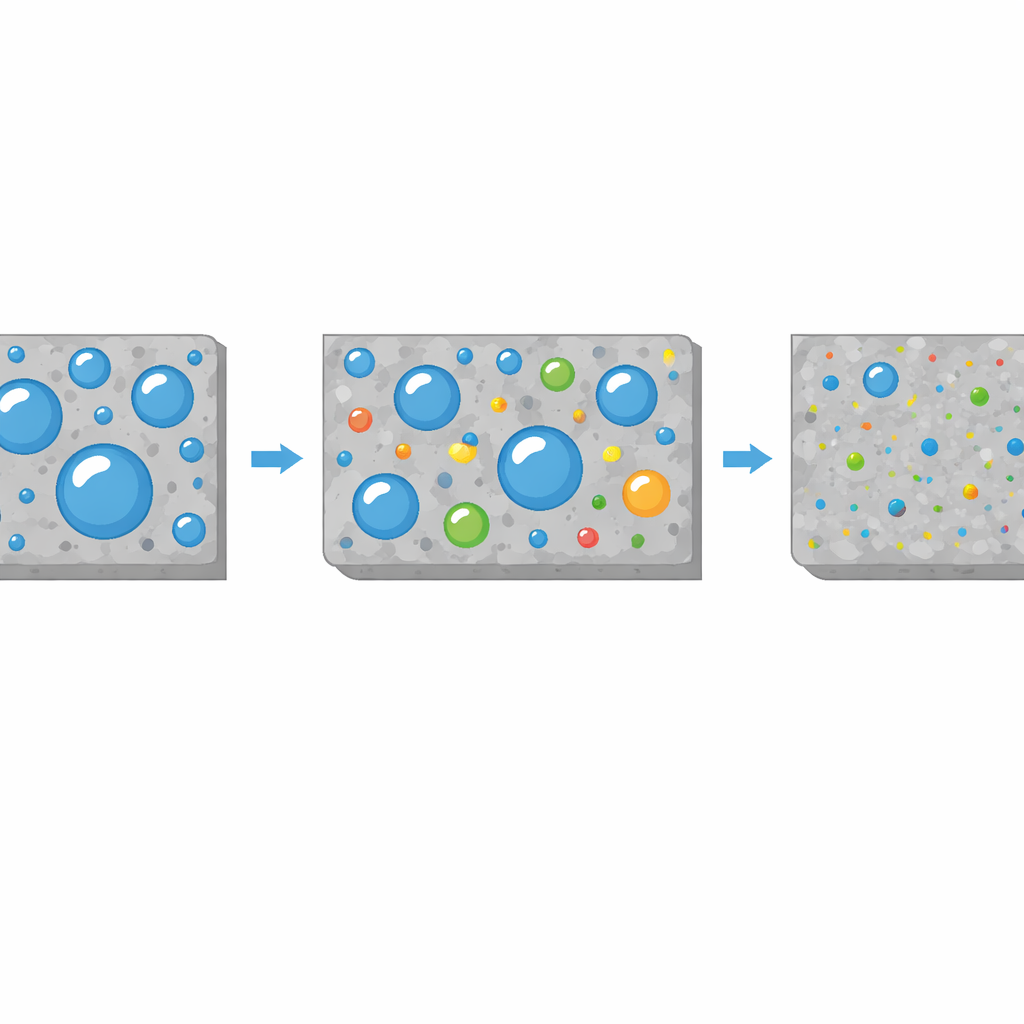
Rubber alone has drawbacks: it can lower concrete strength and create some large, harmful cavities. To counter this, the team added nano-silica—extremely small particles of silicon dioxide. These particles react with the cement and fill in gaps within the hardened paste, especially the bigger pores that weaken concrete. When nano-silica was combined with rubber powder, the number of large pores shrank and the structure shifted toward many small, well-distributed spaces. The overall air content dropped back toward that of ordinary concrete, but a larger share of the remaining voids were the helpful solid pores around the rubber grains, rather than fragile air bubbles.
Putting the New Concrete Through Freeze–Thaw Punishment
To see how this modified concrete behaved in harsh conditions, the researchers repeatedly froze and thawed cube-shaped samples while measuring their strength and internal pore structure. Ordinary concrete lost most of its strength after dozens of cycles, as its pores coarsened and cracks spread. In contrast, concrete that contained both rubber powder and nano-silica kept around four-fifths of its original strength even after one hundred cycles. Microscopic images showed that the rubber-based solid pores and the densified cement paste around them helped absorb and spread out the stresses caused by ice formation, slowing crack growth and keeping the overall pore network more stable.
How the Inner Layout of Pores Changes Over Time
Detailed measurements revealed that, in standard concrete, many of the smallest pores gradually turned into larger ones as freezing and thawing progressed, making it easier for water and ice to damage the material. In the rubber–nano-silica mixes, this shift was much weaker: the share of small pores fell by only about half as much as in the ordinary mix, and the rise in big, dangerous pores was only a fraction of the control case. The spacing between pores also changed less, so water had fewer continuous pathways to move and refreeze. In essence, the smart combination of solid pores and a denser paste created a more resilient internal landscape that resisted long-term deterioration.
What This Means for Cold-Region Structures
For non-specialists, the takeaway is straightforward: by replacing some sand with waste rubber powder and adding a modest amount of nano-silica, engineers can build concrete that loses only a little strength but gains a lot of endurance in freezing climates. The rubber provides flexible pockets that ease the pressure of expanding ice, while the nano-silica tightens the structure so harmful large voids are kept in check. Because rubber can be sourced from local scrap tires and nano-silica is used in small doses, this method is both practical and environmentally friendly for remote, high-altitude projects. The study shows a promising way to keep critical concrete infrastructure safer and longer-lasting where winter is most punishing.
Citation: Feng, LY., Cao, HL., Shi, XW. et al. Synergistic effect of rubber powder and nano-silica on pore structure and frost resistance of concrete. Sci Rep 16, 11857 (2026). https://doi.org/10.1038/s41598-026-36480-8
Keywords: frost-resistant concrete, rubberized concrete, nano-silica, freeze–thaw durability, waste tire recycling