Clear Sky Science · en
Molecular characterization of multi-drug resistance Escherichia coli O157:H7 from calf feces and cow milk in Bangladesh
Why this matters for your kitchen table
Many people enjoy milk and dairy products every day, often without thinking about where they come from. This study from Bangladesh looks closely at a dangerous germ, Escherichia coli O157:H7, that can live in cattle and sometimes slip into milk or the farm environment. Because some of these bacteria can resist several antibiotics at once, they are harder to treat when people get sick. Understanding how often these germs appear on farms, how strong their drug resistance is, and what makes them so harmful helps us protect both food safety and public health.
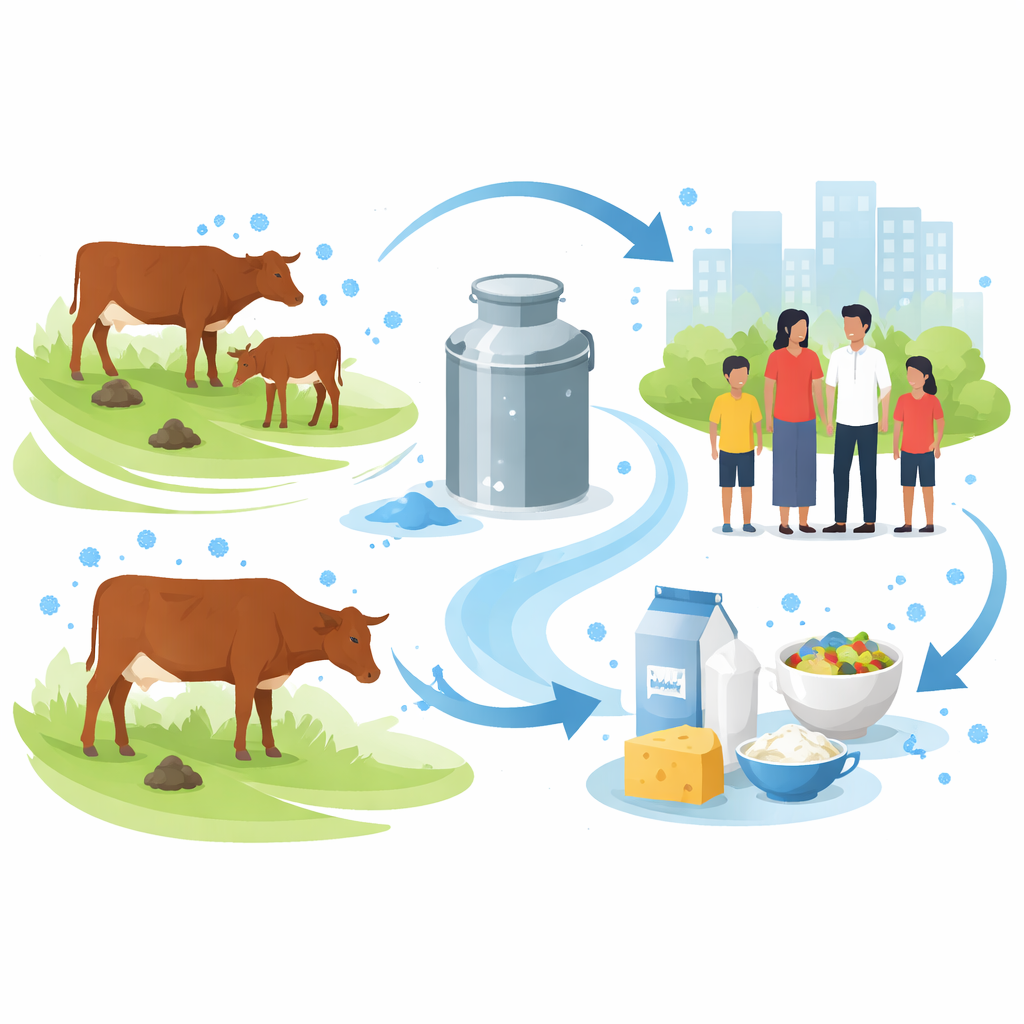
Germs hiding in young cattle and fresh milk
The researchers collected 290 samples from 20 dairy farms in several districts of Bangladesh: 210 fecal swabs from calves and 80 pooled milk samples from cows. Using a sensitive DNA test, they looked for E. coli O157:H7, a strain well known for causing severe diarrhea, bloody colitis, and kidney failure in humans. Overall, one in five samples carried genetic traces of this germ. Calf feces were the main source, with about a quarter of young animals testing positive, while roughly one in thirteen milk samples was contaminated. This pattern confirms that calves act as important silent carriers and that germs from their intestines can reach the milk during daily farm activities.
From lab tests to living bacteria
Detecting a germ’s DNA is not the same as finding live bacteria capable of causing disease. After the initial screening, the team tried to grow E. coli O157:H7 from all positive samples using several culture methods, color-based plates, and confirmation tests. Only eight samples—seven from calf feces and one from milk—yielded living E. coli O157:H7. This gap shows that some signals in the DNA test may come from dead or non-growing cells. It also highlights how tricky it is to recover this organism from messy materials such as manure and raw milk. By comparing different test combinations, the authors showed that using several methods together greatly improves accuracy when farms or laboratories survey for this pathogen.
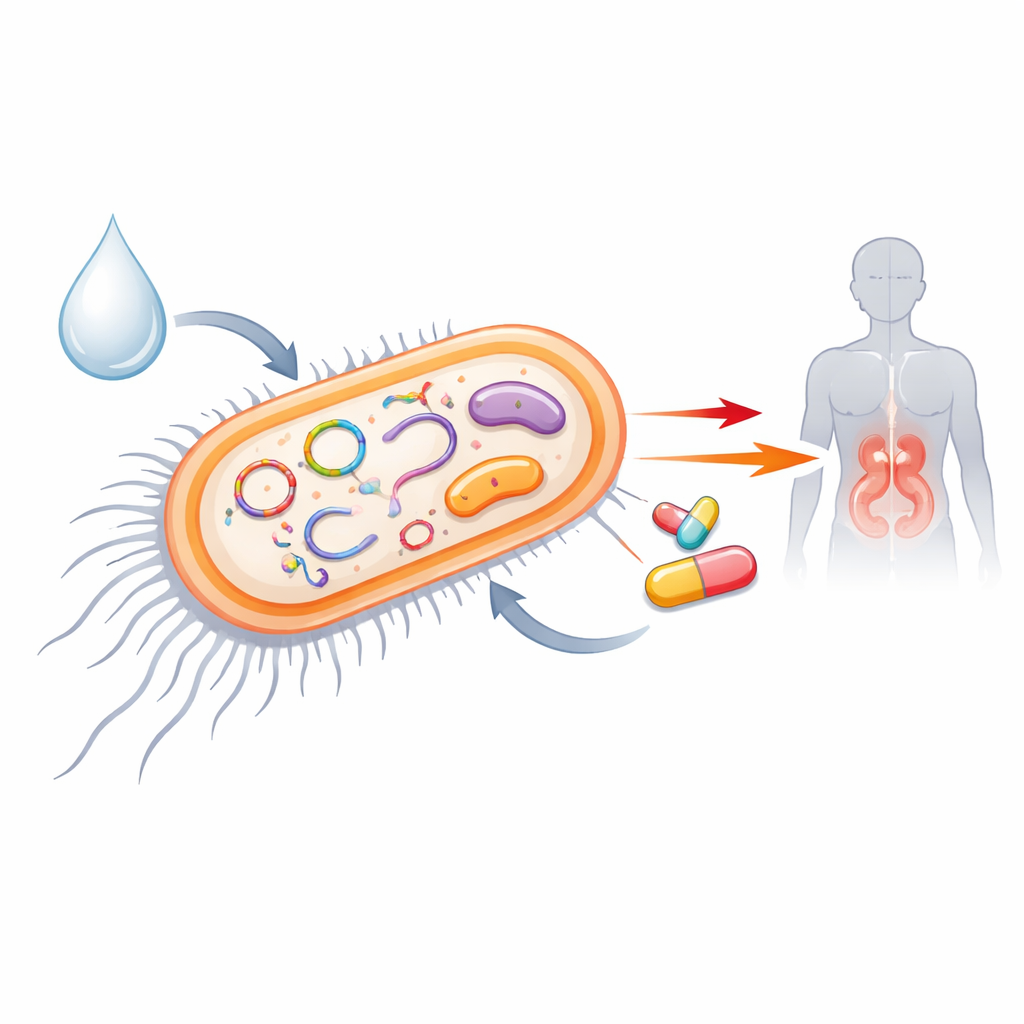
When routine drugs stop working
The eight live strains were then challenged with eighteen commonly used antibiotics. None were resistant to a few important drugs, such as gentamicin and azithromycin, which is encouraging. But half of the strains could withstand three or more different classes of antibiotics and were therefore considered multi-drug resistant. Many were resistant to widely used quinolone and fluoroquinolone drugs, as well as several modern cephalosporin antibiotics. The researchers also calculated a multiple antibiotic resistance index, showing that several strains likely arose in settings where antibiotics are heavily or repeatedly used—conditions that favor the survival of tough, drug-resistant germs.
Inside the genome of a high-risk strain
To see what makes these bacteria so formidable, the team fully sequenced the DNA of one milk-derived strain, named FS14. Its genome carried powerful toxin and attachment genes, including a form of Shiga toxin (stx2) strongly linked to severe kidney damage in humans, plus a sticking factor that helps the germ cling tightly to the gut lining. The strain also carried multiple genetic elements that promote drug resistance, such as efflux pump systems and regulatory switches, several mobile pieces of DNA, and multiple plasmids—small DNA rings that can shuttle traits between bacteria. When FS14 was compared with a famous outbreak strain from Japan, their genomes matched at more than 97 percent, placing the Bangladeshi isolate in a global epidemic lineage called ST11.
What this means for farmers, doctors, and families
Taken together, the findings paint a clear picture: dairy farms in parts of Bangladesh harbor E. coli O157:H7 that not only carry strong toxins but also resist several medical treatments, and at least one strain closely resembles those involved in major outbreaks elsewhere in the world. Even though only a few live strains were recovered, their traits are worrying enough to call for better hygiene during milking, careful handling and pasteurization of milk, and much more cautious use of antibiotics in animals. The authors argue for a “One Health” approach, recognizing that human health, animal health, and the farm environment are tightly linked. By improving surveillance and responsible drug use across this entire chain, countries can lower the risk that dangerous, multi-drug resistant bacteria will travel from barnyard to breakfast table.
Citation: Samad, M.A., Karim, M.R., Mahmud, M.A. et al. Molecular characterization of multi-drug resistance Escherichia coli O157:H7 from calf feces and cow milk in Bangladesh. Sci Rep 16, 9940 (2026). https://doi.org/10.1038/s41598-026-36237-3
Keywords: E. coli O157:H7, raw milk safety, antimicrobial resistance, dairy cattle, One Health