Clear Sky Science · en
Association of long COVID with health-related quality-of-life outcomes
Why this matters for everyday life
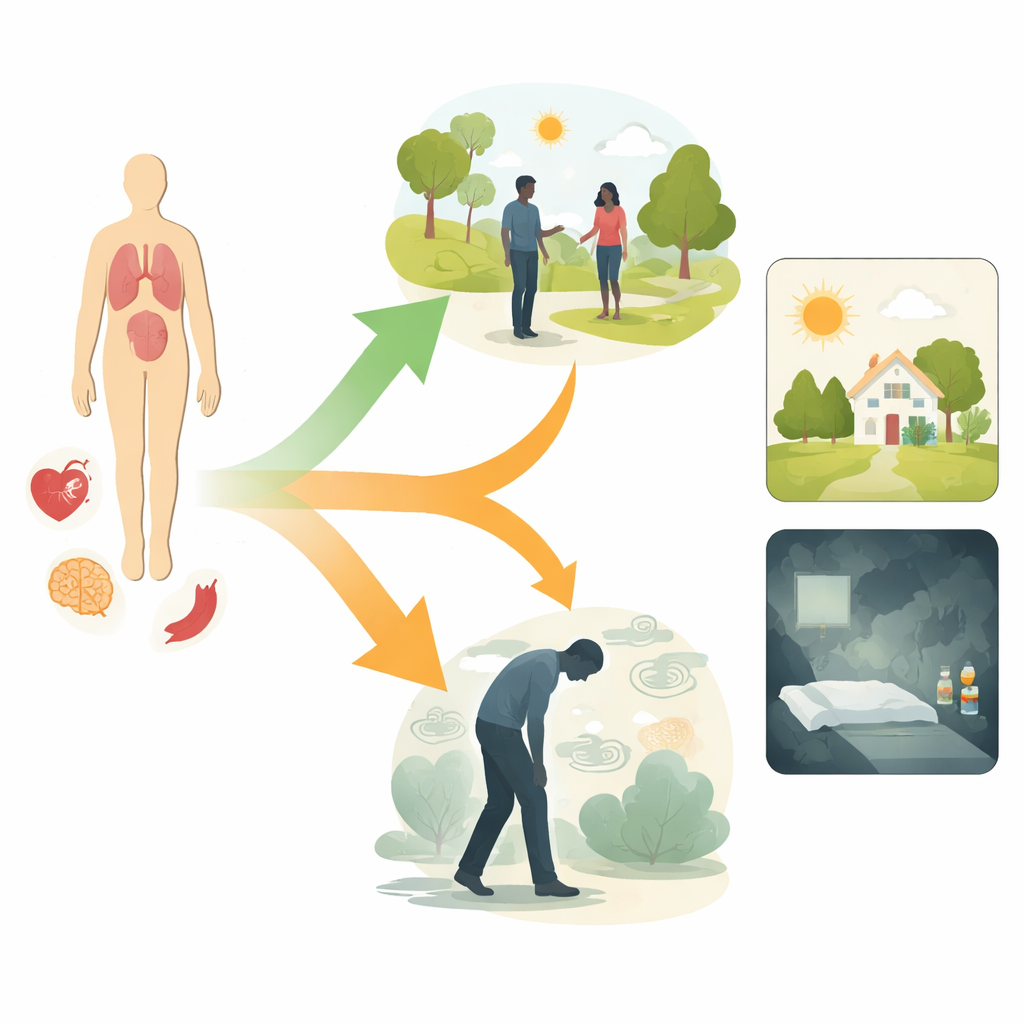
Many people who recover from the initial phase of COVID-19 find that the illness lingers in unexpected ways, affecting how they move, think, work, and enjoy life months later. This condition, often called long COVID, has raised urgent questions: How common is it, and how much does it really interfere with daily living? This study followed adults who had mostly mild to moderate COVID-19 to see, nine months later, how those with ongoing symptoms were faring in terms of their overall well-being, both physically and emotionally.
Who was studied and what was measured
The researchers drew on participants from a large outpatient COVID-19 treatment trial conducted in 2021, before modern variants became dominant and when vaccination rates were still relatively low. They focused on 546 adults who had received placebo rather than active treatment, ensuring that differences in outcomes would not be driven by experimental drugs. About nine months after their initial infection, these participants filled out detailed questionnaires about their current health, including standard tools widely used in medical research to gauge health-related quality of life. These tools asked about mobility, pain, daily activities, mood, energy, and social functioning, and also included a simple self-rating of overall health on a scale from worst to best imaginable.
What long COVID looked like in this group
In this study, long COVID was defined in a participant-centered way: anyone who reported having any level of COVID-related symptoms—mild, moderate, or severe—in the previous four weeks at the nine-month mark was considered to have long COVID. By that definition, about 13% of the group still had lingering symptoms. A slightly larger share, about one in five, said they had not yet returned to their usual pre-COVID health. People with and without long COVID were otherwise broadly similar in age and other medical features, though women and those initially at higher risk for severe COVID were somewhat more likely to report long-lasting symptoms.
How long COVID affected day-to-day functioning
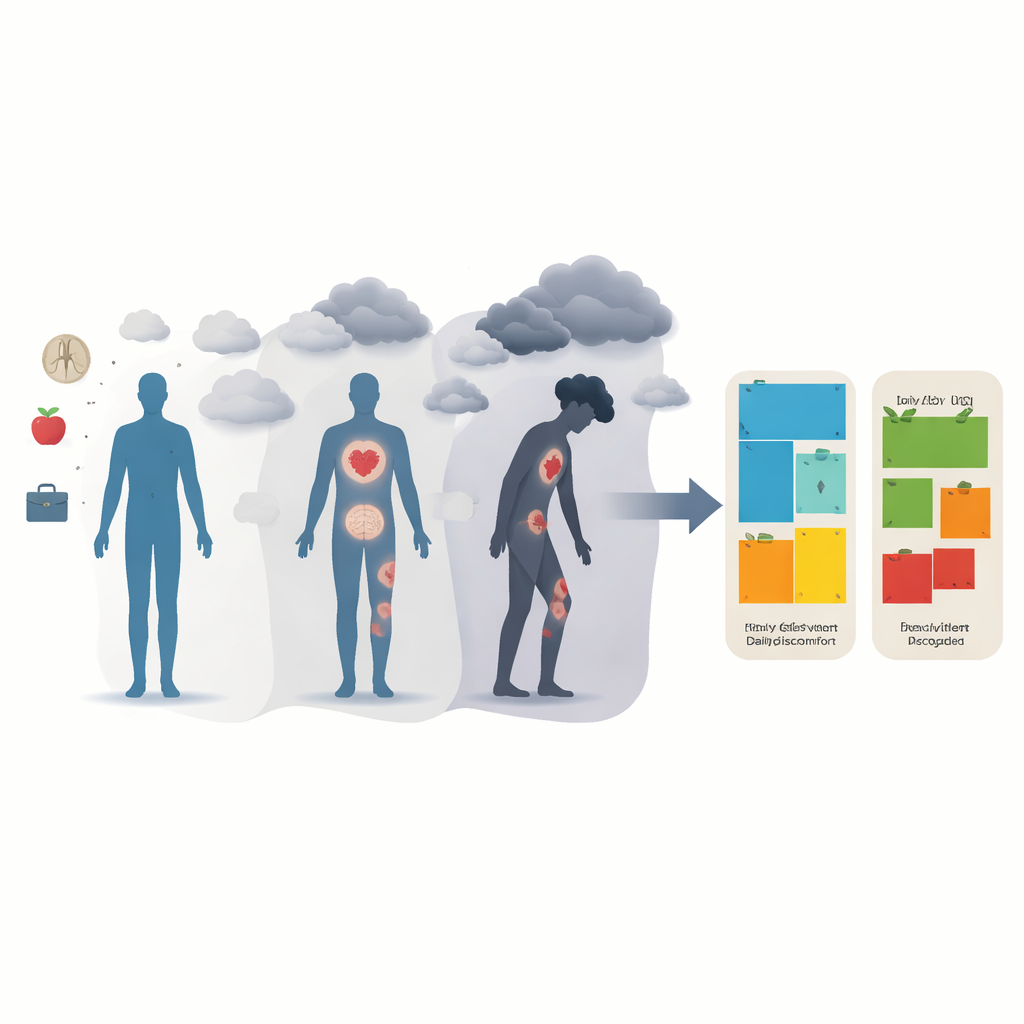
Compared with those who no longer had symptoms, people with long COVID were several times more likely to report problems in key aspects of everyday life. They more often struggled with getting around, performing usual activities such as work and household tasks, and living without pain or discomfort. Feelings of anxiety and low mood were also much more common. On the simple health rating scale, people with long COVID placed themselves notably lower, with typical scores of 80 out of 100 compared with 95 among those who felt recovered. A second set of questions that probed physical function, energy, social life, and emotional well-being told a similar story: across all eight measured domains, people with long COVID scored lower, meaning their lives were more constrained and less comfortable.
Effects across different health backgrounds
One concern is that lingering problems after COVID-19 might simply reflect pre-existing illnesses such as heart disease, lung conditions, or depression. To address this, the researchers looked separately at people with and without such medical histories. They found that the connection between long COVID and reduced quality of life appeared in almost every subgroup. In fact, the relative impact of long COVID on problems like pain and activity limitations was often as great or greater in people who started out without known health issues. This suggests that long COVID can be a meaningful new burden even for those who were previously healthy, not just an extension of older medical problems.
What this means going forward
For a layperson, the key message is that long COVID is not just a matter of lingering sniffles or a bit of tiredness. For a noticeable minority of people who initially had mild to moderate infection, symptoms nine months later translate into real limits on movement, work, social life, and emotional balance. These findings, drawn from a carefully followed trial population, underscore that long COVID can reduce quality of life across physical, mental, and social dimensions. The study highlights the importance of preventing COVID-19 in the first place, as well as the need for treatments and rehabilitation programs that are judged not only by lab results or symptom counts, but by how well they help people walk, think, feel, and live more fully again.
Citation: Gandhi, M.M., Moser, C., Currier, J.S. et al. Association of long COVID with health-related quality-of-life outcomes. Sci Rep 16, 14229 (2026). https://doi.org/10.1038/s41598-026-36189-8
Keywords: long COVID, quality of life, post-acute COVID, COVID-19 recovery, patient-reported outcomes