Clear Sky Science · en
Characterization and preliminary cytotoxic effects of pomegranate peel extract-loaded nanoparticles on HepG2 cells
From Kitchen Waste to Cancer Research
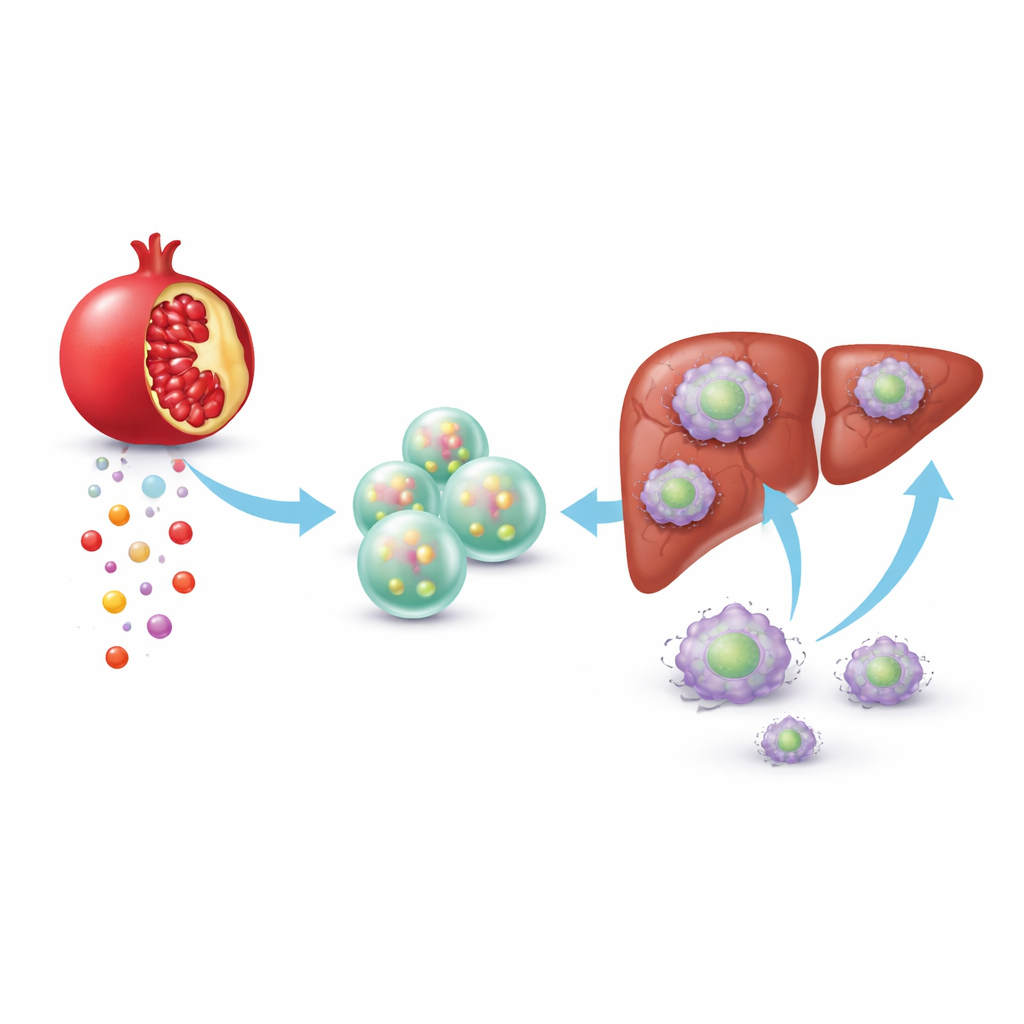
Most of us throw away pomegranate peels without a second thought, yet they are packed with natural chemicals that may help fight disease. This study explores a way to turn that everyday waste into a potential ally against liver cancer by packaging peel extracts into tiny carriers called nanoparticles. The work is still at an early, lab-dish stage, but it shows how pairing plant ingredients with smart delivery systems could open new paths for gentler, more effective treatments.
Why Pomegranate Peel Matters
Pomegranate peel is far more than a protective shell. It contains a rich mix of plant compounds with antioxidant, anti-inflammatory, and anticancer activity. Earlier research showed that these substances can slow the growth of cancer cells, but there is a catch: in their usual form they do not dissolve well, break down quickly, and have trouble reaching their targets in the body. As a result, very high doses are often needed to see an effect, which limits their usefulness as medicines. The challenge is to protect these fragile molecules and deliver them where they are needed, rather than simply flooding the system with crude extract.
Tiny Carriers Built from a Natural Polymer
To tackle this problem, the researchers created a water-based extract of pomegranate peel and then trapped it inside nanoparticles made from chitosan, a biodegradable material derived from natural sources such as shellfish. They used a gentle “ionic gelation” process that avoids harsh chemicals, letting chitosan chains cross-link into smooth, spherical particles while enclosing the extract. Instruments that measure particle size in liquid showed that the resulting spheres formed a stable suspension in the nanometer range, with a positive surface charge that helps them stay apart rather than clumping. Electron microscope images confirmed that the particles were uniform, mostly round, and well dispersed, suggesting they are well suited to travel through watery environments like blood or cell culture medium.
Checking What Was Trapped Inside
Several techniques were used to confirm that the peel extract really sat inside the chitosan shells and retained its important features. Infrared measurements, which probe how molecules vibrate, revealed the chemical fingerprints of both chitosan and the plant extract without signs of damaging reactions between them—evidence that the extract was physically enclosed rather than chemically altered. Gas chromatography–mass spectrometry, a method that separates and identifies smaller, more volatile components, showed that the biggest contributors in both the raw extract and the loaded nanoparticles were related fatty acids and their esters, including forms of oleic acid and conjugated linoleic acid. Some minor compounds no longer appeared once the extract was encapsulated, likely because they were protected inside the particles and no longer free to evaporate or survive the intense conditions of the analytical instrument.
Putting the Nanoparticles to the Test
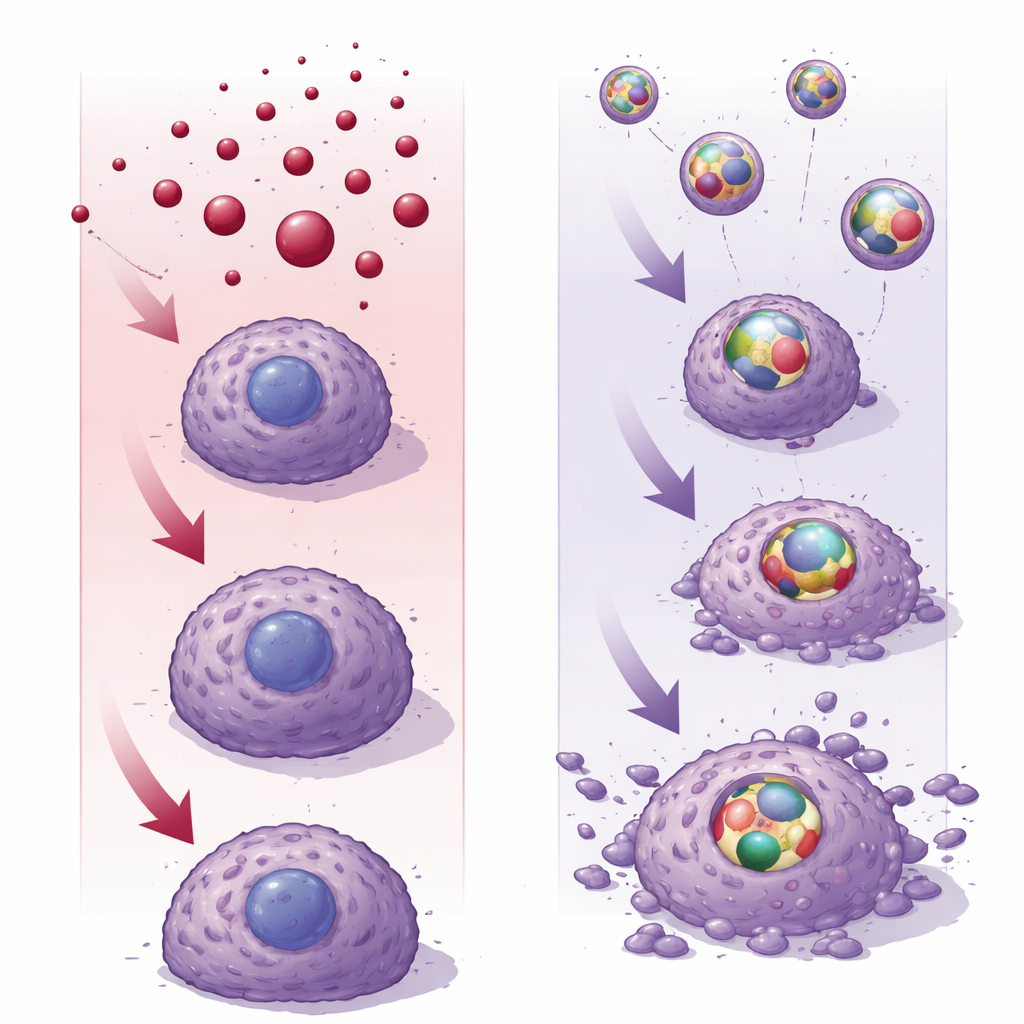
The crucial question was whether these loaded nanoparticles would affect cancer cells more strongly than the peel extract on its own. The team exposed a human liver cancer cell line (HepG2) growing in culture dishes to increasing doses of raw extract, extract-loaded nanoparticles, and empty nanoparticles as a control. Cell health was measured with a standard color-change test and by directly examining cells under the microscope. The plain peel extract showed only modest harm to the cancer cells and only at very high concentrations. In contrast, the extract-loaded nanoparticles caused a sharp, dose-dependent drop in cell survival across a wide range of lower doses, while empty nanoparticles had little impact. Under the microscope, cells treated with the nanoformulation lost their normal shape, detached from the dish, and showed hallmarks of cell death even at moderate doses.
What the Findings Really Mean
When the researchers calculated how much material was needed to kill half the cancer cells, the numbers highlighted the power of the delivery system: the nanoparticles made the peel extract appear about 75 times more potent than the same extract alone. In simple terms, packaging the natural compounds into tiny chitosan spheres helped more of them reach and damage the cancer cells, so far less material was required to see an effect. This does not mean that drinking pomegranate peel tea will cure liver cancer, nor that this specific nanoformulation is ready for patients. The work was done only in cell cultures, and key questions remain about how the particles behave in the body, how exactly they trigger cell death, and whether they spare healthy liver cells. Still, the study offers a striking proof of concept: combining everyday plant waste with smart nanoscale packaging can dramatically boost its biological punch, pointing toward more sustainable and potentially safer cancer treatment strategies in the future.
Citation: Mahmoud, R.A., Hassanine, H., Ashry, A. et al. Characterization and preliminary cytotoxic effects of pomegranate peel extract-loaded nanoparticles on HepG2 cells. Sci Rep 16, 9224 (2026). https://doi.org/10.1038/s41598-026-36063-7
Keywords: pomegranate peel, nanoparticles, liver cancer, natural products, drug delivery