Clear Sky Science · en
Integration of intragraft transcriptomics and urinary cytokines identifies CXCL10 and FasL signature in subclinical acute rejection
Silent trouble in a new kidney
After a kidney transplant, doctors closely track blood tests to see whether the new organ is working. Yet dangerous rejection can smolder inside the kidney even when these tests look normal. This hidden problem, called subclinical acute rejection, can quietly scar the organ and shorten its life. The study described here asks a simple but crucial question: can a routine urine sample warn us about this silent damage, so that only patients who truly need it undergo an invasive biopsy?
Why hidden rejection matters
Subclinical acute rejection occurs when the immune system attacks the transplanted kidney, but standard blood markers like creatinine remain stable and the patient feels well. Microscopic examination of biopsy tissue reveals early injury that, if untreated, can lead to scarring, loss of filtering units, and eventually graft failure. Current guidelines rely on scheduled biopsies to find this problem, but biopsies require hospital resources, carry some risk, and cannot be repeated too often. A simple urine test that flags patients at risk could make follow-up safer, cheaper, and more targeted.
Looking inside the kidney’s genetic activity
The researchers enrolled kidney transplant recipients from several Italian centers and performed protocol biopsies a few months after surgery. Among 89 fully evaluated patients, about one in six had subclinical rejection. From these biopsies they selected 12 patients with hidden rejection and 12 matched patients with normal tissue. Using high-throughput gene expression profiling on preserved biopsy samples, they measured the activity of thousands of genes at once. This analysis uncovered a distinct molecular signature in kidneys with silent rejection, including heightened activity of four immune-related genes—NFKBIZ, TNFSF14, SLAMF8, and CD247. Follow-up tests confirmed that both the RNA and protein products of these genes were increased in the rejecting grafts, underscoring that subclinical rejection is an active inflammatory process even when standard lab values appear reassuring.
From tissue signals to urine clues
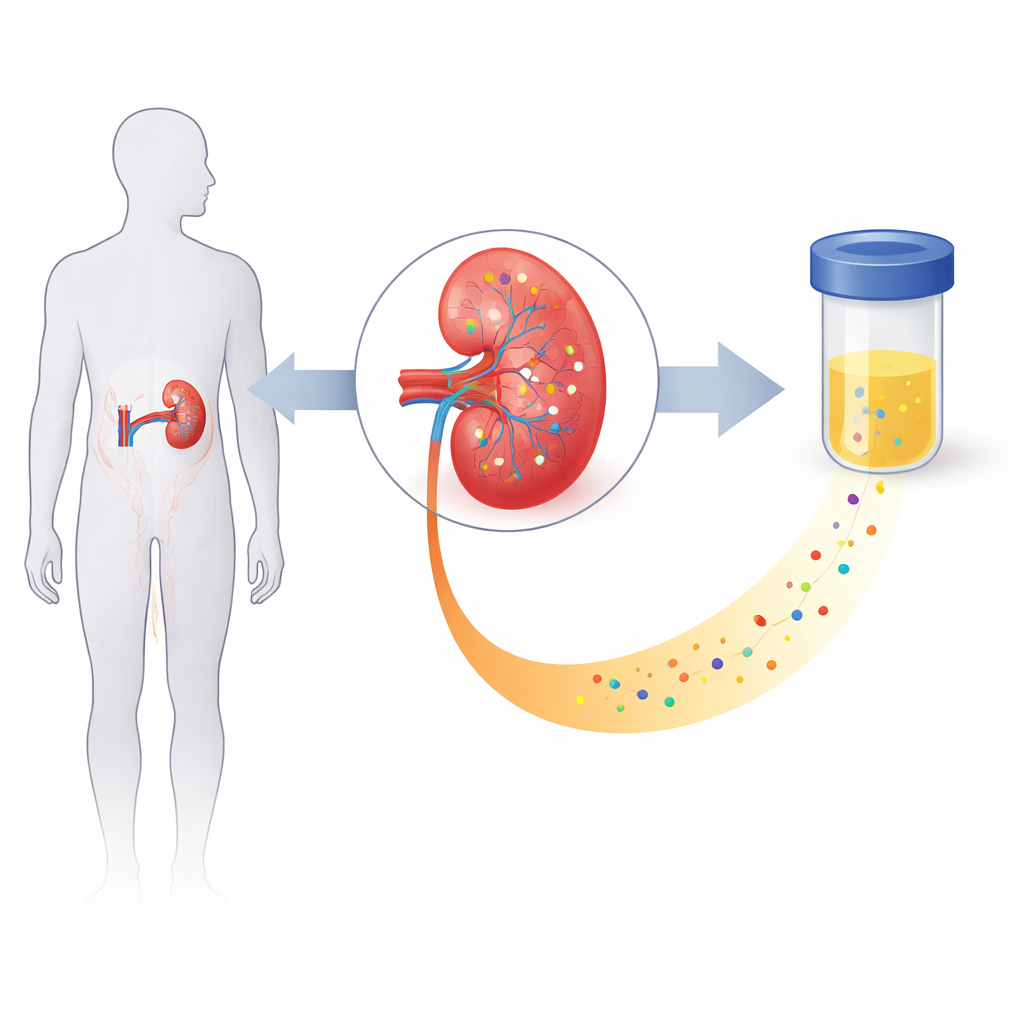
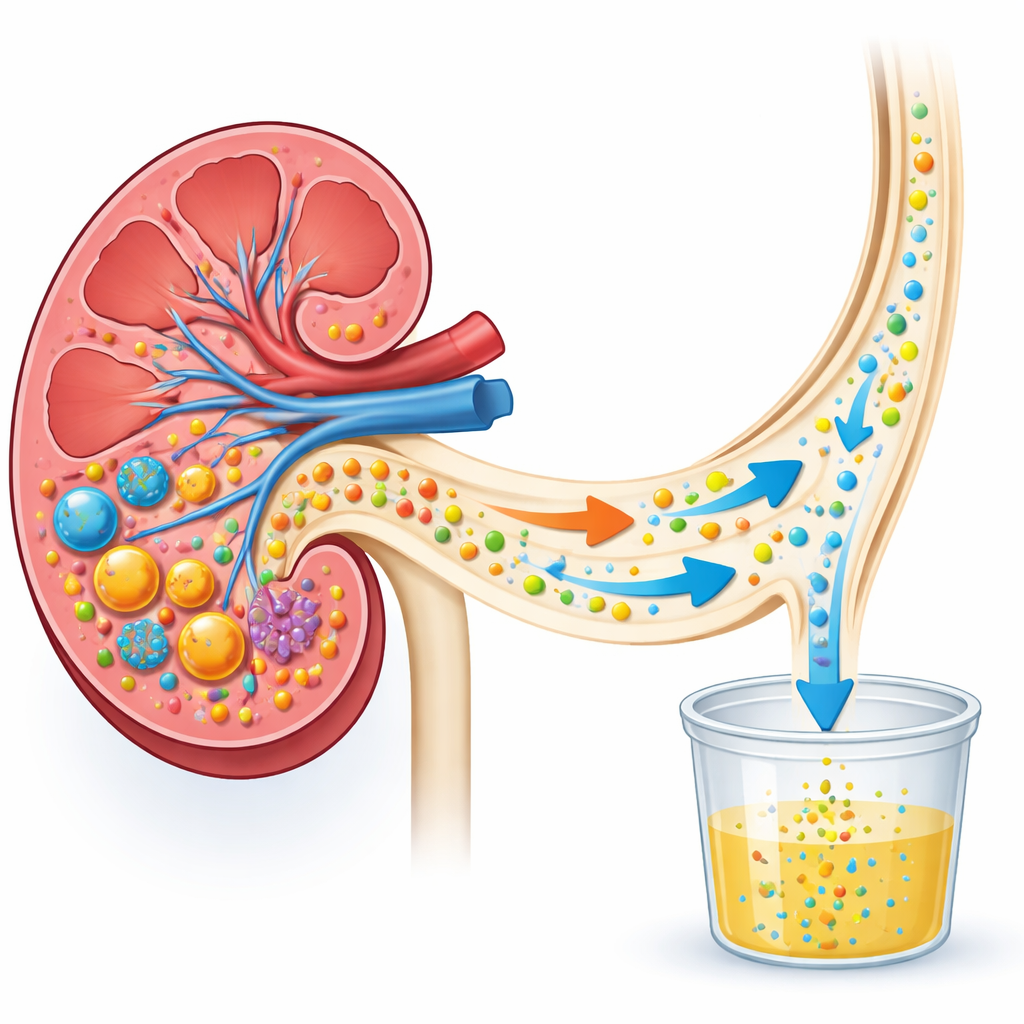
Because routinely sampling kidney tissue is impractical, the team next asked whether molecules linked to this inflammatory signature could be detected in urine. Initial attempts to measure the four key proteins directly in urine failed, likely because they are not abundantly secreted into the urinary space. The investigators therefore broadened their search to other genes that were more modestly, but reliably, increased in rejecting kidneys and that encode secreted immune messengers. Using pathway analysis and public protein maps, they homed in on two cytokines, CXCL10 and Fas ligand (FasL), which are known to be released during immune attacks and to play roles in transplant rejection.
Testing urine as an early warning system
The scientists first confirmed that CXCL10 and FasL gene activity was higher in kidney tissue from patients with subclinical rejection. They then measured the actual proteins in urine samples from 12 patients with hidden rejection and 12 controls, finding clearly higher levels in the rejection group. To see whether these findings held up, they turned to an independent set of 86 transplant recipients from two additional centers that routinely perform protocol biopsies. After carefully excluding patients with confounding conditions such as urinary tract infections or certain viral reactivations, 38 patients remained, 17 of whom had biopsy-proven subclinical rejection. In this real-world validation group, urinary CXCL10 and FasL were again significantly elevated in patients with silent rejection compared to those with healthy-looking grafts.
How well do these urine markers work?
To evaluate the clinical usefulness of these measurements, the researchers used receiver operating characteristic analysis, which weighs how often a test correctly identifies disease versus how often it gives false alarms. CXCL10 alone proved very specific but missed many cases, while FasL was more sensitive but slightly less specific. Combining the two into a simple composite score produced a balanced performance: it correctly flagged about half of the subclinical rejection cases while rarely being elevated in patients without rejection. This pattern suggests that together CXCL10 and FasL could serve as a practical screening tool to decide who should be considered for a confirmatory biopsy, especially when other causes of urinary inflammation have been ruled out.
A step toward gentler graft monitoring
This study offers a proof of concept that the same immune activity detected deep within kidney tissue can be traced non-invasively in the urine. By linking intragraft gene expression with urinary CXCL10 and FasL levels, the work supports the idea that a simple urine test might help clinicians spot silent rejection earlier, focus biopsies on patients most at risk, and track how well treatment is working over time. While larger and more diverse studies are needed before such testing becomes routine, the findings bring the field closer to a future in which monitoring a transplanted kidney may depend less on needles and more on a quick trip to the bathroom.
Citation: Cox, S.N., Chiurlia, S., Pasculli, E. et al. Integration of intragraft transcriptomics and urinary cytokines identifies CXCL10 and FasL signature in subclinical acute rejection. Sci Rep 16, 9891 (2026). https://doi.org/10.1038/s41598-026-35923-6
Keywords: kidney transplantation, subclinical rejection, urine biomarkers, CXCL10, Fas ligand