Clear Sky Science · en
Association of ABCG2 gene variants with urate levels in Mexican patients with type 2 diabetes and chronic kidney disease
Why this matters for everyday health
Uric acid, a natural waste product in our blood, can quietly rise to harmful levels and trigger gout, kidney problems, and heart disease. People with type 2 diabetes are especially vulnerable, and many also develop chronic kidney disease. This study asks a practical question with big consequences: in Mexican adults with type 2 diabetes, do inherited differences in a uric‑acid transporter gene meaningfully affect uric acid levels, or is kidney damage itself the main driver?
Who was studied and what was measured
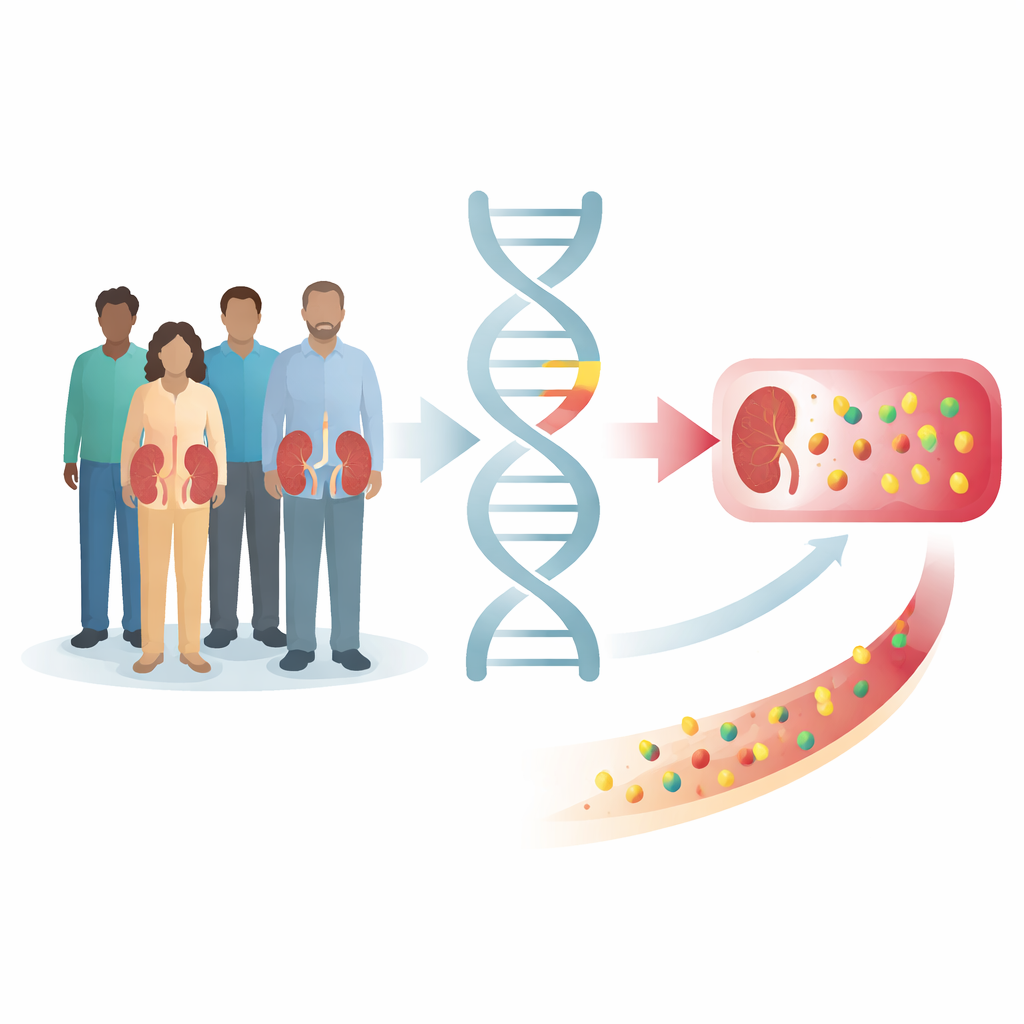
The researchers examined 1,085 Mexican adults with type 2 diabetes and compared them with 284 healthy people from the same region. All participants gave blood samples and had measurements of uric acid, blood sugar, blood fats, kidney function, blood pressure, and body weight. The team also analyzed three versions of a gene called ABCG2, which helps pump uric acid out of the body through the kidneys and the gut. One of these gene variants, known as Q141K, is already linked to gout in other populations, but its role in Mexicans with diabetes had not been clearly defined.
Kidney damage stands out as the main problem
People with type 2 diabetes in this study had higher uric acid levels and a much greater frequency of hyperuricemia (medically high uric acid) than healthy volunteers. Among those with diabetes, individuals who also had chronic kidney disease had the highest uric acid levels and were more than twice as likely to have hyperuricemia as those without kidney damage. When the researchers used statistical models that considered age, weight, blood pressure, cholesterol, and blood sugar control, chronic kidney disease remained the strongest factor associated with high uric acid. Elevated triglycerides and high blood pressure also tracked closely with hyperuricemia, reinforcing the tight link between uric acid and broader metabolic health.
What the gene test really reveals
The ABCG2 Q141K variant did influence how much uric acid people carried in their blood. Both patients with diabetes and healthy subjects who carried the variant tended to have higher uric acid levels than those without it. However, this effect was modest, and the variant did not reliably predict who would cross the clinical threshold into hyperuricemia once other factors were taken into account. Two additional ABCG2 variants tested showed no meaningful impact on uric acid levels or on the risk of hyperuricemia. The team also looked for a combined effect between the ABCG2 variant and another gene, SLC2A9, which helps control uric acid handling in the kidney. In this group of patients, no clear interaction emerged.
Complex ties between sugar, fats, and uric acid
The study highlights that uric acid is woven into a larger web of metabolic changes rather than acting in isolation. Features of metabolic syndrome, including high blood pressure, excess body weight, and especially raised triglycerides, were all linked to higher uric acid in these patients. Interestingly, people with poorly controlled blood sugar were somewhat less likely to have hyperuricemia, possibly because sugar in the urine can carry more uric acid out with it or because certain diabetes medications promote uric acid excretion. These patterns suggest that day‑to‑day factors such as diet, medications, and overall metabolic control may sometimes outweigh the influence of single genetic variants.
What this means for patients and clinicians
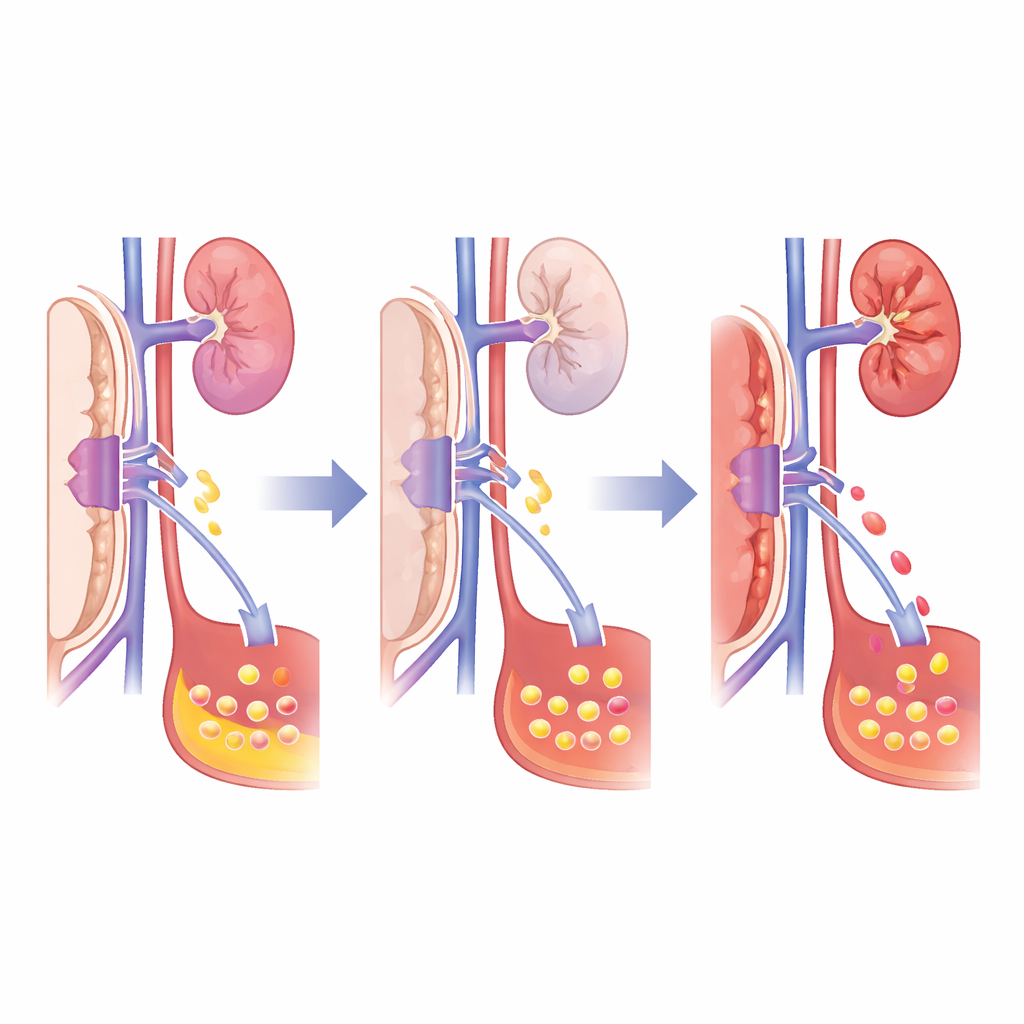
For Mexican adults living with type 2 diabetes, this work suggests that protecting the kidneys and managing blood pressure and blood fats are more important for controlling uric acid than focusing on ABCG2 genetic testing alone. While one ABCG2 variant does nudge uric acid levels upward, it is not by itself a strong predictor of who will develop clinically high levels. In practical terms, regular monitoring of kidney function and uric acid, along with attention to weight, triglycerides, and blood pressure, remains central to lowering the risk of gout and kidney‑related complications. Genetic information may still add nuance in the future, but for now, the biggest leverage comes from preserving kidney health and improving overall metabolic balance.
Citation: Mendoza-Carrera, F., Vázquez-Rivera, G.E., Gómez-García, E.F. et al. Association of ABCG2 gene variants with urate levels in Mexican patients with type 2 diabetes and chronic kidney disease. Sci Rep 16, 9753 (2026). https://doi.org/10.1038/s41598-026-35853-3
Keywords: uric acid, type 2 diabetes, chronic kidney disease, genetic variants, Mexican population