Clear Sky Science · en
Wetland water quality status and suitability for human intended uses in Angolelana Tara District, North Shewa Zone, Central Ethiopia
Why Wetland Water Matters for People
In many parts of the world, wetlands are the neighborhood tap, fish pond, and pasture all rolled into one. In the Angolelana Tara District of central Ethiopia, two such wetlands supply water for crops, livestock, washing, and small-scale fishing to thousands of nearby residents. This study asks a simple but vital question: is that water clean and safe enough for how people are using it today, and what do tiny aquatic creatures tell us about its hidden health?
Two Wetlands, Two Different Surroundings
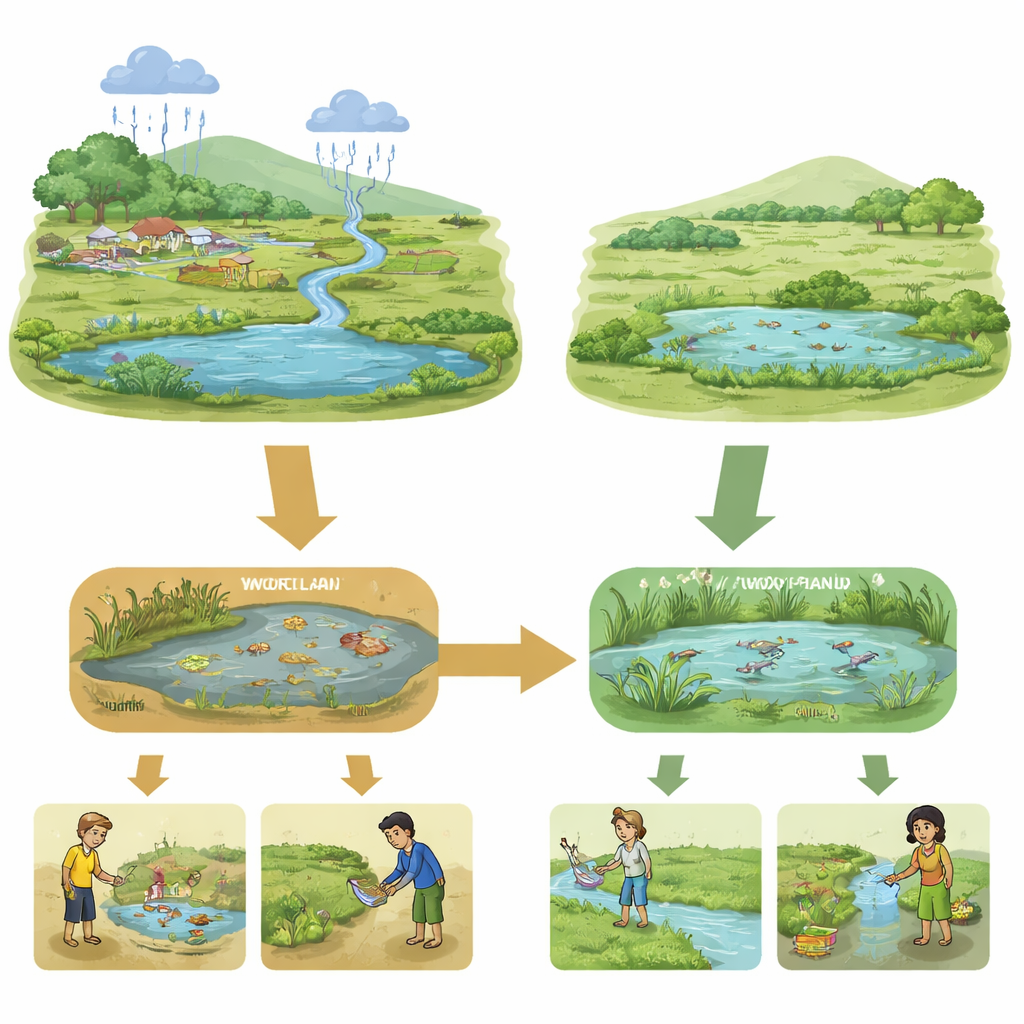
The researchers focused on Burana Natural Wetland, a large wetland that stretches from rural farmland into an expanding town, and Totosie Semi-Artificial Wetland, a smaller wetland surrounded mostly by rocky grazing land. Both areas depend heavily on these waters for irrigation and everyday chores, but Burana experiences more intense pressures: farmland encroaches on its edges, animals graze in and around it, and urban waste from nearby Chacha town can reach its waters. In contrast, Totosie is somewhat more isolated from direct human disturbance, providing a useful comparison between a heavily used wetland and a less disturbed one.
Measuring the Invisible Ingredients in Water
To understand water quality, the team went beyond how the water looks or smells. Over two years they sampled water in wet and dry seasons, taking measurements directly in the field for temperature, acidity, dissolved oxygen, and salt content, and analyzing laboratory samples for nutrients and other dissolved substances. They compared these values with national and international guidelines for irrigation, fish production, and domestic use. In general, both wetlands had water temperatures, salt levels, and oxygen conditions that fall within acceptable ranges for crops and aquatic life. However, Burana showed higher temperatures, more dissolved salts, and greater loads of suspended particles and nutrients such as nitrogen and phosphorus, all signs of heavier pollution from runoff, animal waste, and urban inputs.
Tiny Creatures as Living Water Reporters
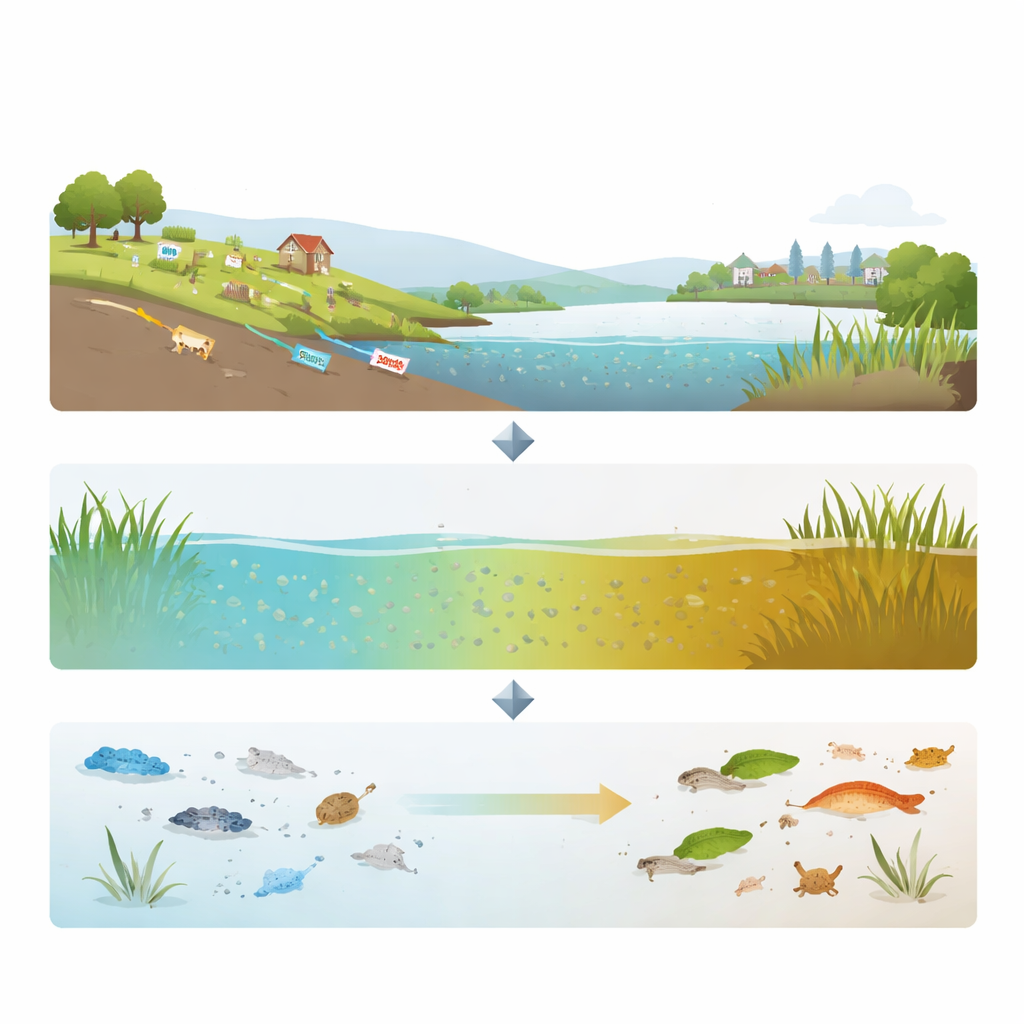
Chemical tests provide snapshots of water quality, but the organisms living in the water experience conditions day in and day out. The researchers collected aquatic macroinvertebrates—small animals like insect larvae and crustaceans—and identified them by family. Each family has a known tolerance to pollution, so their mix can be translated into a numerical score called the Hilsenhoff Family Biotic Index. Lower scores mean cleaner conditions; higher scores indicate heavier organic pollution. Totosie’s score placed it in the “fair to good” category, suggesting modest pollution. Burana’s much higher score pointed to poor to very poor quality, confirming that its aquatic community is dominated by pollution-tolerant species that can survive where more sensitive species have disappeared.
Is the Water Still Usable for People?
Despite these warning signs, most of the measured chemical ingredients in both wetlands were still below the limits set for irrigation water and for uses such as livestock watering, washing, and cleaning. Salts that can damage soils, such as sodium and chloride, were low enough that farmers can safely continue irrigating crops, at least under current conditions. Nutrients like nitrate and phosphate, which can fuel troublesome algal growth, were higher than ideal for natural freshwater ecosystems but did not yet exceed thresholds that would immediately prevent agricultural or everyday use. The authors caution, however, that the wetlands’ suitability for drinking water remains uncertain, because they did not test for heavy metals or microbes that cause disease, which are critical for judging if water can be consumed safely.
What This Means for People and Wetlands
The study shows that even as wetlands like Burana and Totosie continue to support irrigation, fish, and household water needs, their ecological health is already under strain—especially where farming, grazing, and urban growth press hardest on the water’s edge. By combining chemical measurements with the evidence carried in the bodies of small aquatic animals, the researchers demonstrate a practical way to keep watch on wetland condition. Their conclusion for local communities and decision makers is clear: both wetlands remain valuable and usable, but Burana in particular needs urgent restoration and better management if it is to keep providing clean water and livelihoods for the long term.
Citation: Moges, A., Eyayu, A. Wetland water quality status and suitability for human intended uses in Angolelana Tara District, North Shewa Zone, Central Ethiopia. Sci Rep 16, 11063 (2026). https://doi.org/10.1038/s41598-026-35485-7
Keywords: wetland water quality, irrigation water, aquatic macroinvertebrates, Ethiopia wetlands, water pollution