Clear Sky Science · en
Advancing cardiovascular disease diagnosis with an interpretable and responsible AI framework
Why smarter heart checks matter
Heart disease is still one of the top causes of death around the world, often striking without warning. Many people only learn there is a problem after a frightening trip to the emergency room. This study explores how a new kind of artificial intelligence can spot warning signs earlier and support fairer, more trustworthy decisions for doctors and patients, using both simple questionnaire-style information and routine medical tests.
From late discovery to early warning
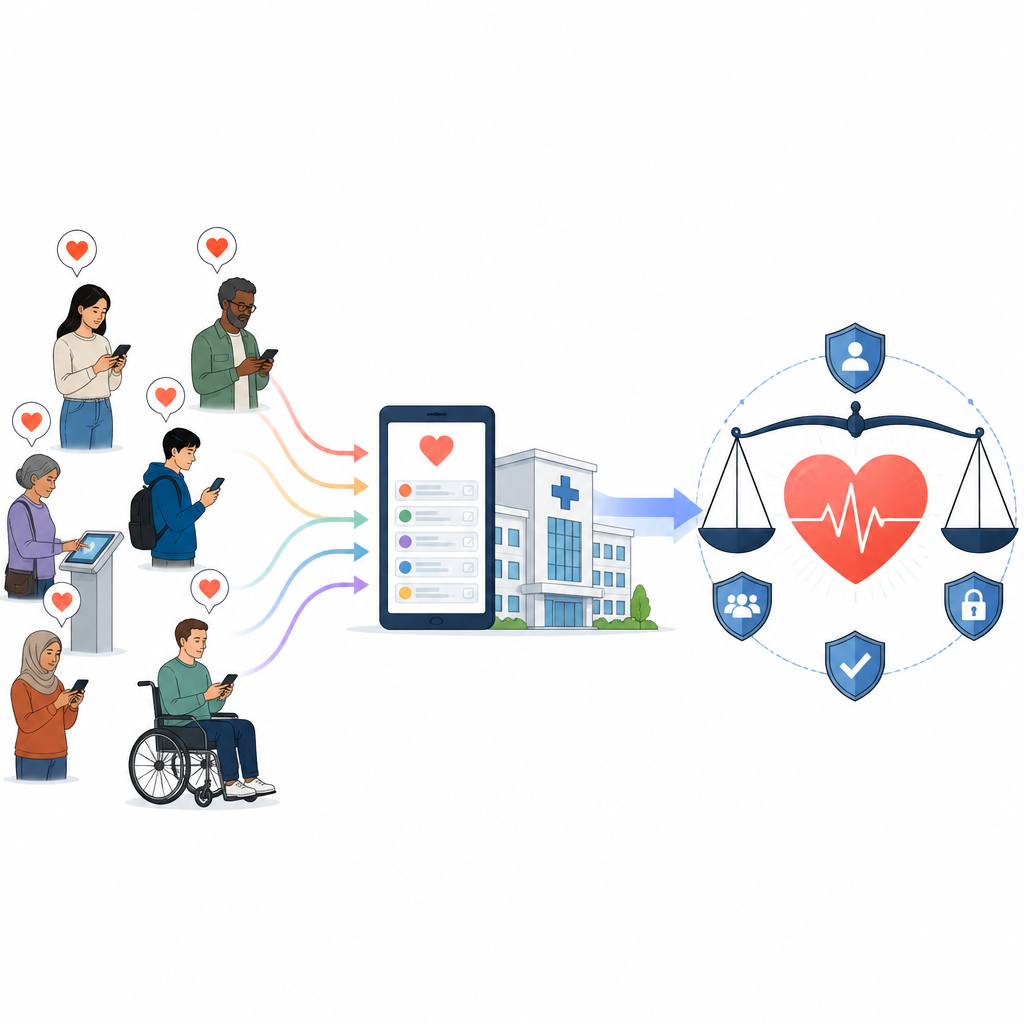
Traditional heart checks depend on clinic visits, machines, and specialists. Tests such as electrocardiograms, exercise stress tests, and blood work are powerful, but they are usually ordered after symptoms appear. The authors show that common details people can report themselves, such as chest discomfort, exercise habits, and basic health history, already contain a lot of hidden information about future heart trouble. By training computer models on large heart data collections from several hospitals and countries, they build an early warning system that can run in a phone app or a community kiosk, reaching people long before they see a cardiologist.
Two paths for checking the heart
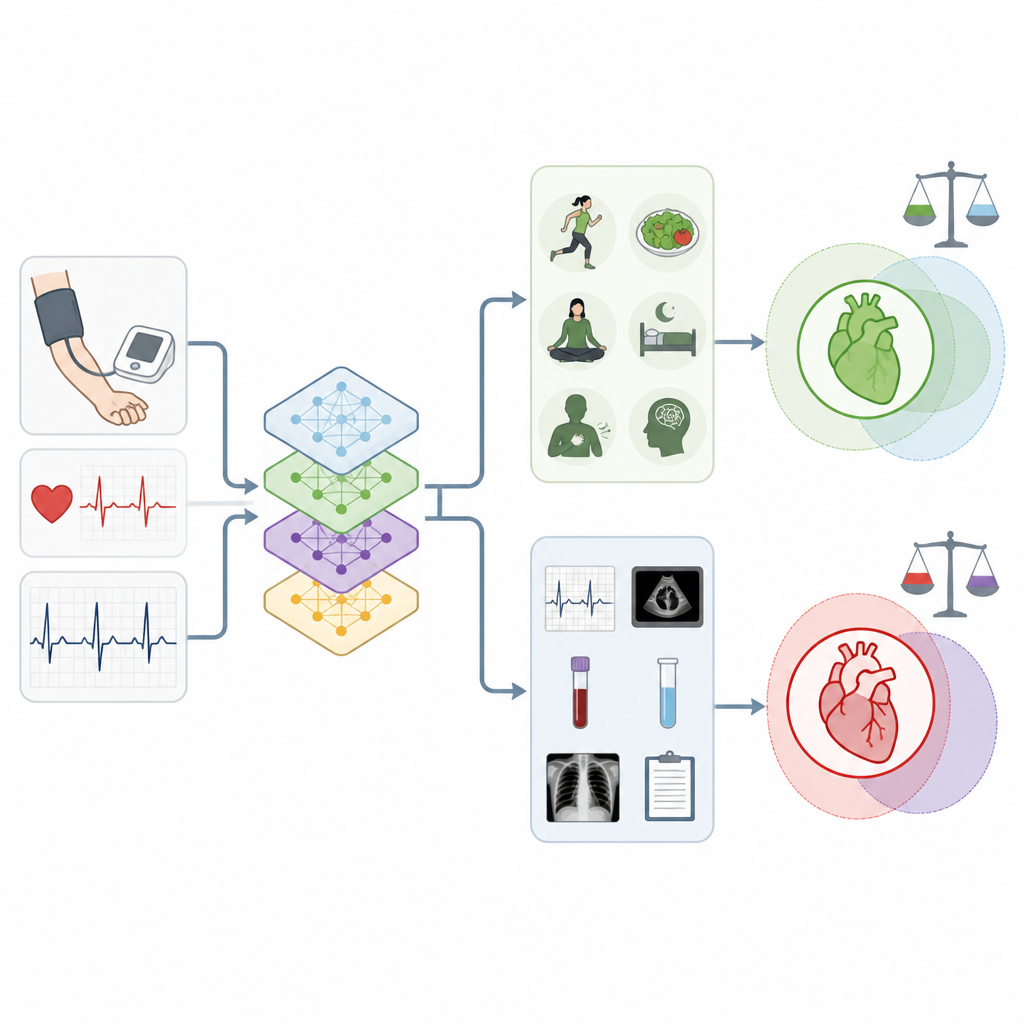
The researchers design a twin-track system. One track uses only non-clinical features, the kind a person can answer without lab tests, to estimate who might be at high risk and should seek care. The second track uses a small set of test-based features, such as patterns in the electrocardiogram and levels of blood fats and sugars, to support more precise diagnosis in clinics. They carefully combine several types of machine learning models, including popular tree-based methods and newer neural networks designed for table-like medical records, and test them across data gathered from different regions to be sure the system works beyond a single hospital.
Making the black box less mysterious
Pure accuracy is not enough when lives are at stake, so the team focuses on making the system understandable. They use explanation tools that show which inputs are driving each prediction, and how strongly. These analyses reveal that fine details in the heart’s electrical signal, such as the slope and depth of certain segments on the electrocardiogram, are among the strongest clues of disease, even more than age or cholesterol in this dataset. They also generate “what if” scenarios that suggest the smallest changes that could flip a prediction from sick to healthy, such as easing exercise-related chest pain or improving exercise heart rate, turning the model into a guide for possible lifestyle improvements rather than a silent judge.
Designing for fairness and confidence
Because medical tools can reinforce existing inequalities, the authors check how often the system flags disease in different groups. Early versions were more likely to predict heart problems in men than women, reflecting patterns in the data. To address this, they rebalance the training records and use advanced methods to create realistic synthetic cases, improving fairness across sex and across hidden regional clusters in the data. They also build a special kind of neural network that outputs not just a yes-or-no answer, but a measure of how confident it is, helping doctors know when to trust the model and when to look more closely.
What this means for everyday care
In the end, the framework reaches about nine correct answers out of ten while highlighting why it made each call, how uncertain it is, and whether its behavior is fair across groups. For laypeople, that means a future where a simple questionnaire or phone-based checkup can give an early nudge to see a doctor, while clinics gain AI support that is more transparent and better aligned with health regulations. Rather than replacing physicians, this responsible use of AI aims to catch heart disease sooner, guide healthier choices, and share the benefits of advanced diagnostics more evenly.
Citation: Hasan, K.S., Dhrubo, I.S. Advancing cardiovascular disease diagnosis with an interpretable and responsible AI framework. Sci Rep 16, 15452 (2026). https://doi.org/10.1038/s41598-026-35451-3
Keywords: cardiovascular disease, heart risk prediction, medical AI, explainable AI, healthcare fairness