Clear Sky Science · en
Design, green synthesis, and bioevaluation of 1,3-thiazole-sulfonamide hybrids as antimicrobial and anti-inflammatory agent
Why New Medicines Need a Greener Path
Antibiotic resistance and chronic inflammation are two of the biggest health challenges of our time. Many drugs that once worked well are losing their power as microbes evolve, while long-term use of pain and anti-inflammatory medicines can bring serious side effects. At the same time, the way we make medicines often depends on harsh chemicals and energy-hungry processes. This study explores how to create new drug candidates that can both fight infections and calm inflammation, using a cleaner, faster method of chemical synthesis.
Blending Two Powerful Building Blocks
The researchers focused on combining two well-known pieces of drug molecules: thiazoles and sulfonamides. Each on its own has a long history in medicine. Thiazoles appear in treatments ranging from antibiotics to cancer drugs, while sulfonamides were among the first synthetic antibiotics and are still used for infections and other conditions. By fusing these two fragments into a single hybrid structure, the team hoped to create “two-in-one” molecules that could attack bacteria and reduce inflammation at the same time, potentially lowering the need for multiple medications.
Cooking Up Molecules with Microwaves
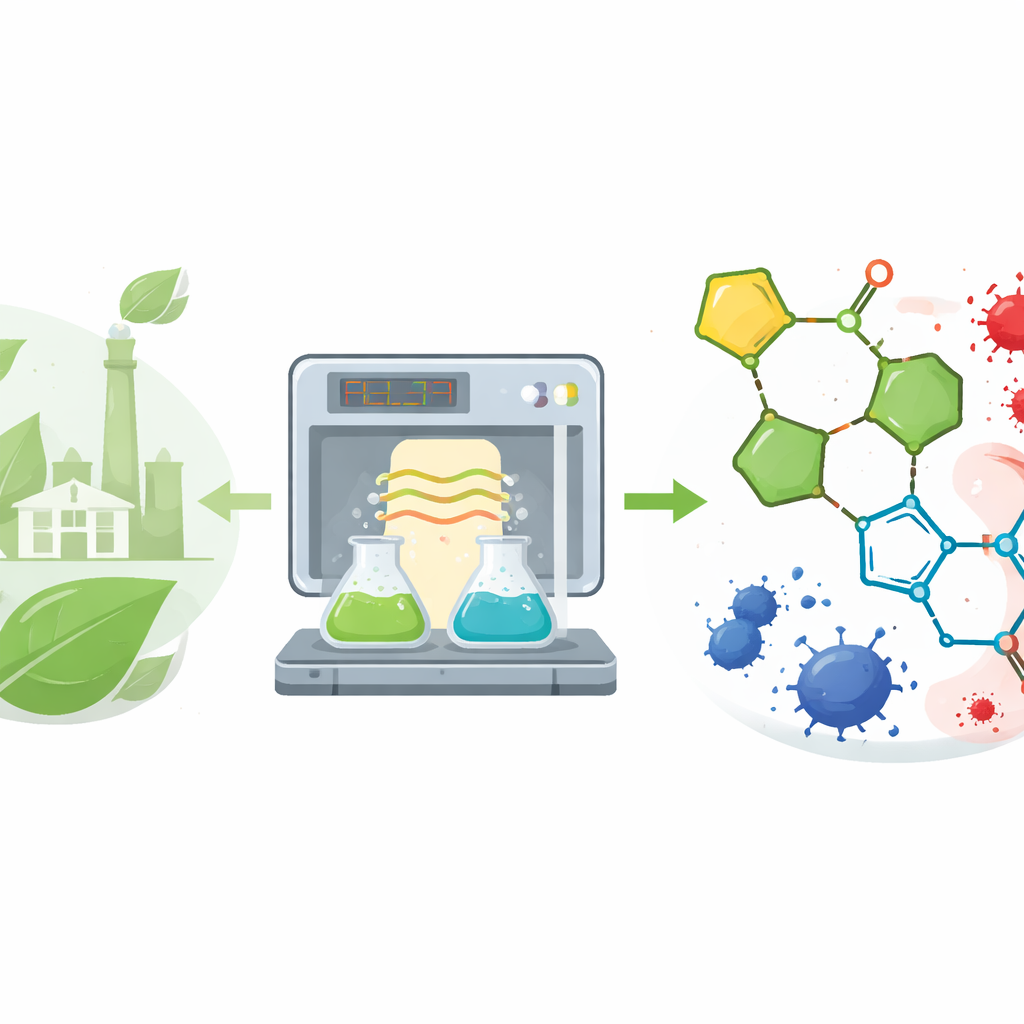
Instead of relying on long, solvent-heavy reactions heated on traditional hot plates, the scientists turned to microwave irradiation—a technique that rapidly heats chemical mixtures from the inside out. Starting from a carefully designed base compound, they reacted it with a series of related ingredients to generate a family of new thiazole–sulfonamide hybrids. Under microwave conditions, the reactions finished in just 8 to 15 minutes and delivered high yields of product, up to about 90%, while using only small amounts of relatively benign solvent. This approach fits well with the goals of green chemistry: saving energy, reducing waste, and limiting exposure to toxic materials during drug development.
Putting the New Compounds to the Test
To see whether these new molecules were biologically useful, the team tested them in the lab against two common bacteria: Staphylococcus aureus, which is often involved in skin and wound infections, and Escherichia coli, a frequent cause of urinary and gut infections. Most of the hybrids showed moderate to strong antibacterial effects, forming clear “no growth” circles around test wells on agar plates. One compound, labeled 6h in the study, stood out by sharply suppressing both types of bacteria, even outperforming the reference antibiotic tetracycline under the same conditions. The scientists also examined anti-inflammatory effects using a simple model based on the tendency of proteins to misfold and clump under stress, a process linked to inflammation. Several compounds, especially 6h, 6i, and 6j, almost completely prevented this damage at higher test doses, matching or even surpassing the widely used pain reliever diclofenac sodium.
What Makes Some Molecules Work Better
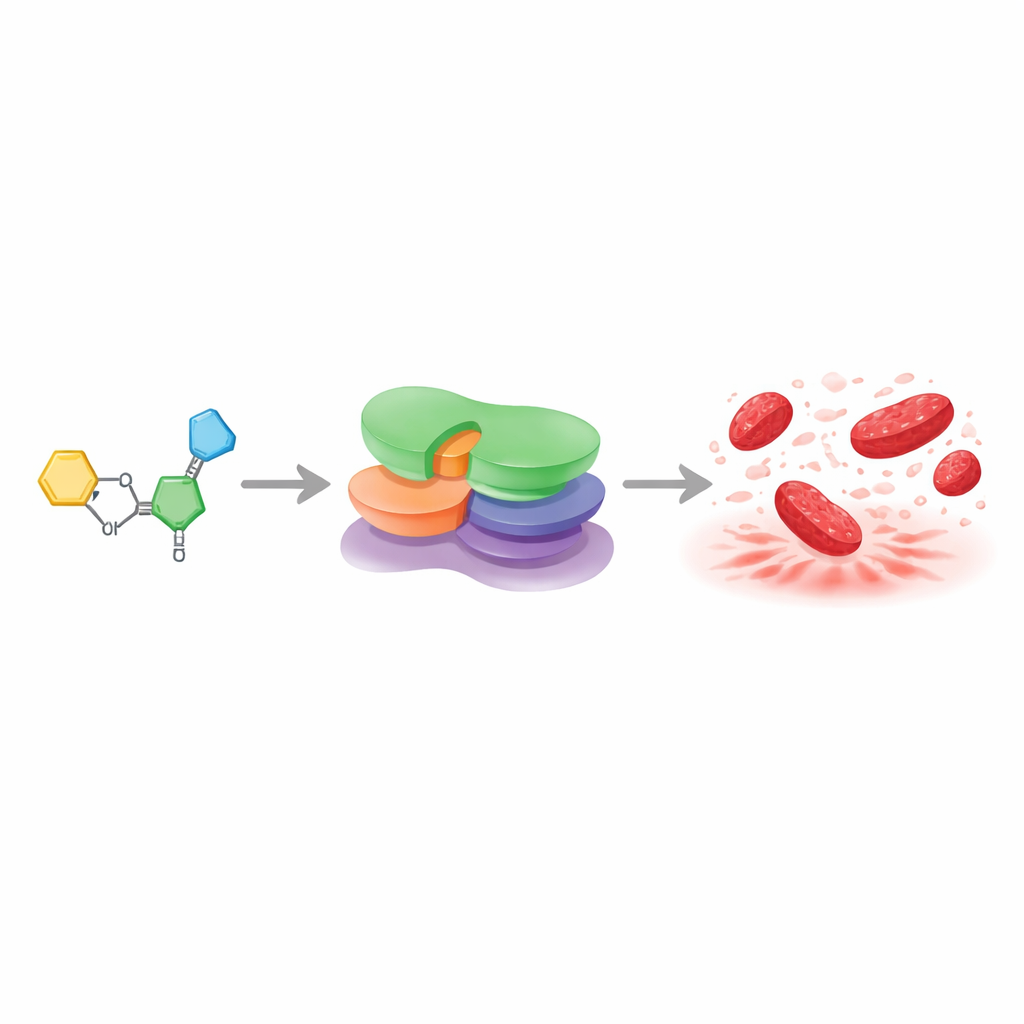
Because each member of the compound family differed slightly in its chemical decoration, the researchers could look for patterns connecting structure and activity. They found that versions of the hybrid bearing “electron-donating” groups—specifically hydroxyl and methoxy groups—on part of the molecule’s ring system were consistently more powerful as both antibiotics and anti-inflammatory agents. These features are thought to adjust how the molecule shares its electrons and how easily it can form hydrogen bonds, helping it stick more tightly to bacterial targets and inflammation-related proteins. In contrast, related molecules without these helpful groups, or with “electron-withdrawing” groups, were less effective. This kind of structure–activity insight gives chemists a roadmap for designing even better candidates in future work.
From Lab Bench to Future Medicines
Overall, the study shows that it is possible to design and quickly assemble new dual-action drug candidates in an environmentally friendlier way, without sacrificing performance. Among the compounds, 6h emerged as the most promising, strongly inhibiting both bacterial growth and protein damage linked to inflammation. While these findings are still at the laboratory stage and further studies in living systems are needed, the work points toward a future where powerful new therapies can be made using cleaner processes, potentially offering better tools to treat infections and inflammatory conditions while easing the environmental footprint of drug manufacturing.
Citation: Alrayes, A.A., Alshammari, A.Q., Alshammari, A.Q. et al. Design, green synthesis, and bioevaluation of 1,3-thiazole-sulfonamide hybrids as antimicrobial and anti-inflammatory agent. Sci Rep 16, 12140 (2026). https://doi.org/10.1038/s41598-026-35429-1
Keywords: antimicrobial resistance, anti-inflammatory agents, green chemistry, microwave-assisted synthesis, thiazole sulfonamide hybrids