Clear Sky Science · en
Mask-guided microbial jet machining for functionalized textured interface fabrication
Sharper Metal Surfaces from Living Tools
From wind turbines to ship engines, many machines depend on metal parts that rub against each other. Making those contact surfaces smarter and more durable can save energy, cut maintenance costs, and reduce waste. This study introduces a new way to "machine" metal using the chemistry of living microbes, guiding them with masks and fluid jets to carve tiny patterns that dramatically lower friction—while using less energy and fewer harsh chemicals than many traditional processes.
Tiny Pits That Tame Friction
Engineers have learned that adding microscopic textures—such as small dimples—onto metal surfaces can make them slide more smoothly and last longer. These textures can trap lubricant, hold wear debris away from the main contact area, and spread out loads more evenly. However, common methods for creating such textures, like laser machining or electric discharge machining, can be expensive, energy-hungry, and may damage or pollute the surface. The new approach in this paper aims to get the same or better performance using a gentler, biology-inspired route.
Microbes as Gentle Sculptors
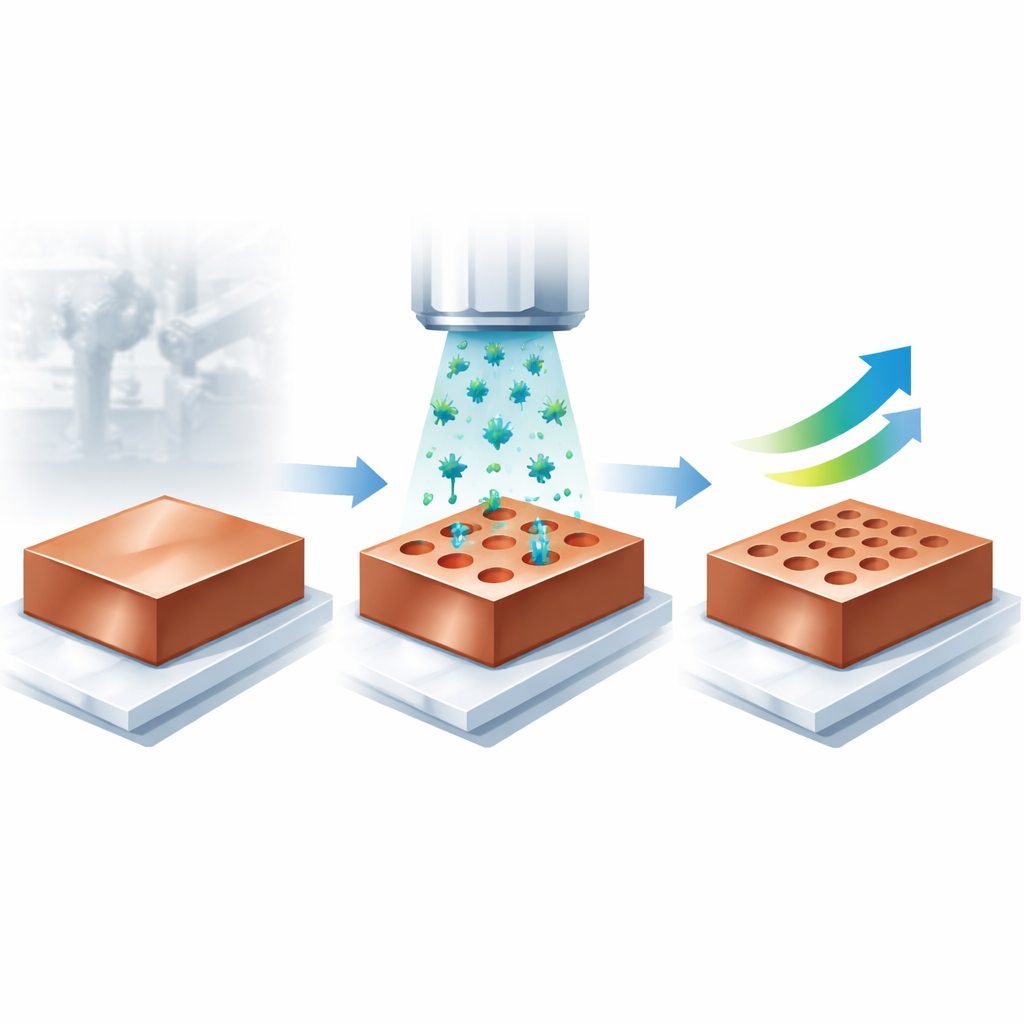
The heart of the technique, called Mask-Guided Microbial Jet Machining, is a naturally occurring bacterium that thrives in acidic, iron-rich environments. These microbes convert one form of iron into another, and in doing so they regenerate a powerful etching agent that can dissolve metals such as copper and tin from an alloy surface. The researchers first grow the microbes under carefully controlled conditions, then filter out the cells to obtain a clear liquid rich in this etching chemistry. A thin patterned mask—made of photoresist and a rubber-like layer—is placed on the metal to expose only selected spots, and a focused jet of the microbial supernatant is directed onto these openings.
From Smooth Metal to Engineered Texture
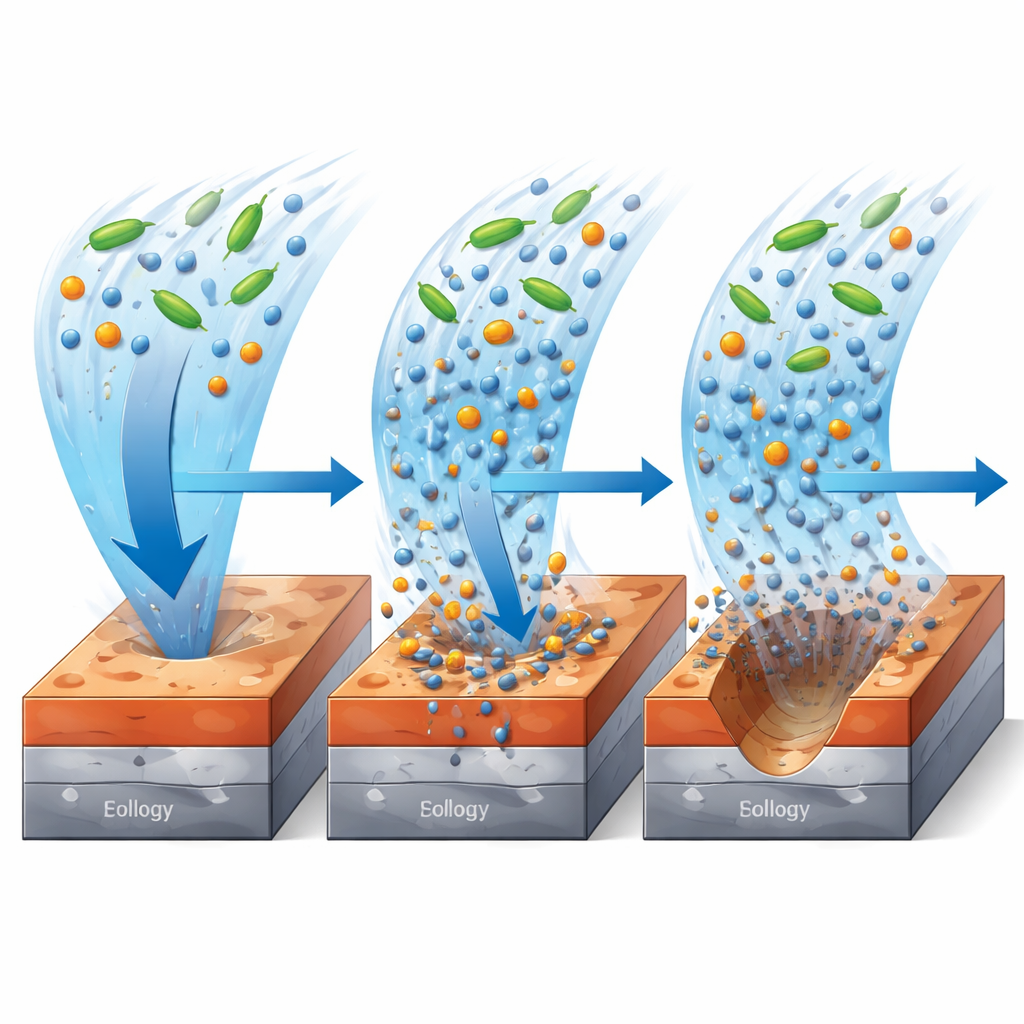
When the jet hits the exposed areas, the iron-based chemicals selectively dissolve the alloy, gradually forming small bowl-shaped dimples. Because the jet flows mainly straight down, sideways undercutting is minimized and the dimples remain close to their intended size and shape. Tests on a copper–tin alloy showed that this jet-based method removes material far more quickly than traditional microbial approaches: about 59 times faster than simple immersion and over five times faster than shaking the samples in flasks. At the same time, the textured surfaces showed consistent geometry across many dimples, with depth and diameter tightly controlled by jet pressure, distance, and mask size.
Smoother Sliding and Less Wear
To find out whether these textures actually improve performance, the team compared smooth samples with several sets of textured ones made using different dimple sizes. They used a specialized friction tester to press a hard pin against the metal while it rotated, measuring how the sliding resistance changed over time. Certain dimple sizes—especially in the midrange—performed best, cutting the average friction coefficient by around 60 percent compared with flat metal. Microscopic examination after testing revealed that these optimally sized dimples stored and arranged wear particles in a way that eased contact stresses instead of worsening them, providing a self-organizing buffer layer between surfaces.
A Greener Path to Precision Surfaces
In plain terms, this work shows that carefully harnessed living chemistry can help manufacture high-performance machine parts more cleanly and efficiently. By combining a patterned mask with a controlled microbial jet, the method quickly sculpts tiny, well-ordered pits into a metal surface, reducing friction and wear while relying on milder solutions than many conventional techniques. The authors argue that such biologically assisted machining could become a key tool in green manufacturing, offering industry a way to fine-tune surface textures for demanding applications without paying a high price in energy use or environmental impact.
Citation: Ruan, J., Wang, X., Wang, Y. et al. Mask-guided microbial jet machining for functionalized textured interface fabrication. Sci Rep 16, 10446 (2026). https://doi.org/10.1038/s41598-026-35244-8
Keywords: surface texturing, microbial machining, friction reduction, green manufacturing, copper alloys