Clear Sky Science · en
Synthesis, characterization, and evaluation of antimicrobial double-layer mat incorporating nisin and thyme essential oil to enhance food safety
Why this matters for your dinner table
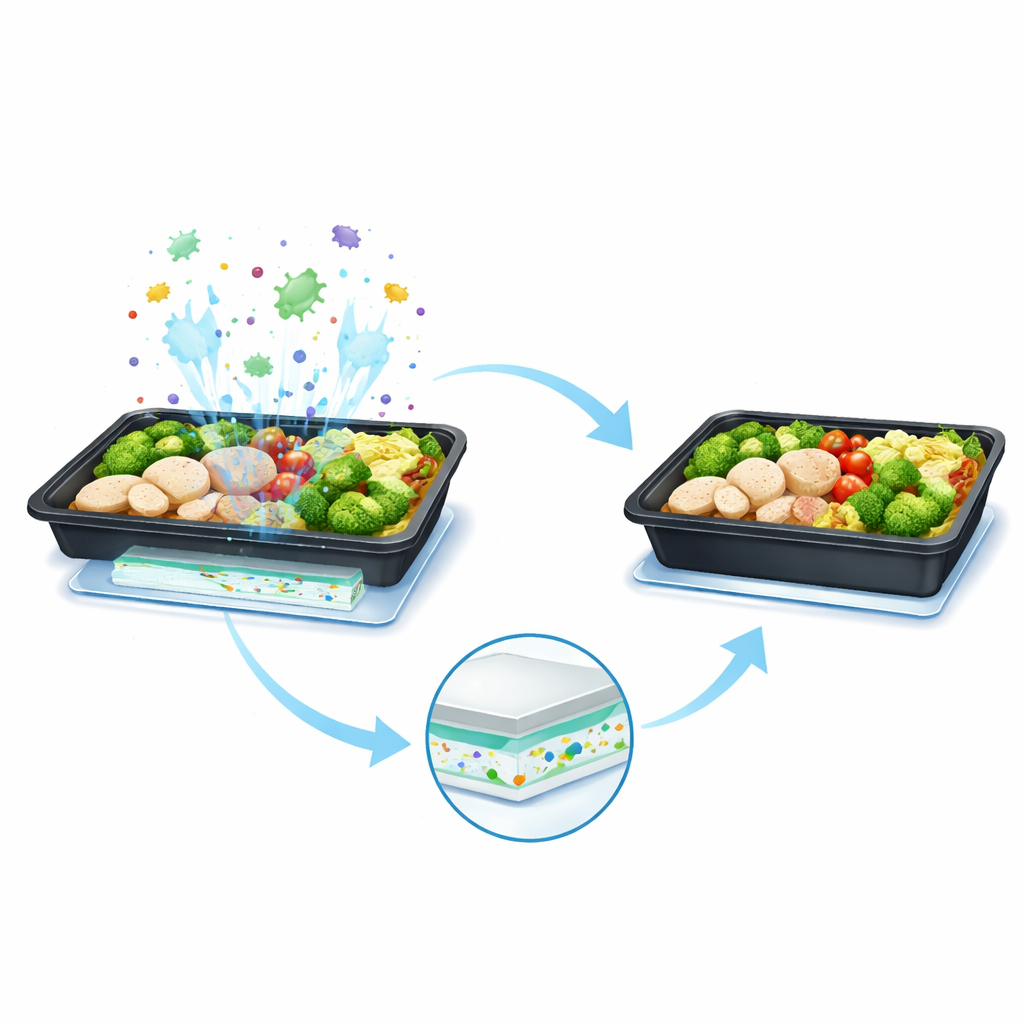
Many of the ready-to-eat foods we buy—such as sliced meats, cheeses, and prepared meals—can quietly harbor dangerous germs. At the same time, most packages are made from plastics that linger in the environment for decades. This study explores a new type of thin, biodegradable mat that can sit inside food packages and slowly release natural germ-fighting ingredients, aiming to keep food safer for longer while relying less on harsh chemicals.
The problem of hidden food germs
Foodborne illnesses are a major global health issue, causing hundreds of thousands of deaths each year and costly product recalls. One especially worrisome culprit is Listeria monocytogenes, a tough bacterium that can grow in the cold, salty, and acidic conditions often found in refrigerators and food plants. Traditional preservatives can help, but natural ones like the peptide nisin or thyme essential oil often break down or get trapped in complex foods before they can do their job. The challenge is to protect these delicate ingredients and deliver them at a steady rate where bacteria live—right at the surface of the food.
A tiny layered pad with natural defenders
The researchers designed a two-layer "active" mat using a technique called electrospinning, which stretches liquid polymers into extremely fine fibers. The inner layer is made from chitosan and poly(vinyl alcohol), both materials already used in food or biomedical products. Into this fibrous web they loaded nisin and essential oil from Shirazi thyme, both known for strong antimicrobial power. The outer layer is based on cellulose acetate—a plant-derived plastic—also containing thyme oil. Crucially, the inner surface facing the food was engineered to be water-loving (hydrophilic), helping it release the active ingredients, while the outer surface was made water-repelling (hydrophobic), helping the mat resist moisture from the environment.
How the mat was built and checked
To create the mat, the team first electrospun the cellulose acetate and thyme oil layer, then immediately formed the chitosan/polymer layer with nisin and thyme oil on top, forming a bonded double sheet. Electron microscope images showed smooth, bead-free fibers in the inner layer with diameters around 145 nanometers—thousands of times thinner than a human hair—while the outer layer formed a more continuous film. Chemical fingerprinting (infrared spectroscopy) confirmed that nisin and essential oil were successfully incorporated and interacted with the surrounding polymers. Heating tests showed that the mat remained stable over typical processing temperatures. Measurements of how water droplets sat on each surface confirmed the planned contrast: the food-facing side absorbed water easily, while the outer side remained strongly water-resistant.
Putting the mat to the germ test
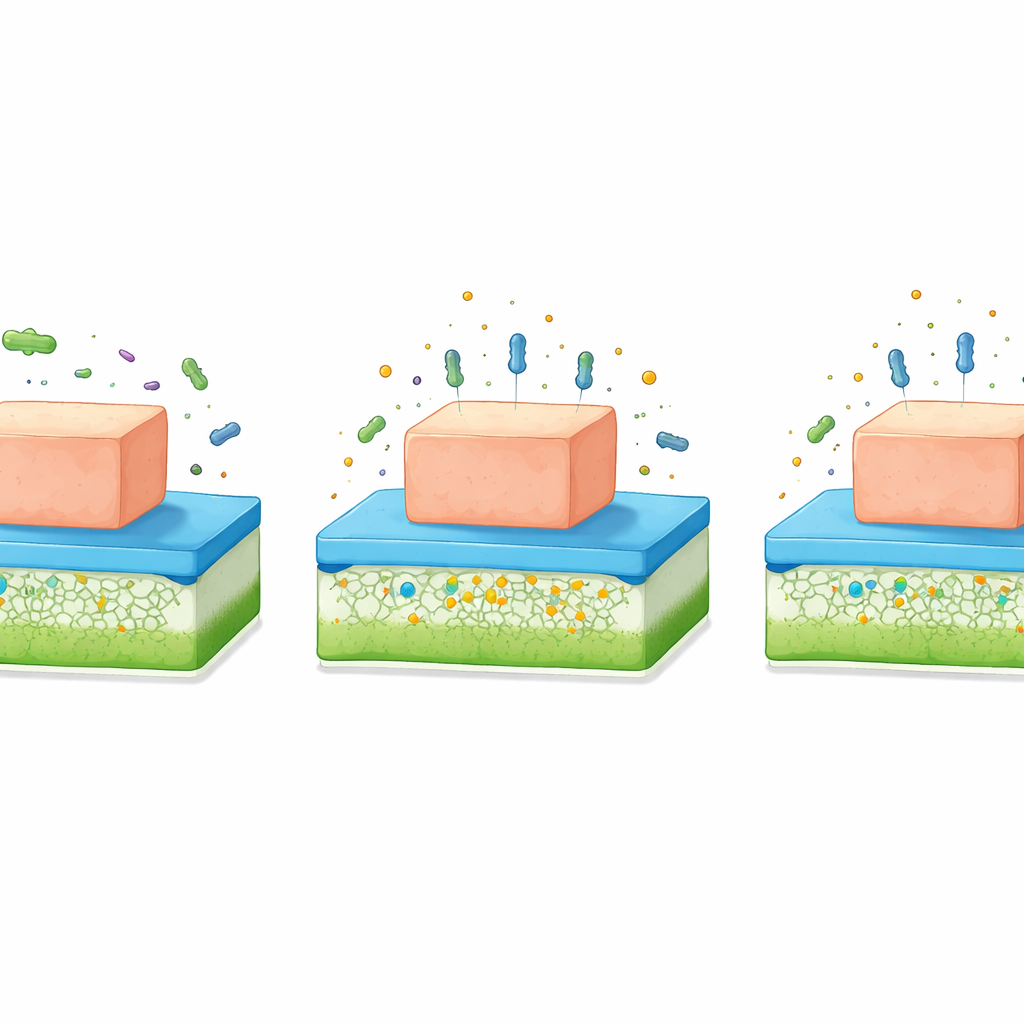
The real trial was whether these pads could actually stop harmful bacteria. In a plate test, small squares of the materials were placed on dishes seeded with Listeria monocytogenes or Escherichia coli. The double-layer mat produced the largest clear “no-growth” zones around itself for both species, outperforming single-layer versions and pure nisin. A second test mimicked a liquid food environment: pads were shaken in broth containing Listeria. While bacteria in the control broth exploded in number, those exposed to the double-layer pad dropped by about a hundredfold and stayed below the detection limit for two days. These results show that the combination of nisin and thyme oil, protected and slowly released from the layered mat, works far better than either component or layer alone.
What this could mean for future food packages
This work suggests a practical way to turn a simple liner or absorbent pad in a tray into an active safety device. The mat is thin, flexible, and strong enough to be handled and could be slipped under meat, poultry, or cheese in existing plastic trays, or coated onto the inside of packaging films. Because it uses food-grade polymers and natural antimicrobials, it fits with the push toward cleaner labels and more sustainable materials. While further testing in real foods, long-term storage, and regulatory studies are still needed, the study shows that a modest-looking double-layer pad could quietly lower the risk of dangerous contamination in the foods we eat.
Citation: Shirdam, N., Mir-Derikvand, M., Rezayan, A.H. et al. Synthesis, characterization, and evaluation of antimicrobial double-layer mat incorporating nisin and thyme essential oil to enhance food safety. Sci Rep 16, 10265 (2026). https://doi.org/10.1038/s41598-025-34848-w
Keywords: active food packaging, electrospun nanofibers, natural antimicrobials, foodborne pathogens, sustainable packaging