Clear Sky Science · en
Phytosociological analysis and floristic composition of fabaceae species assessing human impact and edaphic variables
Why the plants of Jhelum matter
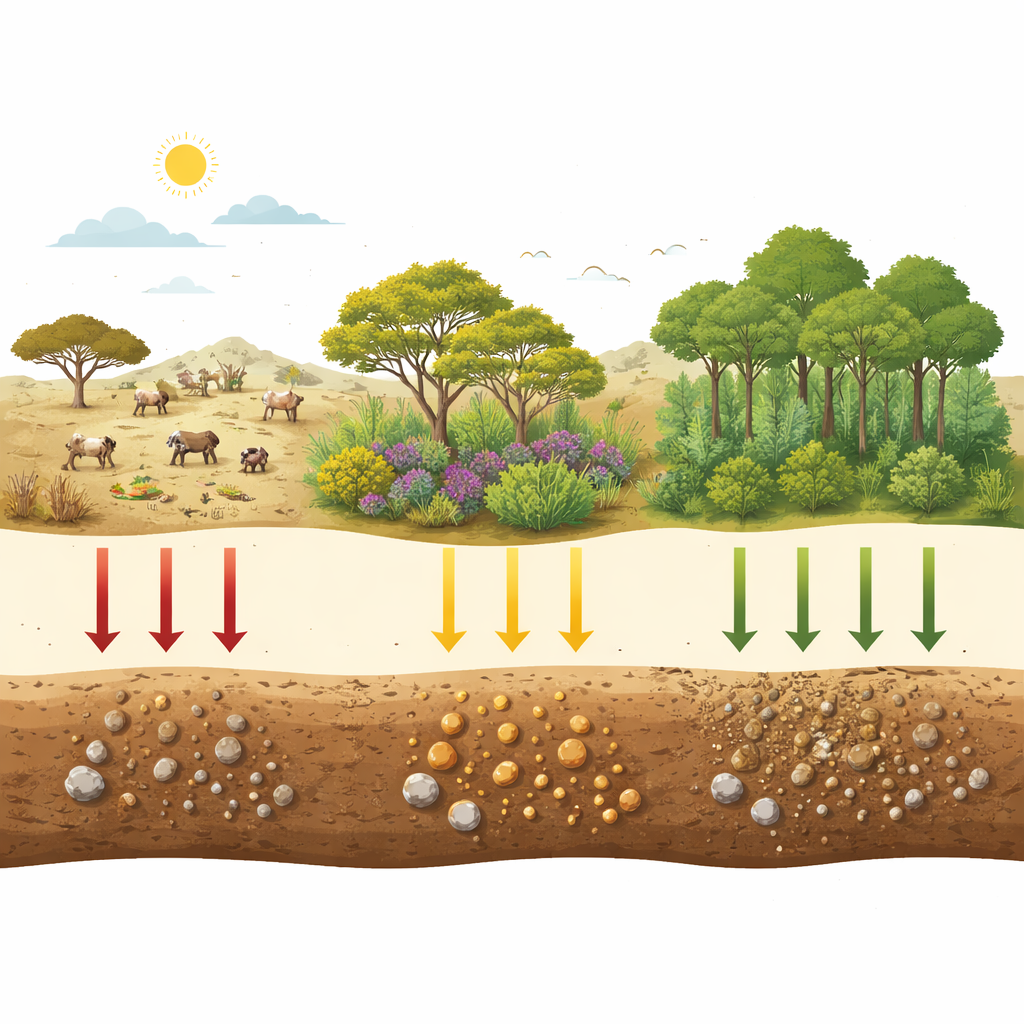
In Pakistan’s Jhelum district, a dry region where forests are shrinking and fields are expanding, plants do much more than add greenery to the landscape. They hold the soil together, feed livestock, support pollinators, and even provide traditional medicines. This study zooms in on one especially important plant family—the legumes, or Fabaceae—to understand how their communities are changing under the combined pressures of human activity and soil conditions. By carefully mapping which legume species grow where, and how they relate to the ground beneath them, the researchers offer clues for restoring damaged land and protecting local biodiversity.
Looking closely at a key plant family
The Fabaceae family includes many familiar trees, shrubs and herbs that enrich soils and support both wildlife and people. In Jhelum’s semi‑arid woodlands, the team set out to document all Fabaceae species they could find and to test whether human disturbance was leaving a clear signature on native vegetation. Over 2019–2020 they surveyed 73 locations across different altitudes and habitats. At each site they laid out systematic plots, counted every legume plant, measured how much ground each species covered, and collected soil samples. In total, they recorded 32 Fabaceae species: about half were herbs, a third were trees, and the rest were shrubs.
Who dominates and who is disappearing
The surveys revealed that a few hardy tree species are now the main structural pillars of the landscape. Dalbergia sissoo (often planted for timber and shade) had the highest overall cover, followed closely by Neltuma juliflora and Acacia farnesiana, both tough, drought‑tolerant trees. At the opposite end, Senna occidentalis appeared only rarely. Using statistical grouping tools, the authors showed that the 73 sampling plots consistently clustered into three distinct vegetation types. One type was characterized by dense stands of Neltuma juliflora; another by Acacia farnesiana and related trees; and a third, smaller group by Acacia nilotica and Dalbergia sissoo with only a few companion species. Within each type, certain plants acted as “indicator species,” reliably appearing where particular conditions prevailed.
Soil as the hidden driver
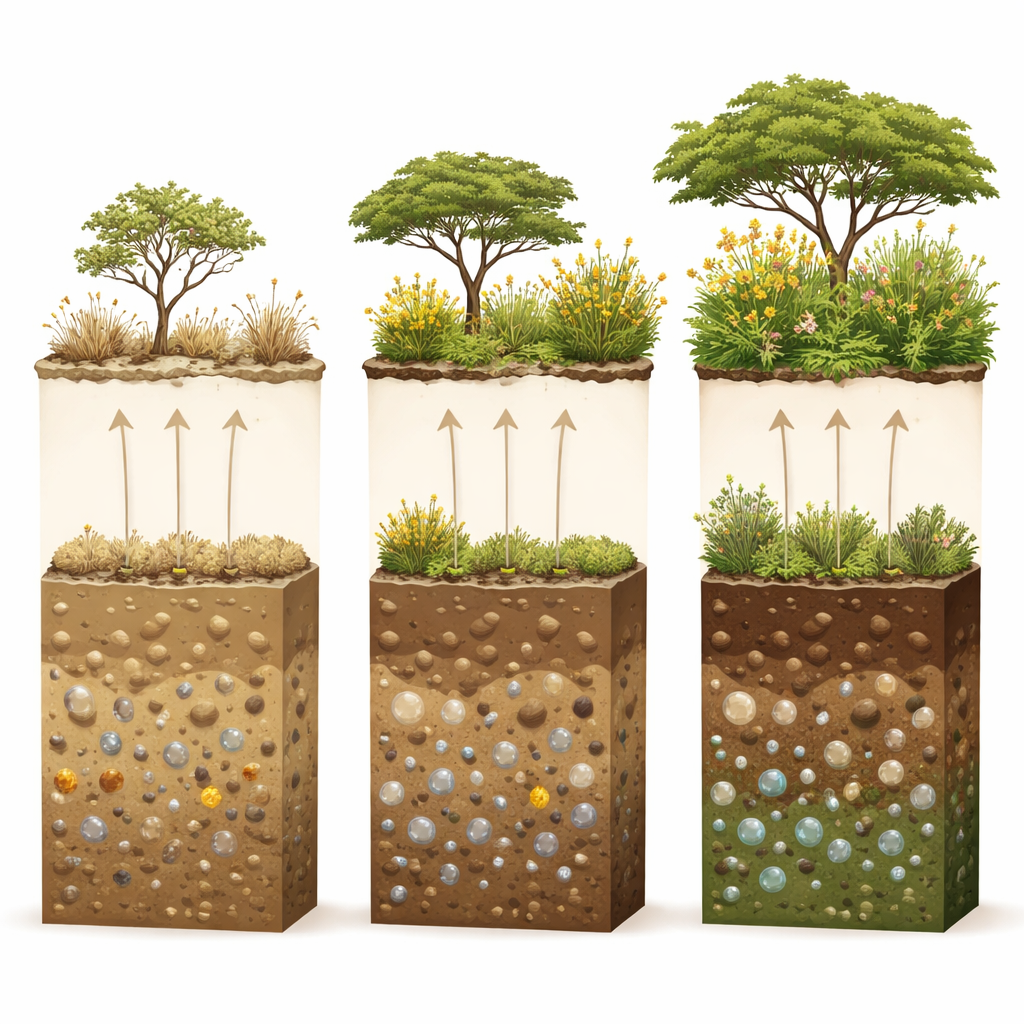
To uncover why these plant groupings formed, the researchers compared vegetation patterns with measured soil properties. They focused on moisture, acidity, salts, nutrients such as nitrogen, phosphorus and potassium, organic matter, and calcium carbonate. Multivariate analyses showed that differences in soil moisture, phosphorus, and organic matter were especially important in explaining which Fabaceae species thrived in which places. For example, some indicator species were tied to slightly wetter soils rich in calcium carbonate, while others favored drier sites with higher potassium. Even though the statistical tests suggested only modest overall explanatory power, the consistent trends pointed to soil conditions as key shapers of legume communities.
Footprints of people and grazing
The study area has a long history of deforestation, fuelwood cutting, and intensive grazing. While the authors did not quantify these pressures directly, they observed clear signs of soil disturbance and thinning vegetation, especially at lower elevations closer to settlements and grazing routes. In these disturbed sites, tough, often invasive trees and shrubs in the Fabaceae family tend to dominate, while more sensitive or threatened species retreat. Several recorded plants are already listed as vulnerable, threatened, or near‑threatened, underscoring that land use choices are quietly reshaping both the composition and the conservation status of local flora.
What this means for restoring the land
By linking plant communities to the soils they grow in, this work provides a practical roadmap for conserving and rebuilding vegetation in Jhelum. The authors conclude that protecting key indicator and rare species in place, reducing overgrazing and unsustainable harvesting, and replanting valuable native trees such as Acacia nilotica and Dalbergia sissoo in degraded areas could greatly improve ecosystem health. Because Fabaceae plants help fix nitrogen and stabilize soil, supporting the right mix of legume species can kick‑start natural recovery. The study thus offers a baseline for future research and for evidence‑based land management aimed at keeping Jhelum’s dry forests productive, diverse, and resilient.
Citation: Majeed, M., Khan, A., Saleem, S. et al. Phytosociological analysis and floristic composition of fabaceae species assessing human impact and edaphic variables. Sci Rep 16, 9626 (2026). https://doi.org/10.1038/s41598-025-34359-8
Keywords: Fabaceae, soil-plant interactions, semi-arid woodlands, Pakistan Jhelum, vegetation restoration