Clear Sky Science · en
Activity of linalool based silver nanoconjugates against brain tumor through in silico, in vitro and in vivo evaluations
Plant Scent Meets Brain Cancer
Brain tumors like glioblastoma are among the hardest cancers to treat, with current surgery, radiation, and chemotherapy often buying only months of extra life. This study explores an unexpected ally from nature: linalool, a fragrant compound found in lavender, tea, and many herbs. By attaching linalool to tiny silver-based particles, the researchers aimed to create a smarter, more effective treatment that can better reach brain tumors and nudge cancer cells toward self-destruction while sparing healthy tissue.
A Tough Cancer and a Fragile Organ
Brain tumors are deadly not only because the cancer cells are aggressive, but also because the brain is difficult to treat safely. Powerful drugs struggle to cross the brain’s protective filter, the blood–brain barrier, and increasing doses can damage healthy nerves and cause severe side effects. Even the standard drug temozolomide faces resistance in many patients. At the same time, plant-derived compounds such as linalool have shown anticancer effects in laboratory studies but are held back by poor solubility, rapid breakdown in the body, and limited delivery to tumors. This work set out to overcome those limitations by packaging linalool into silver-based nanoparticles designed to boost its stability, concentration at the tumor site, and overall punch against brain cancer cells.
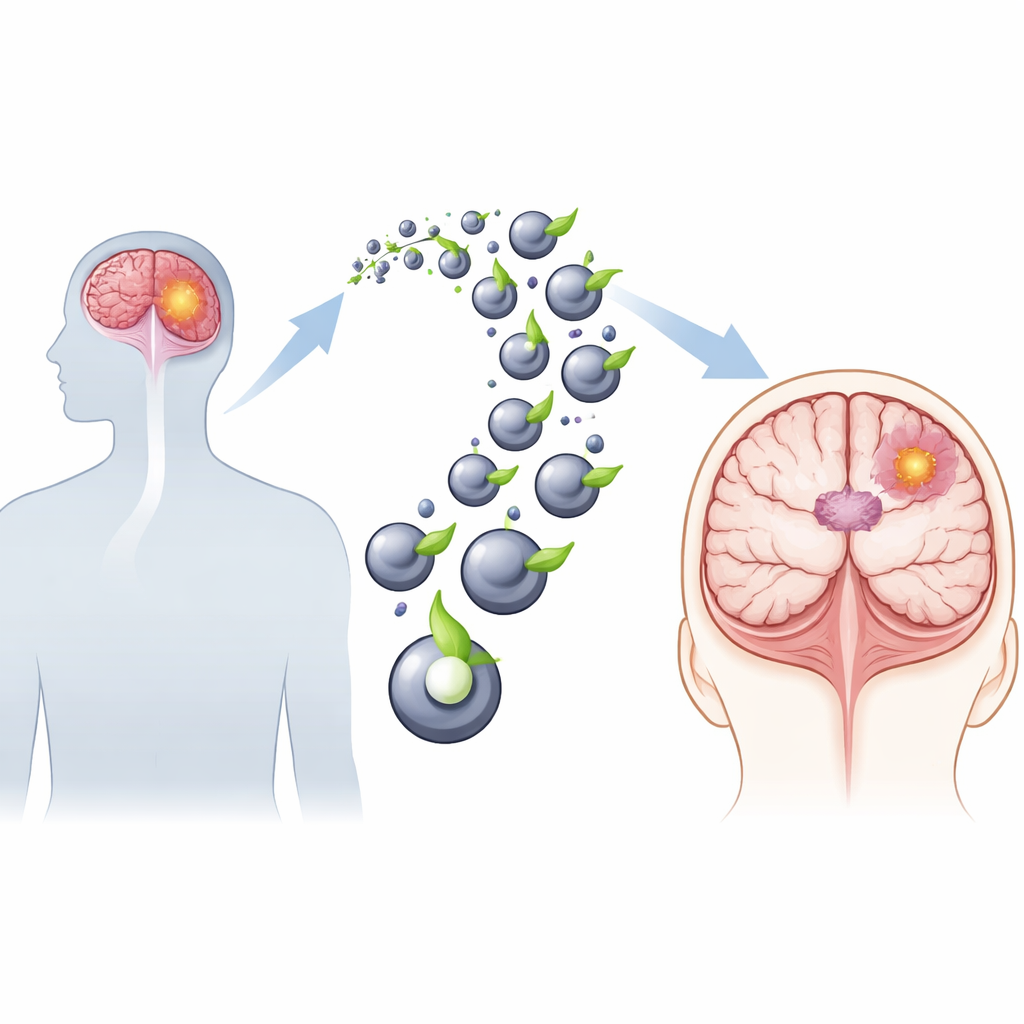
Turning a Fragrant Molecule into a Precision Tool
The team first used advanced computer simulations to predict how linalool and its silver nanoconjugates would interact with two key proteins that control whether cells divide or die. One, CDK4, acts like a gas pedal for cell growth; the other, p53, is a guardian that can stop the cell cycle or trigger cell death when damage is detected. The models showed that both linalool and the linalool–silver particles could nestle stably into critical pockets on these proteins, with particularly strong and steady binding to CDK4. The silver component strengthened contact with specific amino acids and helped lock the drug in place, suggesting that the nanoconjugates might be able to slow runaway cell division and support the tumor-suppressing role of p53 more effectively than linalool alone.
From Computer Models to Cancer Cells
To see whether these predictions held up in real biology, the researchers treated a human brain tumor cell line with linalool and with the linalool–silver nanoconjugates at carefully chosen doses. They then measured the activity of the same two genes, p53 and CDK4. In both cases, the treatments boosted p53 levels by about two to two-and-a-half times while driving CDK4 levels down by roughly half compared with untreated cells. This pattern—more of the guardian, less of the growth driver—is consistent with slowing the cell cycle and promoting programmed cell death. The nanoparticle-linked linalool produced at least as strong, and often stronger, shifts in gene activity than free linalool, supporting the idea that the nanocarrier makes the plant compound more potent and better targeted.
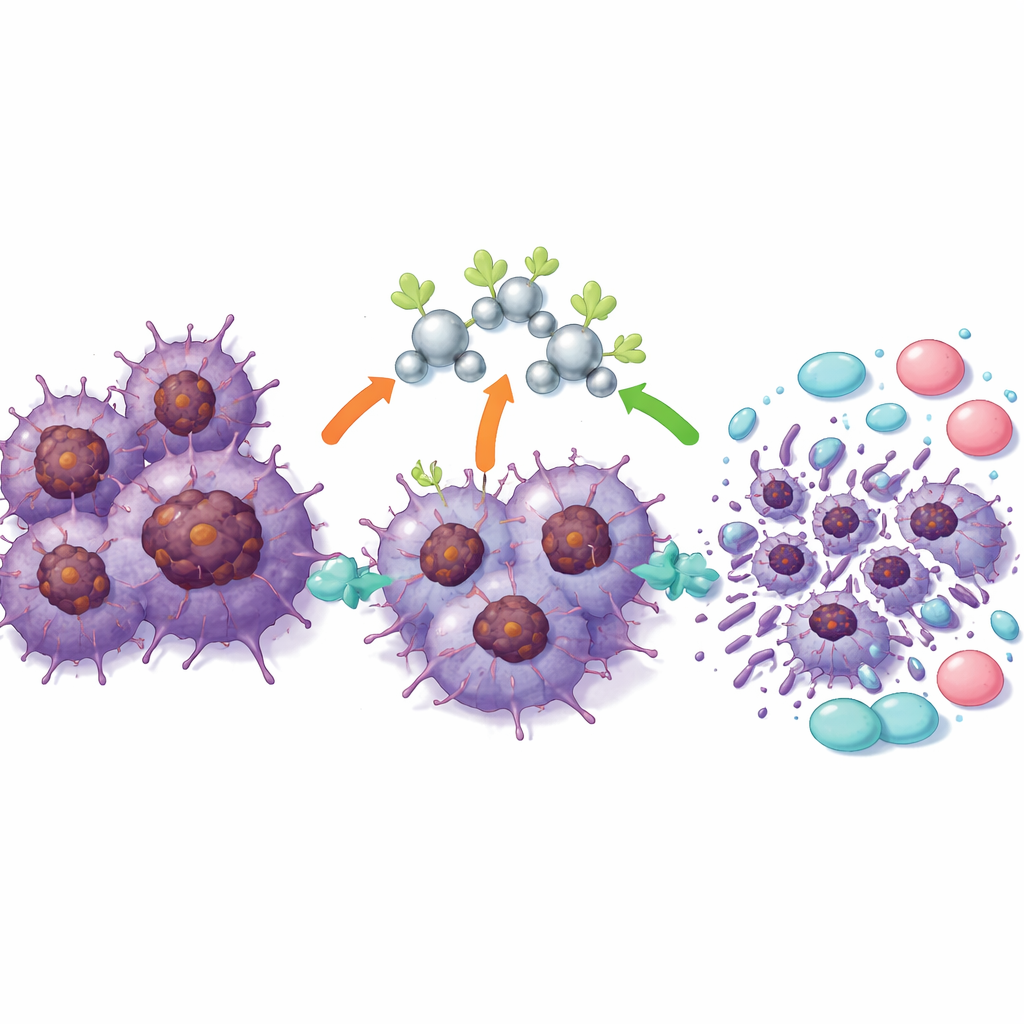
Testing the Therapy in a Living Brain
The most stringent test was in an animal model that mimics human brain tumors. Pregnant rats were exposed to a chemical that causes their offspring to develop glioma-like tumors over several months. Once tumors were confirmed by microscopic analysis of brain tissue, the diseased animals were divided into three groups: no treatment, treatment with linalool alone, or treatment with the linalool–silver nanoconjugates by mouth for 21 days. In untreated rats, the tumors grew with sharp, invasive borders and clear damage in the surrounding brain. Linalool by itself produced little measurable shrinkage. In contrast, rats given the nanoconjugates showed about a 13% reduction in tumor volume, smoother transitions between tumor and healthy tissue, and less infiltration into nearby brain regions. Body weight remained relatively stable, hinting at limited systemic toxicity, and survival curves showed that the nanoparticle-treated animals lived longer than those receiving free linalool or no therapy.
What This Could Mean for Patients
Taken together, the computational, cell-based, and animal results point in the same direction: packaging linalool into silver nanoparticles appears to increase its stability, improve its interaction with critical cancer-control proteins, and enhance its ability to shrink brain tumors while avoiding obvious harm to the rest of the body. Although this work is still at the preclinical stage and lacks detailed data on how well the particles cross into the human brain, it suggests that plant-based nanomedicines could offer a new route to treating otherwise intractable brain cancers. With further studies on safety, distribution in the body, and combination use with standard drugs, linalool–silver nanoconjugates may one day contribute to more effective and gentler therapies for patients facing brain tumors.
Citation: Manzoor, H., Khan, M.U., Javaid, F. et al. Activity of linalool based silver nanoconjugates against brain tumor through in silico, in vitro and in vivo evaluations. Sci Rep 16, 12216 (2026). https://doi.org/10.1038/s41598-025-32335-w
Keywords: brain tumor, linalool, nanoparticles, glioblastoma, targeted therapy