Clear Sky Science · en
Modeling rotational fluoroquinolone therapy as a novel treatment for ophthalmic MRSA infections
Why new eye infection treatments matter
Stubborn eye infections caused by hard-to-kill bacteria can threaten sight, especially after eye surgery. This study explores whether carefully alternating two related antibiotic eye drops could better control these infections, slow the rise of drug resistance, and keep more patients seeing clearly in the long run.
The challenge of tough eye germs
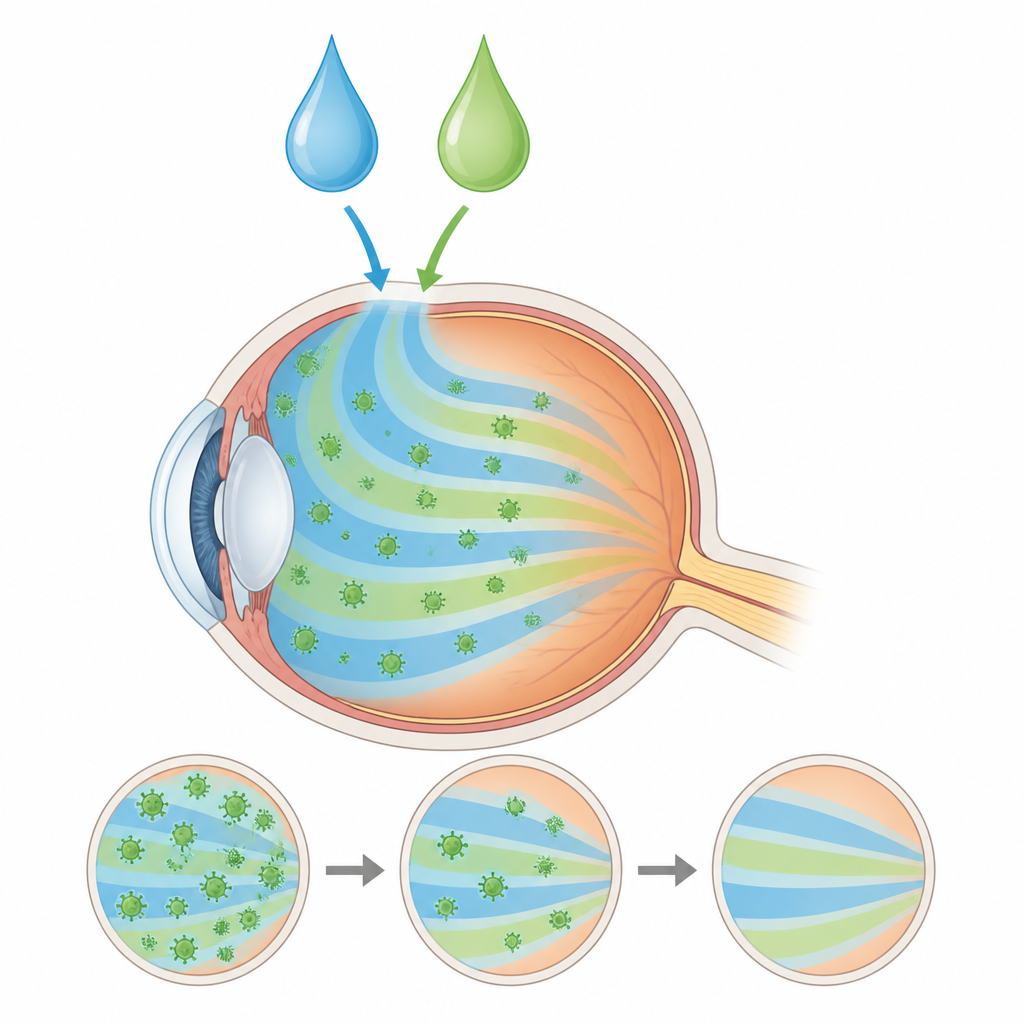
Methicillin-resistant Staphylococcus aureus, often called MRSA, is a strain of bacteria that no longer responds to many standard antibiotics. When it reaches the eye, it can cause painful ulcers and even vision loss. Doctors frequently rely on a class of drugs known as fluoroquinolones, given as eye drops, to protect patients before and after surgery. However, repeated use of a single drug from this family can push MRSA to evolve resistance, leaving fewer options when a serious infection occurs.
Two partner drugs with different strengths
The researchers focused on two fluoroquinolones: moxifloxacin, already used in eye drops, and trovafloxacin, a powerful but systemically withdrawn antibiotic that remains of interest for local eye use. Both drugs attack bacterial enzymes needed to copy DNA, but they grip those enzymes in slightly different ways. Laboratory tests showed that MRSA strains resistant to moxifloxacin grew more slowly than sensitive strains, hinting at a fitness cost to resistance. Computer docking studies then suggested that a common resistance change in the target enzyme weakens moxifloxacin binding while leaving trovafloxacin’s hold largely intact. This pattern creates collateral sensitivity, where resistance to one drug makes bacteria relatively more vulnerable to another.
Following drug movement inside the eye
To see how these drugs might behave in a real eye, the team built mathematical models of the front eye chamber, including the cornea, fluid-filled spaces, and vitreous body. They combined lab growth and killing data with equations describing how medicine diffuses through eye tissues and is washed out by natural fluid turnover. Importantly, they wove in daily body rhythms, using a circadian curve to mimic how eye fluid clears drugs more slowly at night and faster during the day. Simulations showed that the timing of each drop mattered: giving a dose when clearance was low kept drug levels higher for longer without increasing the amount used.
Why taking turns can beat using one drug alone
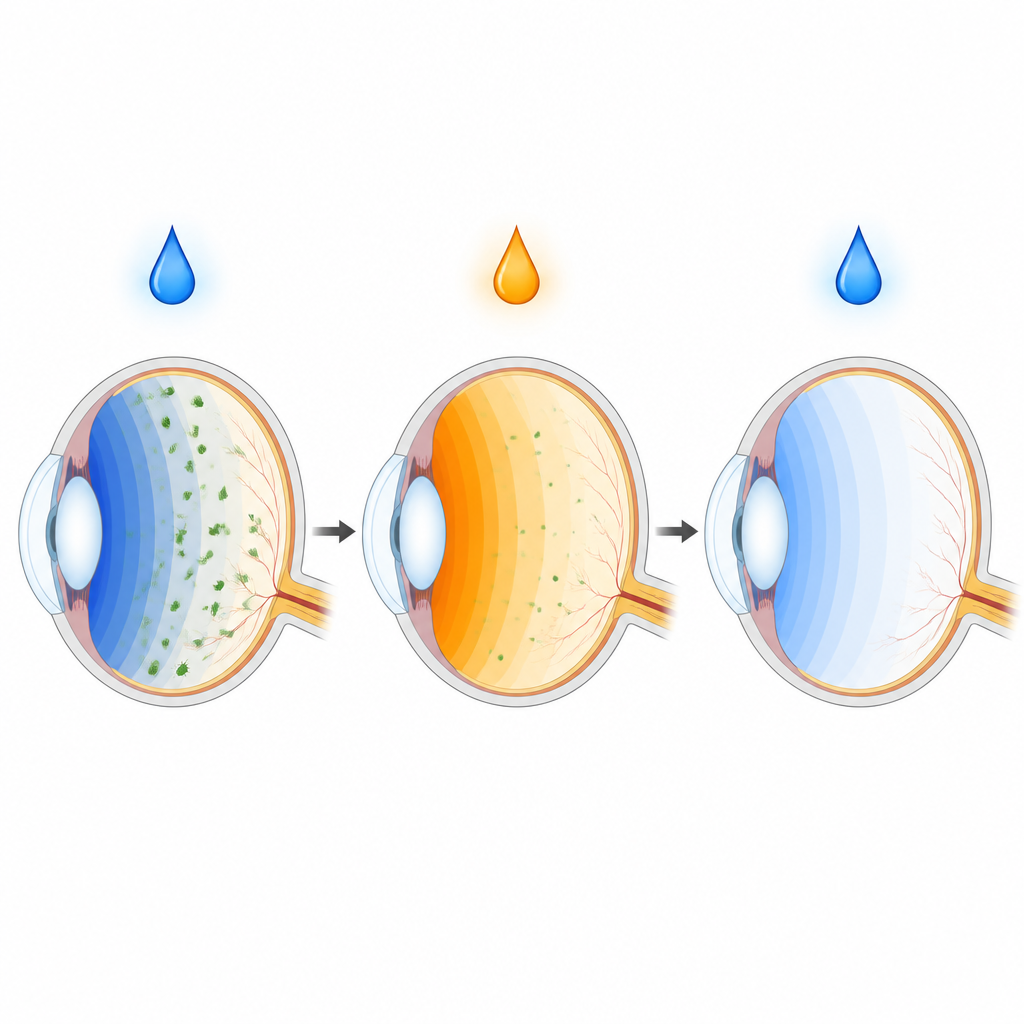
Armed with these models, the authors compared standard moxifloxacin alone to a schedule that alternated moxifloxacin and trovafloxacin every four hours. With a single drug, high concentrations appeared near the corneal surface but faded quickly and barely reached deeper regions. Bacteria were knocked down only briefly before bouncing back between doses, and sheltered pockets of infection remained in the back of the eye. Under the rotating schedule, the two drugs took turns filling each other’s low points, sustaining drug levels above the minimum needed to inhibit MRSA across more of the tissue. The simulations showed steep moving “kill fronts” sweeping from the surface inward, steadily shrinking and finally eliminating the bacterial population within a day under high-resistance conditions.
What this could mean for future eye care
The study concludes that, at least in computer models, alternating two related eye antibiotics with different resistance profiles and penetration patterns can outperform using either one alone against resistant MRSA. By exploiting daily rhythms in eye fluid flow and the trade-offs bacteria pay when they become drug resistant, rotational therapy could maintain effective killing while limiting total drug exposure. These findings do not yet change patient care, but they provide a quantitative roadmap for laboratory and clinical studies that may one day turn a smarter dosing schedule into better protection for sight.
Citation: Storper, A., Miller, D. & Huo, X. Modeling rotational fluoroquinolone therapy as a novel treatment for ophthalmic MRSA infections. Sci Rep 16, 15392 (2026). https://doi.org/10.1038/s41598-025-30598-x
Keywords: MRSA eye infections, fluoroquinolone rotation, topical antibiotics, ocular pharmacokinetics, collateral sensitivity