Clear Sky Science · en
Evaluating the semi-chronic effects of household air pollution exposure on cardiopulmonary health under two different ventilation conditions
Why the air in your kitchen matters
Most of us think of air pollution as something outside—smog over a city or exhaust from traffic. But this study shows that a major source of pollution may be much closer to home: everyday cooking. Researchers set out to see how tiny particles released while preparing meals affect heart and lung health, and whether smarter ventilation systems in ordinary apartments can protect our bodies from this hidden hazard.
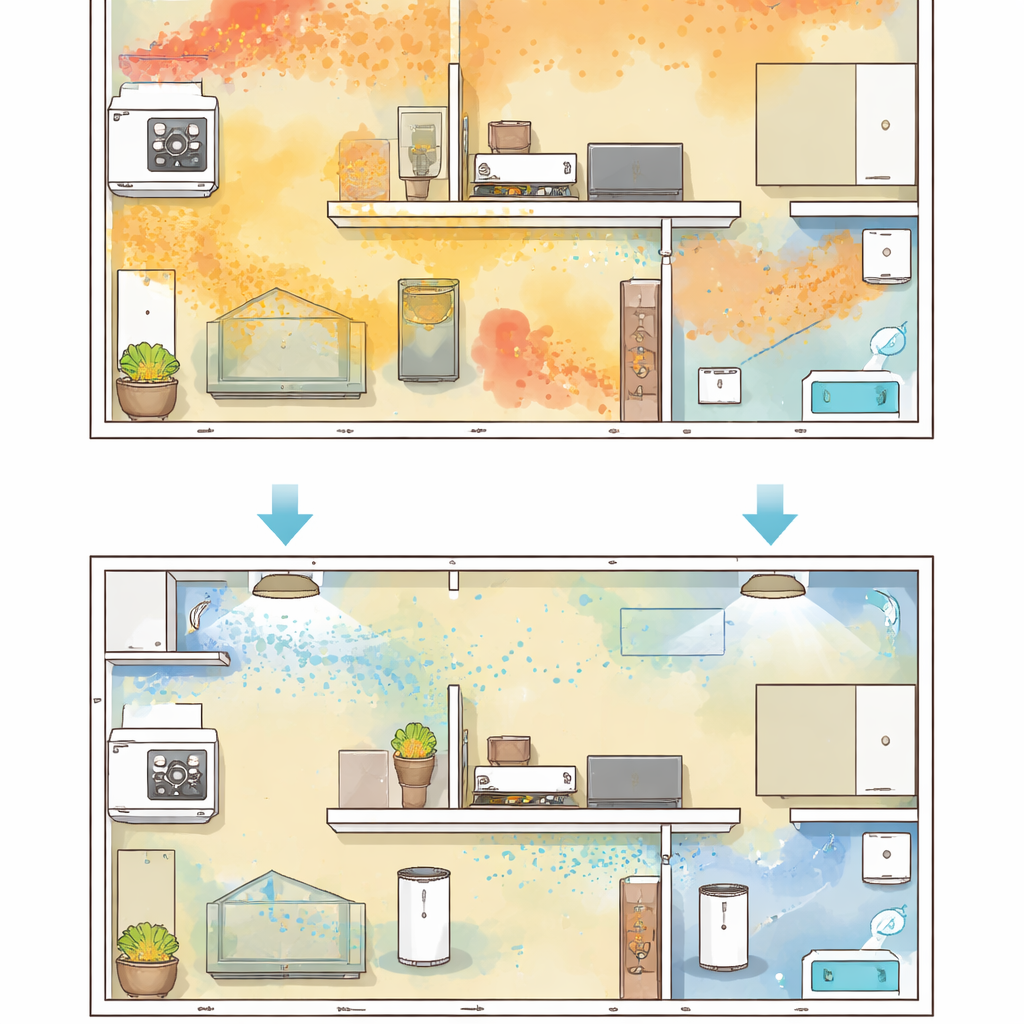
Invisible particles from everyday cooking
When food sizzles on a hot pan, it releases clouds of fine particles called PM2.5—so small they can slip deep into the lungs and into the bloodstream. In a special "Living Lab" with two nearly identical one-bedroom apartments, volunteers cooked breakfast and dinner over several weeks. The team compared two set‑ups. One reproduced a typical home with basic heating and cooling and a manually operated stove hood. The other added an “advanced” system: range hood, portable air cleaners and bathroom exhausts that switched on automatically whenever sensors detected a rise in particle levels.
How the study watched bodies react
To see how these particles affect the body, the researchers focused on short‑term changes in several simple health markers measured before and after cooking. They tracked blood pressure and heart rate, as well as subtle beat‑to‑beat changes in heart rhythm that reflect how well the nervous system balances stress and recovery. They also measured a gas in exhaled breath, nitric oxide, which can hint at irritation in the airways. At the same time, small sensors in the apartments continuously recorded the concentration of fine particles in the air, especially around cooking times.
Spikes in pollution, and how smart controls help
The results revealed just how dramatic cooking emissions can be. Before the stove was turned on, particle levels were extremely low, well under international health guidelines. Once cooking began, they shot up roughly one hundred‑fold, often staying above recommended limits for a large share of the measurement period. Under the standard ventilation condition, median particle levels during heart‑monitoring periods climbed to more than 260 micrograms per cubic meter. With the automated hoods and air cleaners, those peaks were noticeably lower, around 170 micrograms per cubic meter—still high, but a substantial reduction. This showed that a coordinated system of sensor‑driven devices can meaningfully cut pollution exposure, even in already well‑ventilated apartments.
What happened to hearts and lungs
These jumps in indoor pollution were not just numbers on a screen; they showed up in the volunteers’ bodies. Under the advanced ventilation condition, systolic blood pressure—the top number in a blood pressure reading—tended to drop a few points after cooking, while it barely changed under standard ventilation. Heart rate also fell slightly with better ventilation but rose a bit with standard air control, hinting that the body was working harder in the dirtier air. Measures of heart rhythm balance did not shift enough to be clearly different, but trends suggested a tilt toward a calmer, more restful state with cleaner air. For the lungs, levels of exhaled nitric oxide decreased after cooking in both conditions, with a somewhat larger drop when the automatic system was active, though the study’s small size made it hard to be certain about this difference.
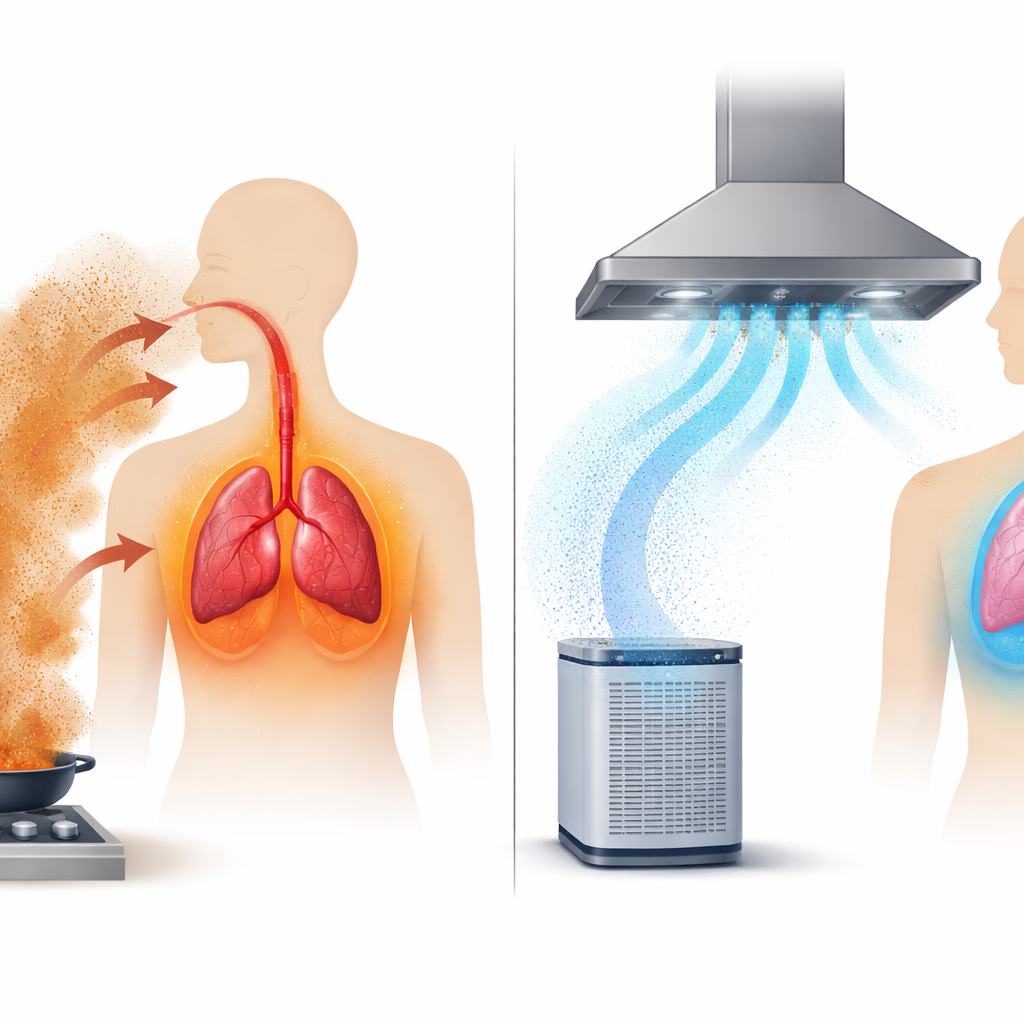
What this means for everyday homes
Although this was a pilot study with only fourteen healthy adults in carefully controlled apartments, the message is highly relevant to everyday life. Cooking can briefly turn even a clean home into a highly polluted space, and these short, repeated bursts may nudge blood pressure and heart function in an unhealthy direction over time—especially for people who already have heart or lung disease. The work suggests that simple technologies—automatic range hoods, well‑placed air cleaners and smart exhaust fans—can significantly reduce the dose of particles we breathe during meals and soften their impact on the heart. In plain terms, making it easier for our homes to "breathe" when we cook could be a practical way to protect our own hearts and lungs.
Citation: Aristizabal, S., Snyder, E.M., Pope, Z.C. et al. Evaluating the semi-chronic effects of household air pollution exposure on cardiopulmonary health under two different ventilation conditions. Sci Rep 16, 10758 (2026). https://doi.org/10.1038/s41598-025-29728-2
Keywords: household air pollution, cooking emissions, indoor air quality, ventilation, cardiovascular health