Clear Sky Science · en
Enhanced antibacterial activities of zirconia nanoparticles modified with yttrium oxide and alumina
Stronger dental implants with tiny helpers
Dental implants and other medical devices can fail when harmful bacteria settle on their surfaces and build sticky communities called biofilms. This study explores how mixing zirconia, a ceramic already used in dentistry, with two other oxides can create tiny particles that better stop bacteria from growing on implants while still being gentle on human cells.
Why teeth and implants need protection
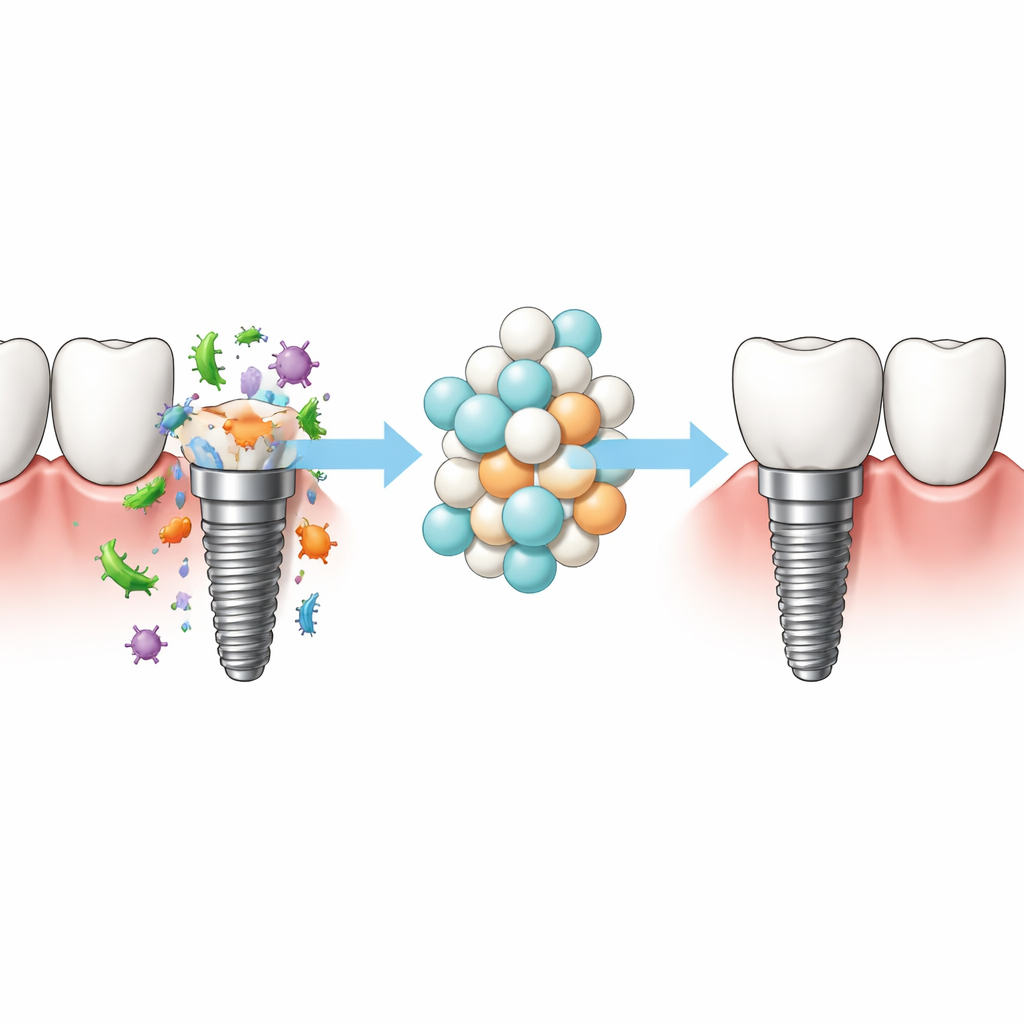
Inside the mouth, teeth and implants are constantly bathed in saliva and exposed to food, drink, and large populations of bacteria. If bacteria stick to these surfaces and multiply, they can form biofilms that are tough to remove and harder to kill with antibiotics. Around implants, this buildup can lead to infection, pain, and even the need to remove and replace the device, which is costly and stressful for patients. Materials that naturally resist bacterial growth, without harming nearby tissues, are therefore highly valuable in modern dentistry.
Building a better protective ceramic
The researchers focused on zirconia, a strong white ceramic already used in dental crowns and implants because it is tough and friendly to body tissues. They produced three kinds of tiny particles: pure zirconia, a binary mix of zirconia with yttrium oxide, and a triple mix that also included aluminum oxide. Careful preparation and heating produced well mixed, dense particles with very small, isolated pores. This structure is important because open pores can trap saliva and bacteria, while closed pores make it harder for germs to find hiding places on the surface.
Putting bacteria to the test
To see how well these particles fight germs, the team exposed three common problem bacteria to different particle mixtures. They tested Escherichia coli and Staphylococcus aureus, which often cause infections, and Streptococcus mutans, a key player in tooth decay and dental plaque. Using standard lab dishes, they measured clear zones where bacteria failed to grow. All zirconia based particles showed antibacterial activity, but the triple mixture with zirconia, yttrium oxide, and alumina produced the largest clear zones, especially against Staphylococcus aureus. The particles also generated more reactive oxygen species inside bacterial cells, which can damage membranes and vital components, helping to kill the microbes.
Stopping sticky biofilms from forming
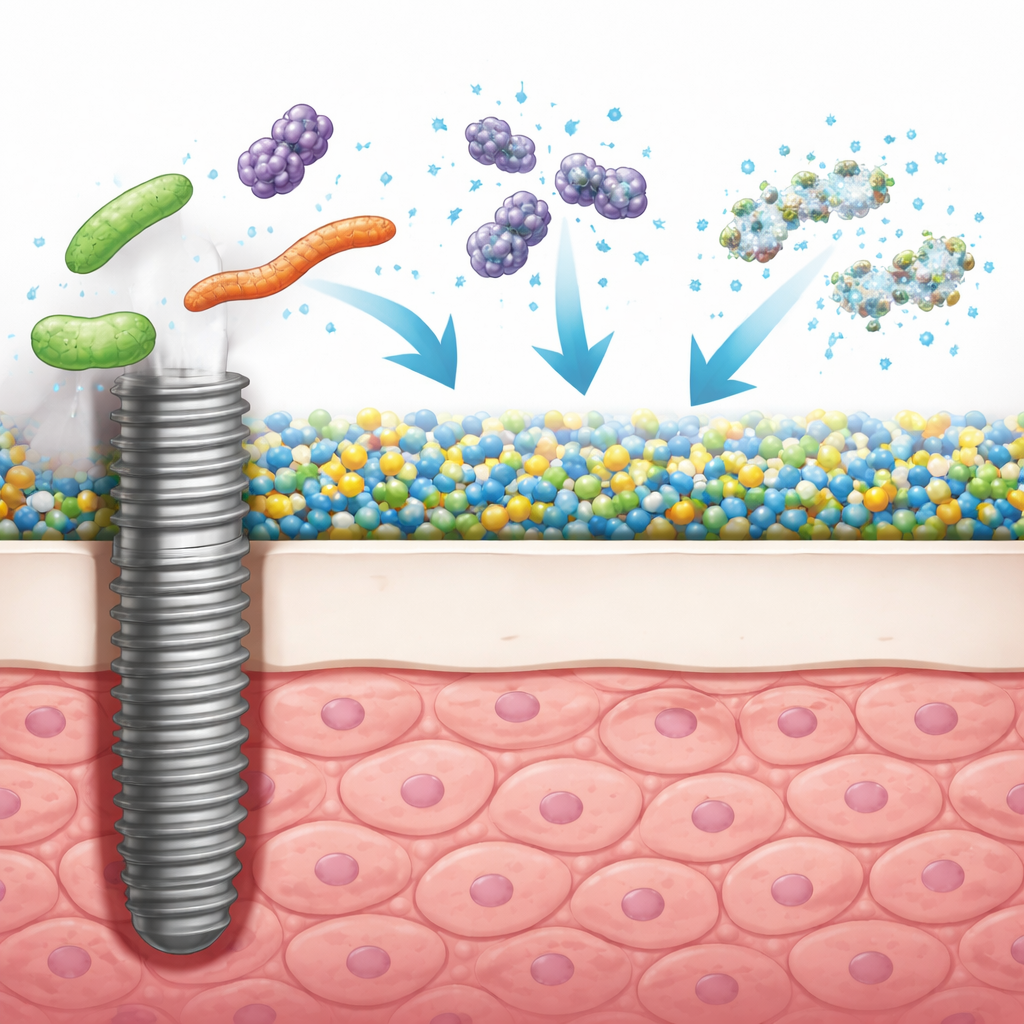
Beyond killing free floating bacteria, the study also looked at how well the particles blocked the first steps of biofilm formation. In tests with Streptococcus mutans and surfaces coated with the triple mixture, bacterial adhesion dropped as the amount of material increased. When bacteria were allowed to form biofilms in small plastic wells, adding the zirconia based particles reduced both the amount of attached biofilm and its metabolic activity. Again, the triple mixture was the most effective, suggesting that the combined action of the three oxides makes it harder for bacteria to settle, communicate, and build protective layers.
Safe for surrounding body cells
For any material used in the body, safety is as important as antibacterial power. The researchers tested the same nanoparticle mixtures on rat embryonic fibroblast cells, which model soft tissue around implants. Across a range of concentrations and up to three days of exposure, the cells remained largely viable, with only modest toxicity even at the highest doses. These results indicate good biocompatibility, meaning the particles can weaken bacteria and biofilms without severely harming nearby healthy cells.
What this means for future dental care
In simple terms, the study shows that tiny particles made from a triple mix of zirconia, yttrium oxide, and alumina can better protect against harmful mouth bacteria than zirconia alone, while remaining kind to body tissues. By resisting bacterial growth, reducing sticky biofilms, and staying biocompatible, these engineered ceramics could lead to dental implants and other devices that stay cleaner for longer and are less likely to cause infection.
Citation: Saad, S.M., Hadi, E.M., Hussein, N.N. et al. Enhanced antibacterial activities of zirconia nanoparticles modified with yttrium oxide and alumina. Sci Rep 16, 14711 (2026). https://doi.org/10.1038/s41598-025-29085-0
Keywords: zirconia nanoparticles, dental implants, antibacterial materials, biofilm inhibition, biocompatible ceramics