Clear Sky Science · en
Plasma-modified biodegradable coatings for controlled nitrogen release from urea
Feeding Crops Without Polluting Water
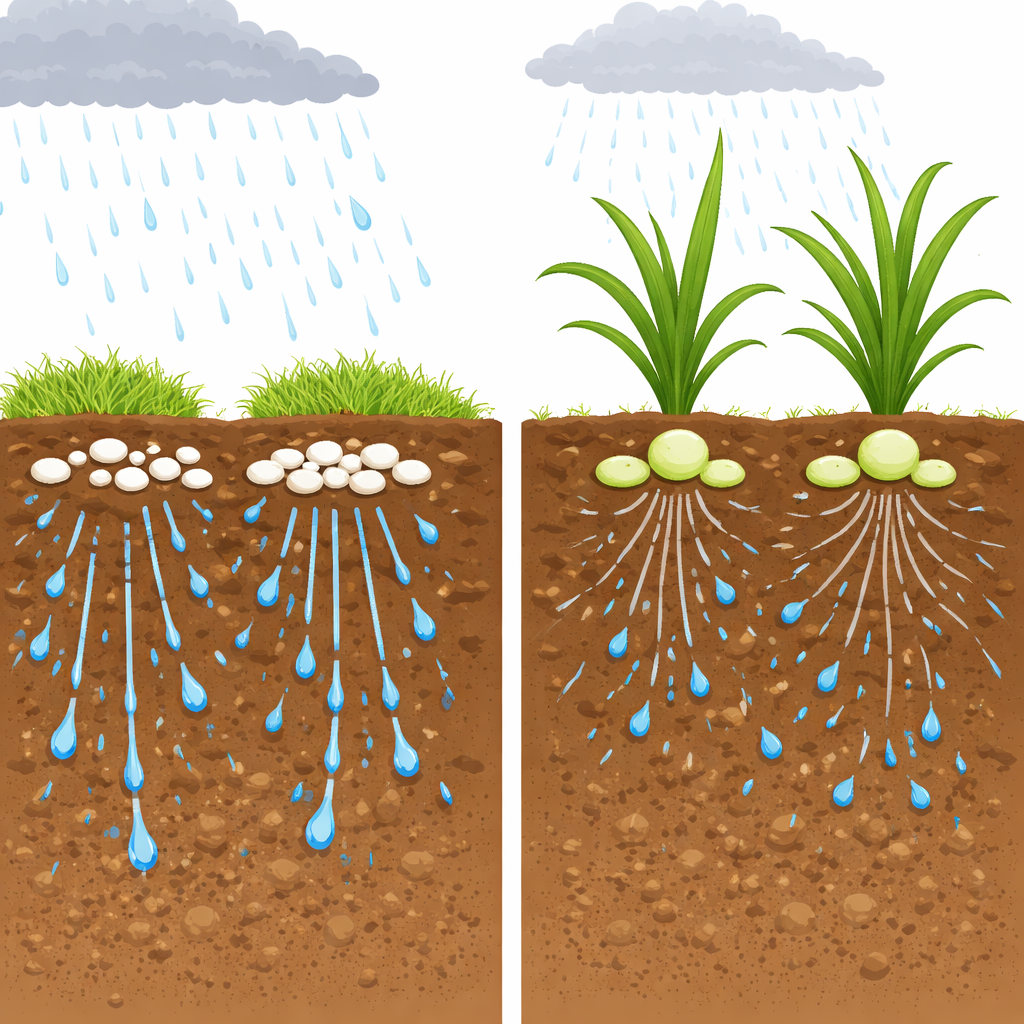
Modern farming depends heavily on nitrogen fertilizer to grow the food we eat, but much of that nitrogen never reaches the crop. It escapes into the air as gases or washes into rivers and groundwater, where it can fuel algal blooms and climate‑warming emissions. This study explores a new kind of “smart” fertilizer coating made from biodegradable plastics and a gentle electrical treatment called plasma, designed to keep nitrogen in the soil longer, release it when plants need it, and then safely break down.
Why Ordinary Fertilizer Wastes Nitrogen
Conventional urea fertilizer is cheap and powerful, but it dissolves quickly once it hits moist soil. In a matter of days, its nitrogen transforms into forms that can either be taken up by plants or lost through leaching and gas release. Farmers often respond by applying extra fertilizer to hedge against these losses, which raises costs and environmental damage. Earlier slow‑release products tried to solve this by wrapping urea in tough synthetic plastics. Those coatings do slow the release, but they do not break down easily, so they can build up in soil and contribute to microplastic pollution.
A New Biodegradable Shell Around Each Grain
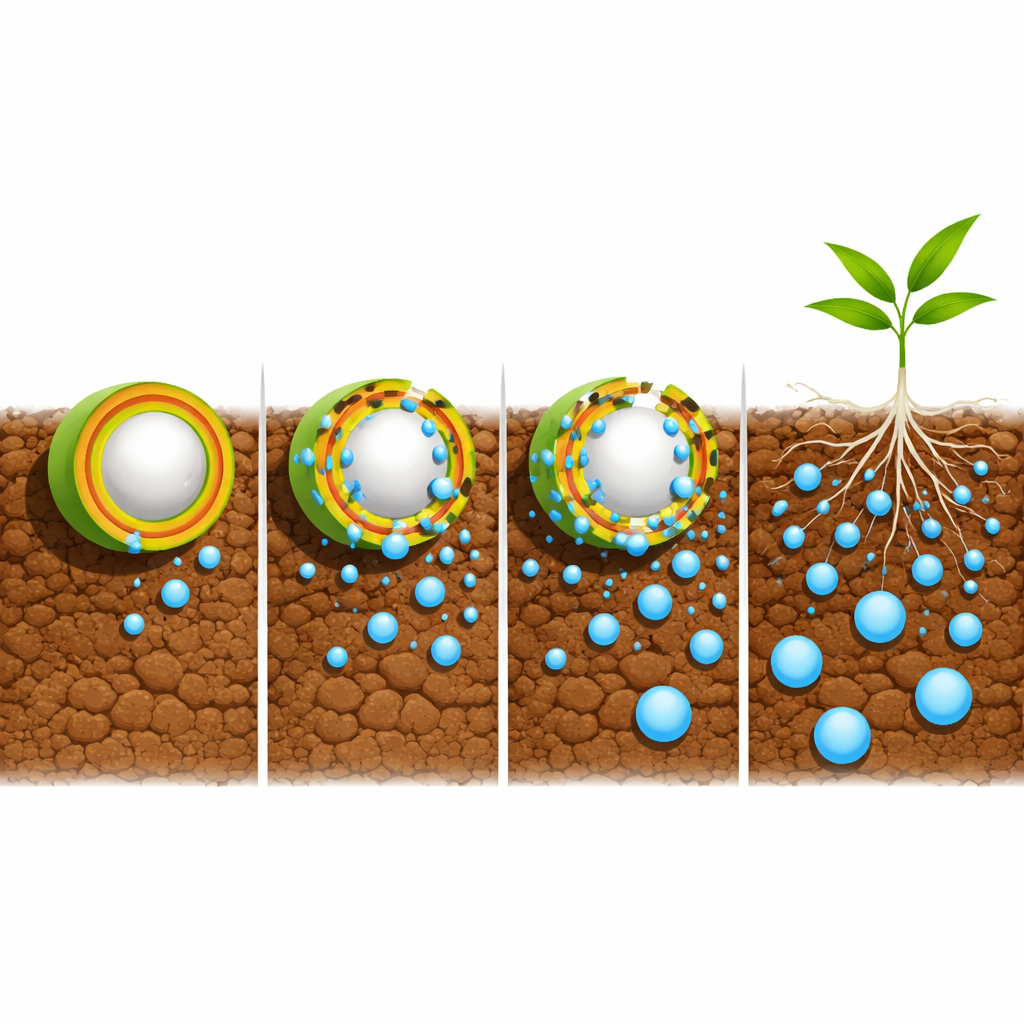
The researchers tackled this trade‑off by developing a coating made from two well‑known biodegradable plastics, PBS and PCL. On their own, these plastics do not mix smoothly and can form weak, patchy films. To strengthen the coating, the team added a small molecule, MDI, that stitches the polymer chains together, and then treated the surface with plasma, which gently roughens it and adds water‑loving chemical groups. Lab techniques that probe how the atoms are arranged showed that these treatments made the plastic blend less crystalline and more interconnected, creating a tighter yet still biodegradable shell around each urea grain.
Following Nitrogen Through Soil Columns
To see how these coatings behave in realistic conditions, the team packed soil into transparent columns and added either uncoated urea or urea wrapped in different versions of the biodegradable film. Over 90 days, they regularly poured water through the columns to mimic rainfall and measured how much nitrogen washed out in two key forms: ammonium (which appears soon after urea dissolves) and nitrate (which forms later and is easily leached). In the uncoated treatment, ammonium spiked within five days and then almost vanished by day 45, while nitrate peaked around day 30. In contrast, all coated fertilizers stretched nitrogen release over nearly three months, with peaks shifted to roughly day 70 and measurable amounts still present at day 85.
Plasma and Crosslinking Fine‑Tune the Release
The different coating recipes produced distinct release patterns. Films strengthened only with MDI held onto nitrogen longer, keeping ammonium and total nitrogen available in the later part of the experiment. Plasma‑treated films, which are more easily wetted by water, released nitrogen a bit earlier but still far more slowly than bare urea. The most advanced version, combining both MDI and plasma, delivered a balanced profile: it avoided the early burst seen in uncoated urea yet maintained a steady trickle of both ammonium and nitrate throughout the 90‑day test. When the researchers modeled the data mathematically, all coated fertilizers followed a smooth S‑shaped curve with an initial lag, a controlled rise, and a gentle plateau, matching the ideal pattern for matching fertilizer supply to crop demand.
What This Means for Fields and Waterways
From a layperson’s perspective, these results suggest a fertilizer that behaves more like a slow‑melting ice cube than instant sugar in water. The biodegradable coating keeps nitrogen from rushing out all at once, feeding crops over weeks instead of days and reducing the share that ends up polluting the environment. Because the plastic shell is designed to break down, it avoids the long‑term build‑up of persistent polymer fragments in soil. While the economics still need to be tested at farm scale, the study shows that carefully engineered, plasma‑modified biodegradable coatings can make nitrogen fertilizer both more efficient for farmers and gentler on the planet.
Citation: Chung, W., Choi, J., Song, JS. et al. Plasma-modified biodegradable coatings for controlled nitrogen release from urea. Sci Rep 16, 10516 (2026). https://doi.org/10.1038/s41598-025-23866-3
Keywords: slow-release fertilizer, biodegradable coating, nitrogen leaching, urea fertilizer, plasma surface treatment