Clear Sky Science · en
A multidimensional core set development of sesame germplasm leveraging agro-morphological traits diversity for genetic improvement and climate resilience
Why this matters for your plate and the planet
Sesame seeds show up in everyday foods, from burger buns to tahini, but behind each tiny seed lies a world of hidden variety. This study explains how scientists sifted through thousands of sesame types from around the world to build a smaller, powerful collection that captures nearly all of that natural diversity. This streamlined set will help breeders develop sesame varieties that yield more oil and protein, stand up to droughts and floods, and resist damaging diseases in a warming climate.
From ancient crop to modern challenge
Sesame is one of the oldest oilseed crops, grown for more than 5,000 years. Its seeds are rich in oil, protein, and health-promoting compounds called lignans, which act as antioxidants and may support heart and brain health. Yet, despite this nutritional punch, sesame lags behind other oil crops like soybean and sunflower in global production. Farmers often face low yields, frequent seed loss at harvest, and damage from pests, diseases, drought, and waterlogging. At the same time, gene banks around the world store tens of thousands of sesame samples collected over decades. These stores hold solutions for many of sesame’s problems—but the sheer number of samples makes them hard to use efficiently.
Boiling a huge collection down to the essentials
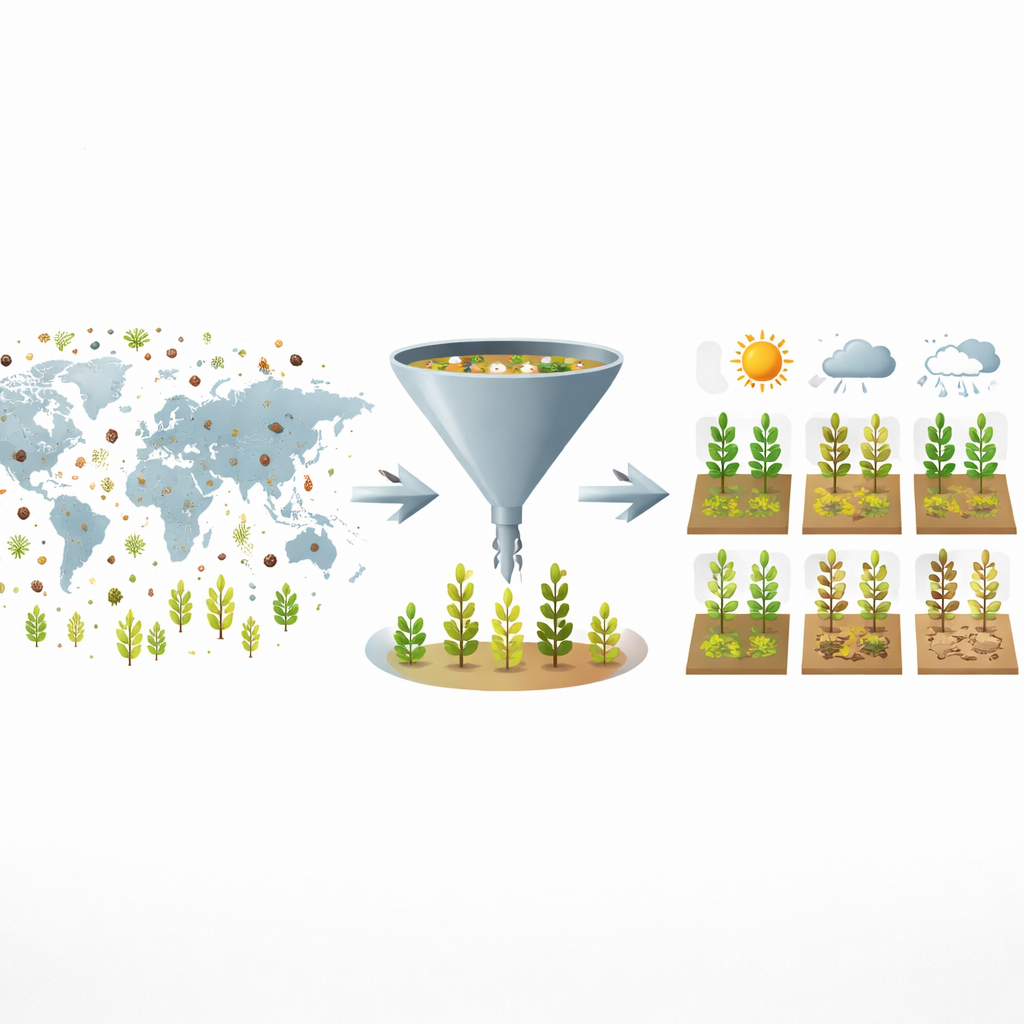
Scientists in India started with 6,000 unique sesame lines conserved in the National Genebank, representing both local Indian types and introductions from 19 other countries. Over two growing seasons, they planted this collection at six sites spanning five distinct climate zones, from dry western plains to humid coastal regions. At each site they scored 33 visible traits, such as plant height, branching pattern, capsule size, seed number, and time to maturity, and recorded how each line handled stresses like drought, waterlogging, and two major diseases (phyllody and dry root rot). They also measured seed quality traits, including oil and protein content, lignans, and fatty acid profiles. Using this mountain of data, they set out to create a much smaller “core set” that still reflected almost all of the original diversity.
Checking that nothing important was left behind
The team used a series of statistical tests to make sure their reduced set truly mirrored the full collection. They compared averages, ranges, and variation for key traits between the original 6,000 lines and the proposed core. Measures of diversity showed that nearly the full spread of plant shapes, growth habits, and seed features was preserved. The core captured 99.8% of the range of values seen in the entire collection and even slightly increased overall variability, which is useful for breeders. Graphs and correlation analyses confirmed that relationships among traits—such as taller plants tending to mature later, or plants with more capsules also having higher yields—remained intact. In the end, they arrived at 773 accessions, just 12.9% of the original set, but still spanning the genetic and geographic breadth of global sesame.
Finding stand-out lines for farmers and breeders
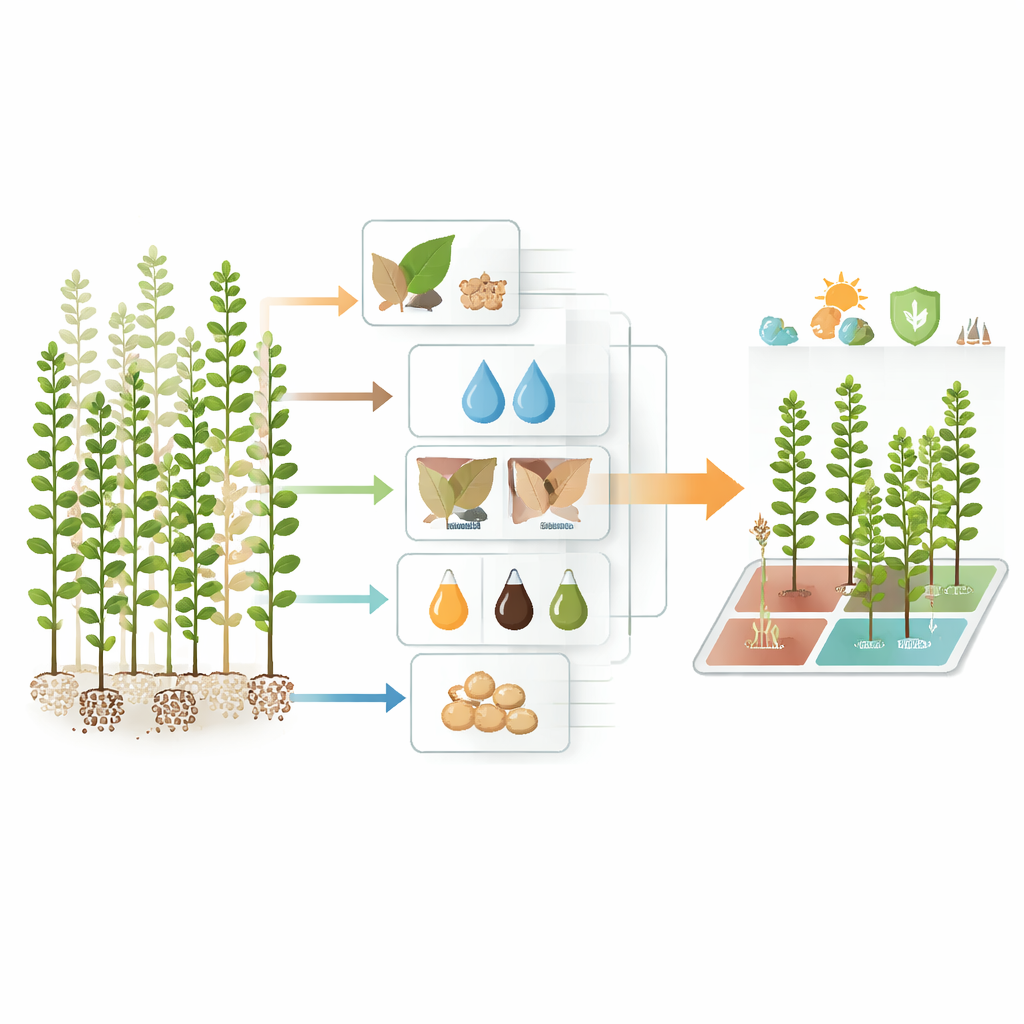
Within this streamlined core, the researchers highlighted sesame lines with especially promising traits. Some plants had a compact, determinate growth habit and single stems, which make for easier mechanical harvest and more uniform ripening. Others formed extra-long capsules, multiple capsules per leaf node, or exceptionally high numbers of capsules and seeds, all pointing toward higher yield. Certain lines stood out for early maturity, which can fit into short growing windows or double-cropping systems. Many accessions combined strong performance under drought or waterlogging with natural resistance to key diseases. Others boasted high oil, high protein, or elevated lignan and favorable fatty acid levels, making them attractive for health-focused foods. Importantly, some lines bundled several of these advantages in a single genetic package.
A toolbox for climate-ready sesame
By distilling thousands of sesame types into a carefully chosen core set, this work gives breeders, farmers, and researchers a practical toolbox for improving the crop. Instead of working with an unwieldy global collection, they can focus on 773 lines that still carry almost all known variation in yield traits, stress tolerance, and seed quality. Future studies can now more easily pinpoint the genes behind these valuable features, using DNA sequencing and other “omics” technologies, and then use modern breeding tools to combine them into new varieties. For consumers, this translates into sesame oils and seeds that are more abundant, nutritious, and reliably produced—even as climates become more extreme.
Citation: Yadav, R., Vishwakarma, H., Satpathy, S. et al. A multidimensional core set development of sesame germplasm leveraging agro-morphological traits diversity for genetic improvement and climate resilience. Sci Rep 16, 14410 (2026). https://doi.org/10.1038/s41598-025-20647-w
Keywords: sesame germplasm, core collection, climate-resilient crops, oilseed breeding, plant genetic diversity