Clear Sky Science · en
Investigating the mechanistic link between pesticide DDT and breast cancer through network toxicology, molecular docking, and molecular dynamics simulation
Why this old pesticide still matters
Even though many countries banned the insect killer DDT decades ago, traces of it are still found in soil, water, food, and even in people’s bodies. At the same time, breast cancer remains one of the most common cancers in women worldwide. This study asks a pressing question for public health: how, exactly, might lingering DDT in our environment nudge breast cells toward cancer, and could existing medicines help counter that risk?
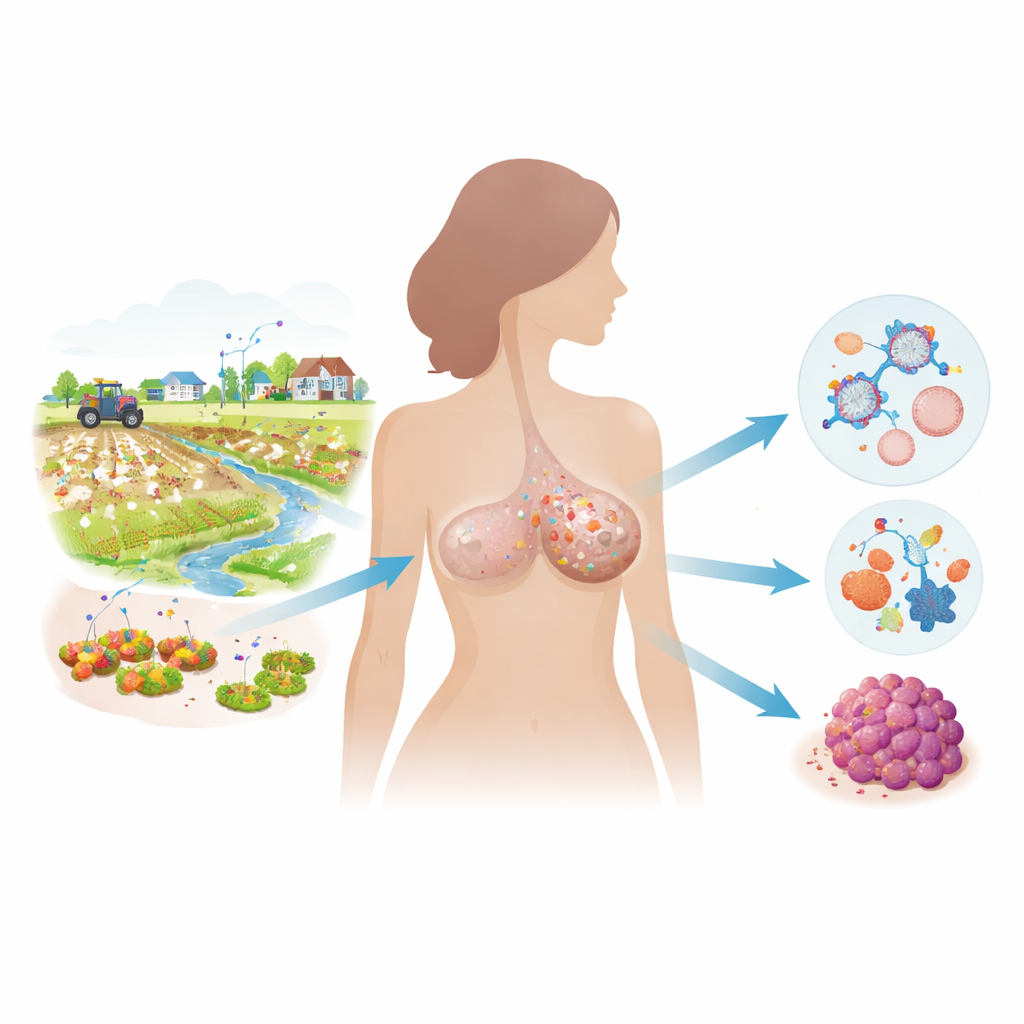
From farm fields to the human body
DDT is stubbornly long‑lived and dissolves easily in fat, which means it can build up in living tissue and move up the food chain. Earlier population studies linked early‑life exposure to higher rates of breast cancer, especially in tumors that respond to female hormones. But these studies could not show what was happening inside cells. The new work uses computer‑based biology to trace a path from environmental exposure down to specific molecules in breast tissue, aiming to bridge the gap between large‑scale health data and microscopic chemistry.
Finding the key molecular crossroads
The researchers first pulled together two large sets of information from public databases: human proteins that DDT is predicted to interact with, and thousands of genes tied to breast cancer. By overlapping these lists and mapping how the shared proteins interact with each other, they narrowed the focus to just 12 "crossroads" proteins. Four of them stood out: receptors for sex hormones and growth signals that already play starring roles in many breast cancers. These include receptors for estrogen, androgen, and a well‑known growth factor often called HER2. Together, these molecules form a signaling hub that tells breast cells when to grow, divide, or rest.
How DDT may mimic hormones in breast cells
Next, the team used molecular docking, a kind of three‑dimensional digital fitting, to see how tightly a DDT molecule might nestle into the pockets of these four key proteins. The simulations suggested that DDT can spontaneously and strongly bind to each of them, particularly to the main estrogen receptor in breast tissue. In further computer experiments that track how molecules move over time in a virtual water‑filled cell, the DDT–estrogen‑receptor complex stayed stable and compact for dozens of nanoseconds. This behavior supports the idea that DDT can act like a rogue hormone signal, latching onto receptors and potentially switching on growth‑related pathways in breast cells.
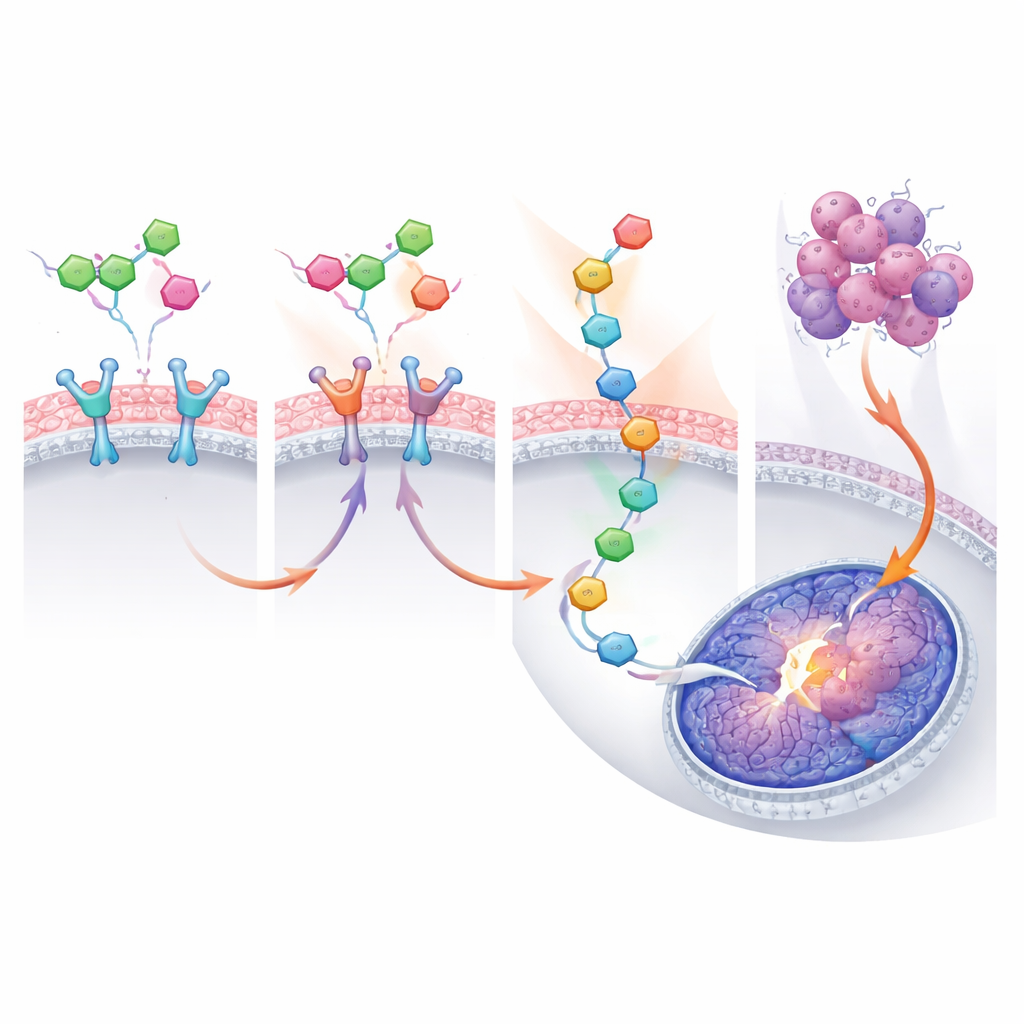
Comparing DDT with cancer drugs
To place DDT’s behavior in context, the authors compared it with four drugs already used against breast cancer. One of them, the hormone‑blocking drug exemestane, turned out to share several chemical features with DDT, including high fat solubility and a tendency to affect similar metabolic routes. When the team docked these medicines to the same receptors, exemestane bound even more strongly than DDT at the very same sites. The other drugs showed moderate binding. This raises the possibility that some existing therapies could be particularly useful for people whose tumors arose in the setting of DDT exposure, though that idea still needs rigorous testing.
What this means for health and policy
Taken together, the results sketch a plausible chain of events: persistent DDT from the environment accumulates in the body, slips into hormone‑sensing proteins inside breast cells, stabilizes those signals, and in doing so may push cells toward uncontrolled growth. The study does not prove that DDT causes any one person’s cancer, and it relies on predictions rather than lab or clinical experiments. Still, it offers a detailed molecular story that lines up with decades of animal and human data, strengthening concerns about ongoing DDT use. It also points to specific proteins that could be monitored as early warning markers and targeted by future treatments for women exposed to this long‑lived pollutant.
Citation: Tang, Y., Huang, J., Yang, F. et al. Investigating the mechanistic link between pesticide DDT and breast cancer through network toxicology, molecular docking, and molecular dynamics simulation. Sci Rep 16, 9569 (2026). https://doi.org/10.1038/s41598-025-20169-5
Keywords: DDT, breast cancer, endocrine disruption, hormone receptors, environmental toxicology