Clear Sky Science · en
Long-term random sampling confirms high-use areas and indicates declining abundance of juvenile smalltooth sawfish (Pristis pectinata) in Charlotte Harbor, Florida
A Hidden Razor-Nosed Resident of Florida’s Coast
Along the mangrove-lined rivers of southwest Florida lives one of the world’s most unusual and threatened fishes: the smalltooth sawfish, a ray with a long, toothy snout that looks like a saw. This study follows more than a decade of young sawfish living in Charlotte Harbor, an important nursery where newborns grow in sheltered, shallow waters. By carefully tracking where these juveniles appear and how many there are, the researchers reveal both the spots the fish depend on most and an alarming decline in their numbers—insights that matter for anyone who cares about the fate of rare wildlife and the health of coastal habitats.
Where Young Sawfish Grow Up
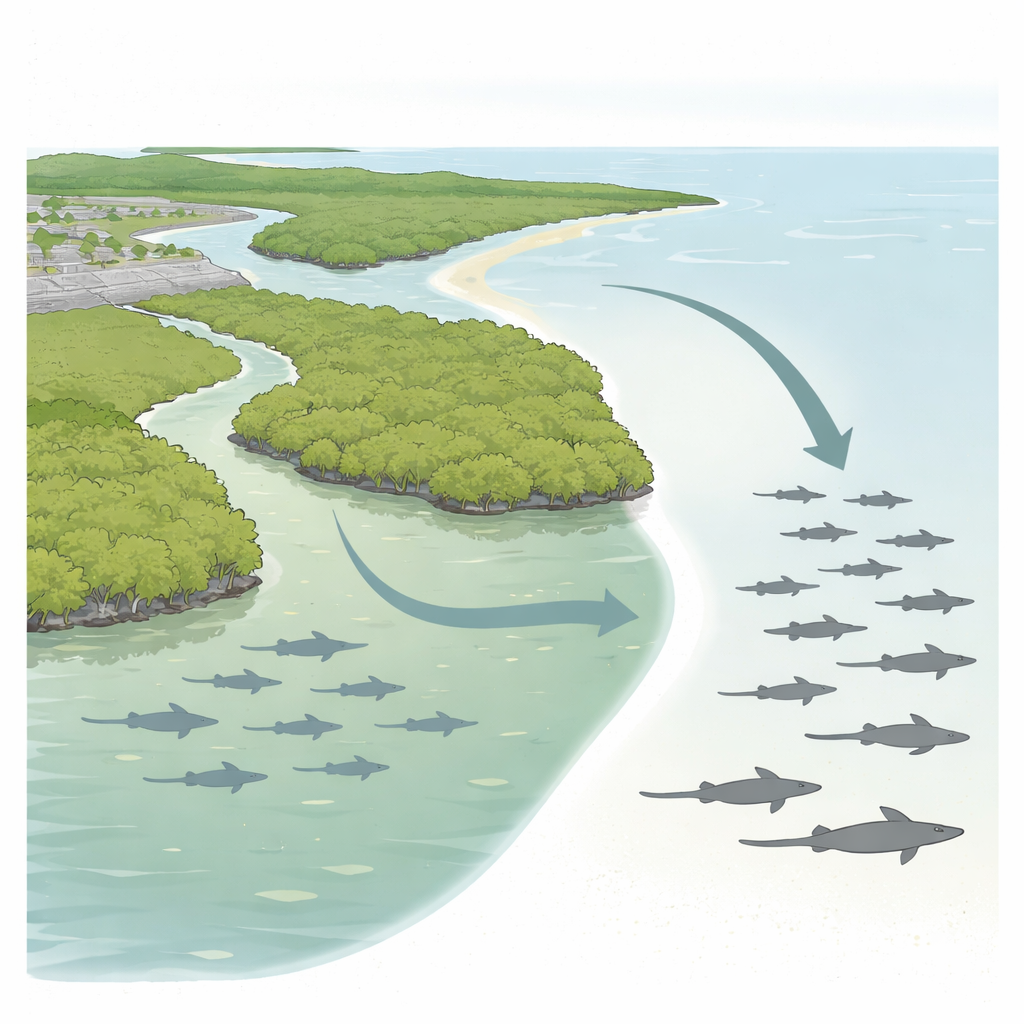
Charlotte Harbor is one of Florida’s largest estuaries, a mixing zone where rivers meet the sea. For smalltooth sawfish, it functions as a nursery, especially along two rivers that feed the harbor: the Peace and the Caloosahatchee. Newborn and yearling sawfish, all under about six feet long, tend to stay in very shallow water near shore, often beside stands of mangroves. These tangled roots offer hiding places from sharks and other predators, as well as plenty of small fish to eat. Adult females are creatures of habit, returning to the same rivers every few years to give birth. Their young then linger in these sheltered shorelines for months before gradually venturing into deeper, more open water as they grow.
Thirteen Years of Careful Counting
To understand how many young sawfish use these nurseries and where they concentrate, scientists conducted long-term, fishery-independent surveys between 2010 and 2022. They set thousands of standardized gill nets at randomly chosen shoreline sites and recorded every juvenile sawfish that was caught, along with water depth, temperature, oxygen levels, salinity, and type of shoreline. Satellite-style maps and aerial images were used to identify where mangroves still fringe the rivers and how densely they grow. The team then combined all of these data in statistical models that relate juvenile sawfish density to environmental conditions and habitat features, allowing them to estimate abundance not just at sampled points but across the whole estuarine system.
Favorite Hangouts and What Makes Them Special
The models showed that young sawfish strongly favor certain recurring “high-use” areas that remained stable through the years. These hotspots are typically 5 to 15 kilometers upriver from the mouth, where the water is shallow, warm, and moderately salty—neither fresh nor fully marine. Crucially, these stretches tend to have natural shorelines lined with dense mangroves, rather than hardened seawalls and heavily developed canals. Well-oxygenated water (above about 7 milligrams of oxygen per liter) also stood out as a key factor. While some other parts of Charlotte Harbor look similar at first glance, they rarely host small juveniles, suggesting that the combination of female birth-site fidelity, mangrove shelter, and local water conditions tightly focuses where this endangered fish can thrive early in life.
Fewer Young Sawfish and Very Few Mothers
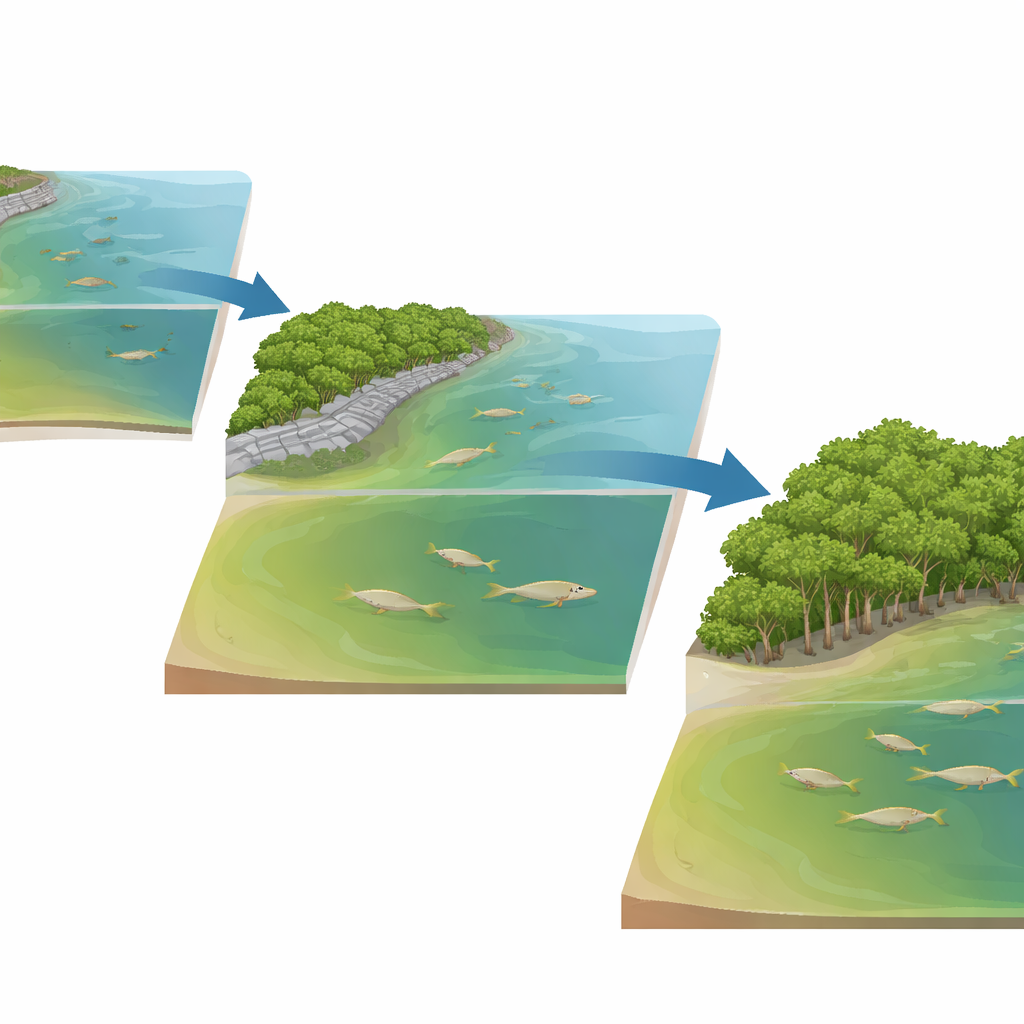
Despite finding these reliable nursery zones, the study uncovered a troubling trend: the estimated number of small juveniles in the survey area dropped from relatively high levels in 2010–2012 to much lower, fluctuating levels afterward, and has stayed depressed in recent years. On average, the models suggest only a few dozen age-0 and age-1 sawfish occupy the monitored shoreline stretches at any given time, and only a few hundred across the broader harbor. By working backward from these juvenile counts using known litter sizes and expected age structure, the researchers estimate that fewer than 100 adult females are currently sustaining the Charlotte Harbor population. This tiny breeding pool is especially worrisome given ongoing threats, including bycatch in commercial shrimp trawls, loss of mangroves to coastal construction, declining water quality, and recent large-scale die-offs likely linked to harmful algae or other toxins.
What This Means for Recovery
To a non-specialist, the message is stark yet actionable: a globally endangered fish is hanging on in just a few key nursery pockets, and its future may depend on safeguarding those places. The study confirms that juvenile smalltooth sawfish rely on warm, brackish, well-oxygenated river edges lined with intact mangroves and relatively little hard shoreline. It also shows that young sawfish numbers are falling and that very few mothers are left to replenish the population. Protecting and restoring these specific high-use areas, limiting damaging activities such as destructive shoreline development and risky fishing practices, and maintaining long-term monitoring are all critical steps if this saw-nosed icon of Florida’s coastal ecosystems is to avoid vanishing from U.S. waters.
Citation: Farmer, N.A., Brame, A.B., Dar, R. et al. Long-term random sampling confirms high-use areas and indicates declining abundance of juvenile smalltooth sawfish (Pristis pectinata) in Charlotte Harbor, Florida. Sci Rep 16, 8736 (2026). https://doi.org/10.1038/s41598-025-14430-0
Keywords: smalltooth sawfish, Charlotte Harbor, mangrove nurseries, endangered species, coastal conservation