Clear Sky Science · en
The association between systemic inflammation markers and breast cancer
Why Blood Clues for Breast Cancer Matter
Breast cancer touches millions of families worldwide, yet most people only hear about mammograms and genetic tests when it comes to catching it early. This study asks a simple but powerful question: can an ordinary blood test, the kind many of us get during routine checkups, offer clues about who is more likely to have breast cancer? By looking at subtle changes linked to inflammation in the bloodstream, the researchers explore whether these everyday measurements could someday help doctors better target screening and pay closer attention to people at higher risk. 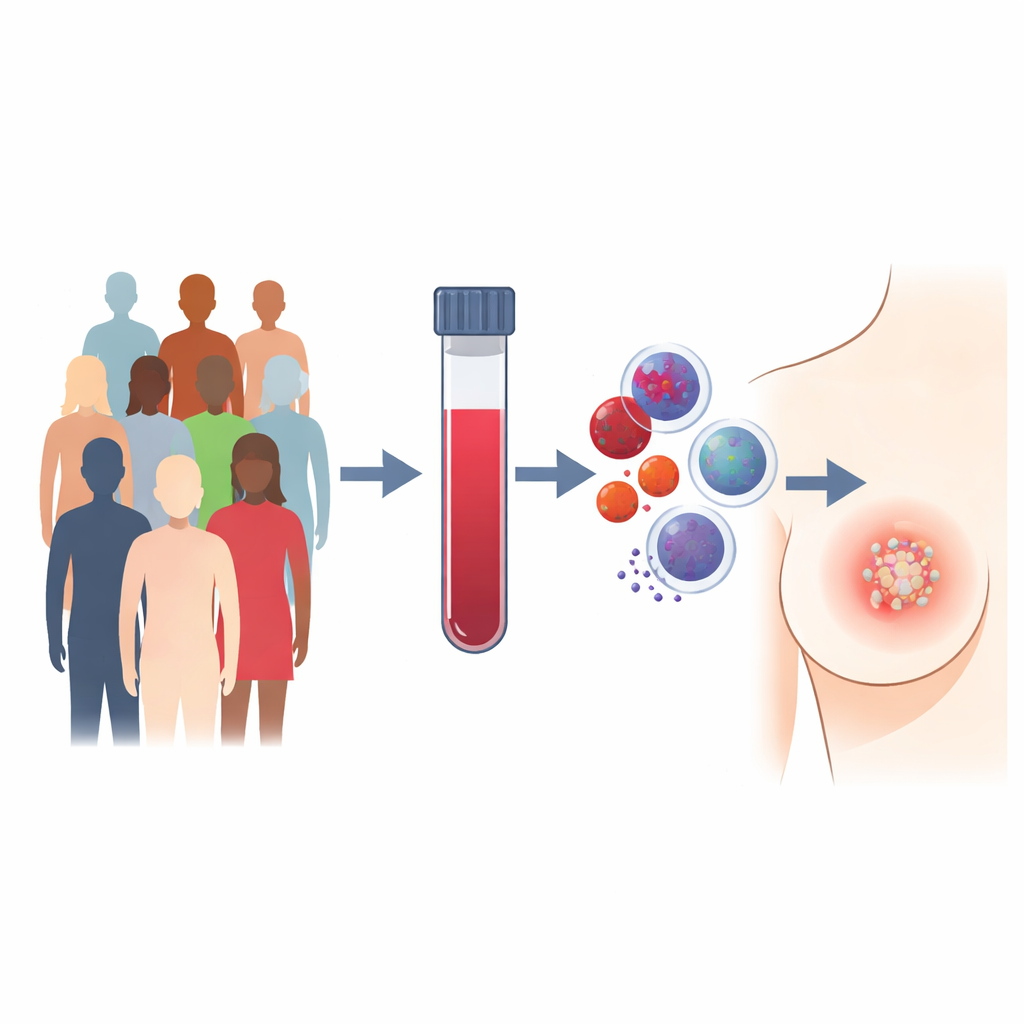
A Large Health Survey as a Living Laboratory
To investigate this idea, the scientists turned to the National Health and Nutrition Examination Survey, a long-running program in the United States that regularly collects health information and blood samples from thousands of adults. From survey years 2007 to 2016, they studied 19,734 people, of whom 312 reported a history of breast cancer. Everyone had standard blood counts measured, including platelets, neutrophils, monocytes, and lymphocytes—different types of cells that take part in clotting and immune defense. The team then combined these basic counts into six simple ratios and indexes that reflect the balance between inflammatory and protective cells in the body.
What the Blood Ratios Reveal
The researchers focused in particular on the platelet-to-lymphocyte ratio, or PLR, which compares the number of clotting cells (platelets) to the number of certain white blood cells (lymphocytes). They also examined related measures, such as the neutrophil-to-lymphocyte ratio and several composite indexes that blend multiple cell types into a single score. Using statistical models that accounted for age, weight, smoking, drinking, diabetes, blood pressure, and other social and health factors, they asked whether higher values of these markers were linked to a greater chance of reporting breast cancer.
Patterns Across Different Groups
Across the entire group of nearly twenty thousand participants, all six inflammation markers showed a positive link with breast cancer: people with higher values tended to be more likely to have the disease. PLR stood out as the most informative of the bunch. The data suggested that as PLR rose, the odds of breast cancer also increased, especially above a certain threshold. This pattern held up in many subgroups, including older adults, people who were overweight, non-smokers, and those with high blood pressure. Interestingly, diabetes appeared to slightly change the relationship between some markers and breast cancer, hinting that underlying health conditions may shape how inflammation and cancer interact. 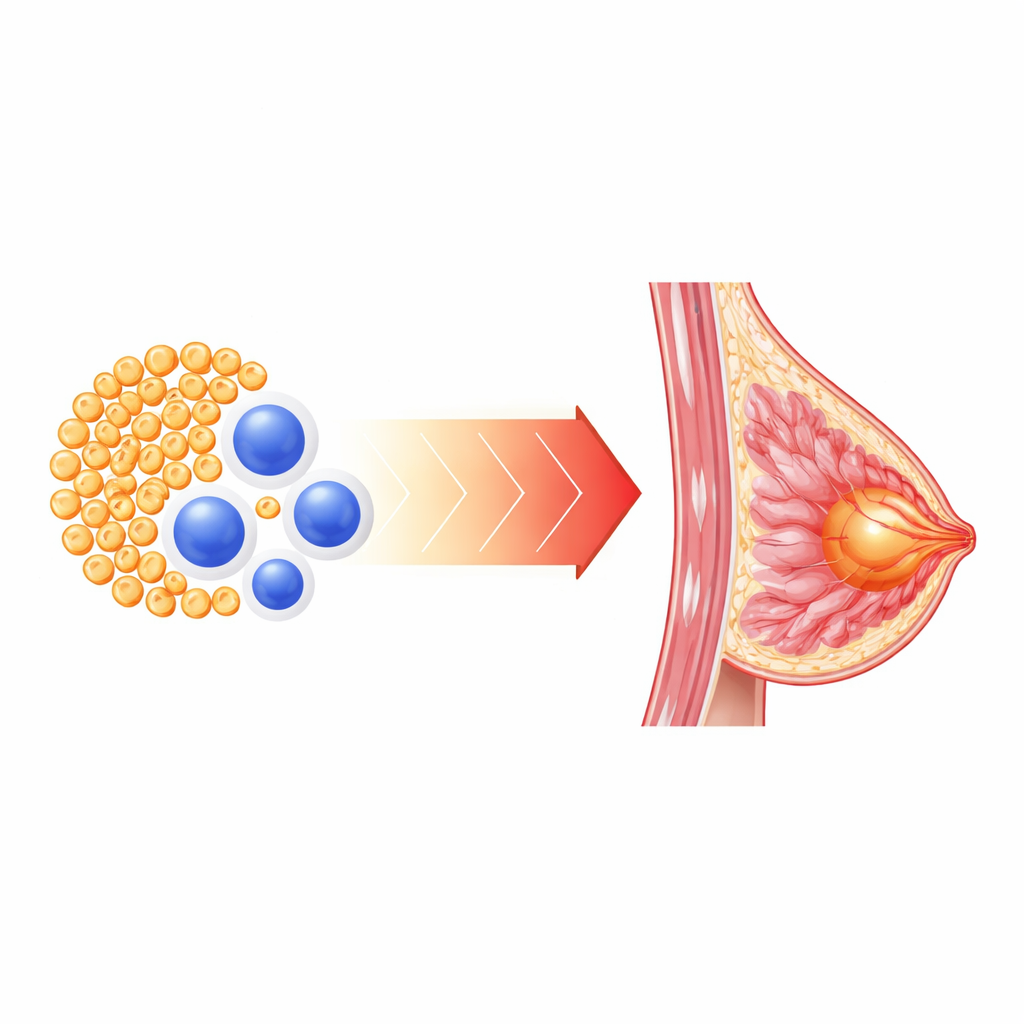
Promise and Limits of a Simple Test
To test whether these markers could realistically help in identifying breast cancer, the authors used a standard tool that measures how well a number distinguishes people with disease from those without it. PLR again performed better than the other markers, but only modestly so. While people with higher PLR were more likely to have breast cancer, the marker alone missed many cases and would not be reliable enough to serve as a stand-alone screening test. Its strength lay more in being fairly specific—an elevated PLR was more often seen in people with breast cancer—but it was not sensitive enough to catch most affected individuals.
What This Means for Patients and Doctors
In everyday terms, this study suggests that routine blood tests may quietly contain information about breast cancer risk, and that the balance between platelets and lymphocytes in the bloodstream reflects processes tied to tumor growth and the body’s defense. However, the findings come from a snapshot in time rather than long-term tracking, so they cannot prove that these blood changes cause breast cancer. For now, PLR and related markers are better viewed as early research leads than as tools ready for the clinic. With more work in larger, carefully followed groups, such markers could eventually help refine who needs closer screening or more intensive follow-up, adding a new layer of insight to the fight against breast cancer.
Citation: Zhang, S., Li, R., Chen, C. et al. The association between systemic inflammation markers and breast cancer. Sci Rep 16, 9564 (2026). https://doi.org/10.1038/s41598-025-10809-1
Keywords: breast cancer, inflammation, blood markers, platelet-to-lymphocyte ratio, early detection