Clear Sky Science · en
The impact of environmental regulation on the development of new quality productive forces in heavily polluting enterprises
Why cleaner rules can mean stronger businesses
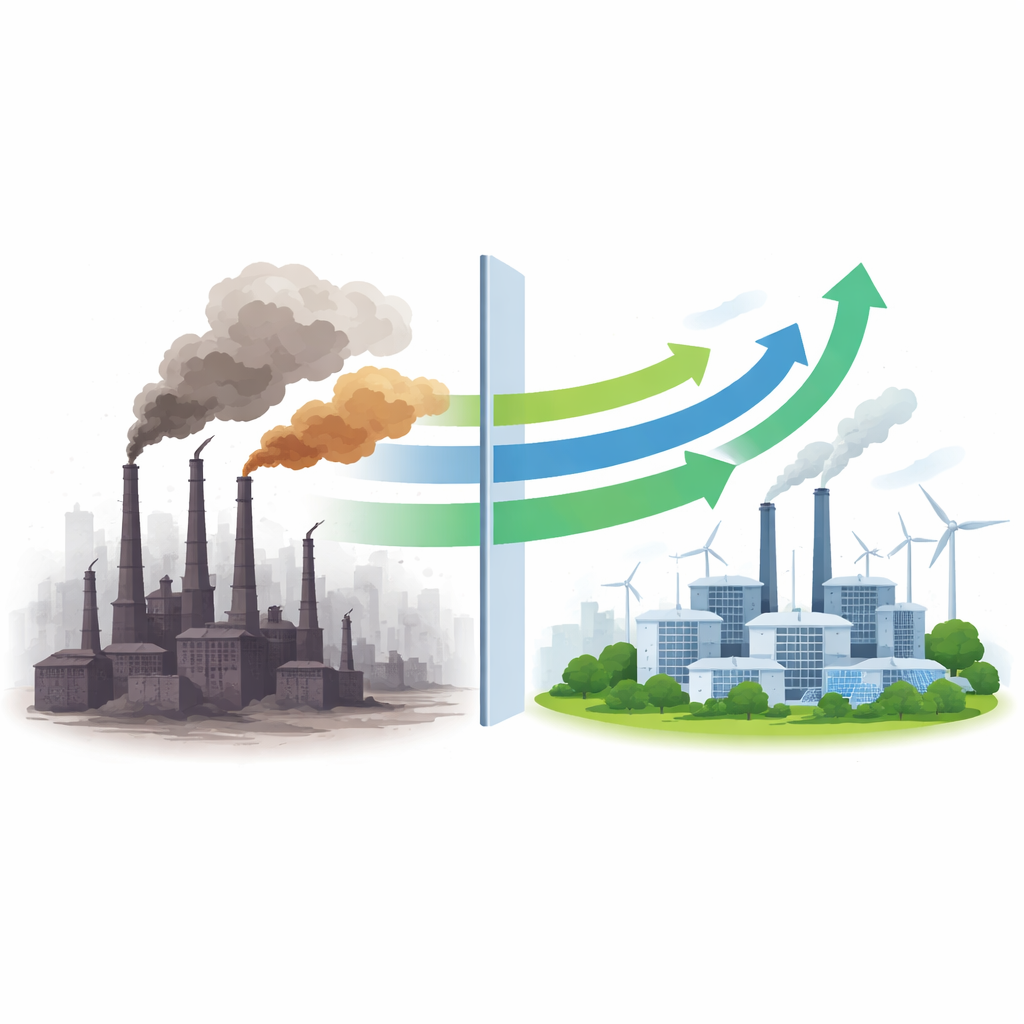
Across the world, people worry that tougher environmental rules might slow economic growth by making life harder for companies. This study looks at what actually happened in China after a powerful new Environmental Protection Law took effect in 2015. Focusing on some of the country’s dirtiest industries, the authors ask a simple but important question: can strict pollution controls push companies to become cleaner and more efficient at the same time?
A turning point for dirty industries
Before 2015, China’s rapid growth came with heavy air and water pollution. The new law marked a sharp turn: it gave regulators stronger tools, from unlimited daily fines to forced shutdowns, and demanded more public disclosure of pollution data. The study tracks more than 11,000 listed manufacturing firms from 2011 to 2022, comparing heavily polluting industries like steel, cement and chemicals with cleaner manufacturing sectors. Because the law arrived suddenly and applied most strongly to dirty industries, the authors treat it like a natural experiment, allowing them to separate the law’s impact from other economic changes.
Measuring a new kind of productivity
Rather than looking only at output or profits, the authors build an index of what they call “new quality productive forces.” In plain terms, this captures how far a company has moved toward a modern, efficient and knowledge‑driven way of producing goods. The index blends indicators of skilled workers, research and development spending, advanced equipment and how effectively assets are used. A higher score reflects a company that relies less on cheap labor and heavy resource use, and more on technology, smart management and cleaner methods.
What happened after tougher rules arrived
The analysis shows that, after the law took effect, heavily polluting firms improved their new‑quality productivity more than comparable firms in cleaner industries. This result holds across many checks, including alternative samples and placebo tests that randomly assign which firms are “treated” by the policy. In economic terms, the law’s impact is sizable: firms facing stricter oversight shifted toward more efficient production rather than simply absorbing higher costs. The pattern supports the “Porter hypothesis,” which argues that well‑designed environmental rules can spur innovation that more than compensates for compliance expenses.
How innovation and finance did the heavy lifting
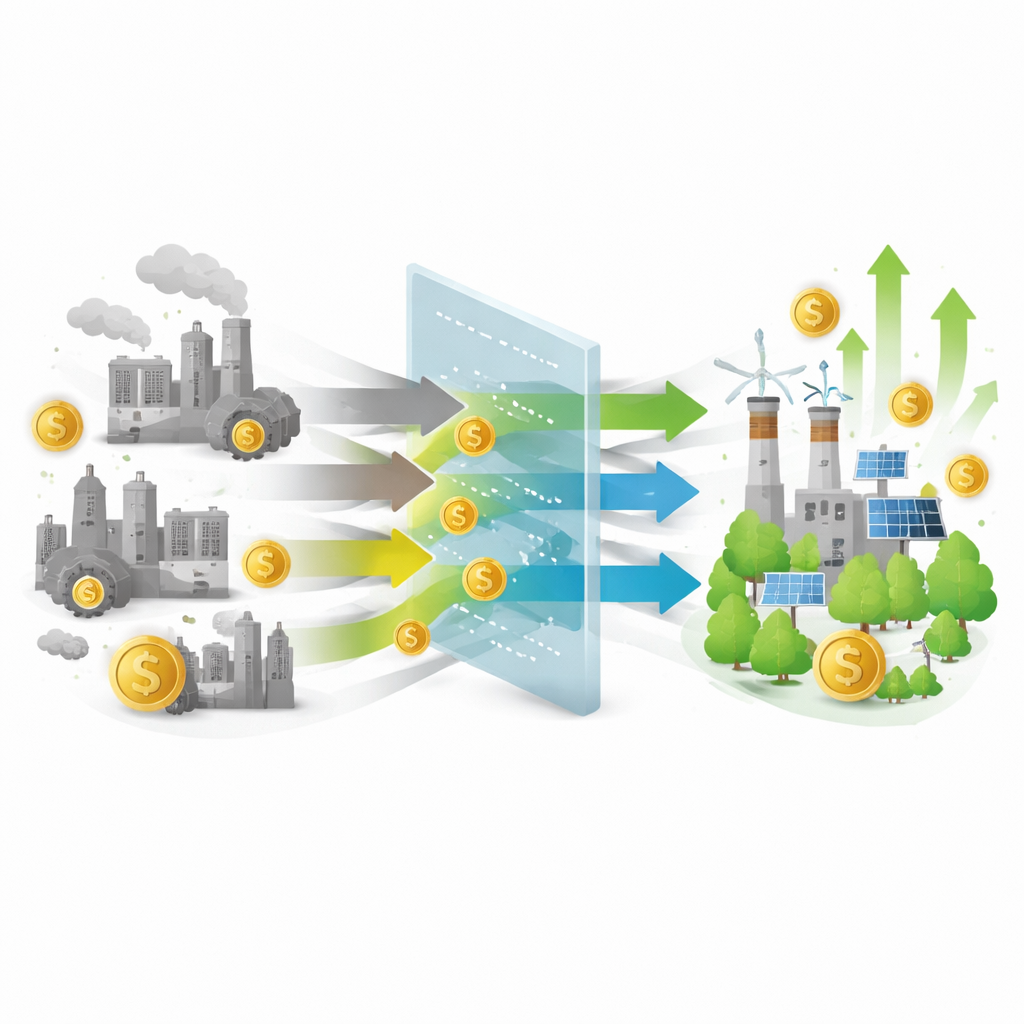
The study then looks under the hood to see how this transformation happened. First, it finds that the law clearly boosted green innovation, measured by patents related to cleaner technologies. Firms that increased such innovation also saw larger gains in their productivity index, and statistical tests show that part of the law’s positive effect flows through this innovation channel. Second, the law helped ease financial bottlenecks. By forcing better disclosure of environmental performance and rewarding cleaner behavior with things like green loans and subsidies, the policy made it easier for compliant firms to attract funding. Companies facing fewer financing constraints were better able to invest in new equipment and cleaner processes, further raising their productivity.
Not all firms benefited equally
The gains were uneven. Firms with ample cash on hand could respond quickly, hiring skilled staff and upgrading technology, and they showed strong improvements. Those with weak cash flow struggled to take advantage of better credit conditions, even when banks were more willing to lend. Ownership also mattered: while both state‑owned and private firms improved, private companies reacted more strongly. With less guaranteed support from government, they had stronger incentives to innovate and cut costs in order to survive under tighter rules.
What this means for people and policy
For a lay reader, the main takeaway is that environmental rules do not have to be a drag on the economy. In China’s dirtiest industries, tougher enforcement pushed many firms to become cleaner, smarter and more productive at the same time. The study suggests that when governments combine strict limits on pollution with support for innovation and access to finance, they can nudge even heavy polluters onto a greener path without sacrificing growth. To spread the benefits, the authors argue, future policies should pay special attention to cash‑poor and smaller firms, ensuring they, too, can afford the investments needed to join this new, cleaner wave of industrial development.
Citation: Li, S., Lin, D. & Du, B. The impact of environmental regulation on the development of new quality productive forces in heavily polluting enterprises. Sci Rep 16, 13899 (2026). https://doi.org/10.1038/s41598-025-02273-8
Keywords: environmental regulation, green innovation, China industry, sustainable productivity, environmental protection law