Clear Sky Science · en
Self-Management of Geriatric Syndromes–longitudinal data on medical and psychosocial factors in older patients
Why caring for frail older adults matters
As people live longer, many spend their later years juggling several health problems at once. These issues are not just about illness in the narrow sense, but also about memory, mood, pain, sleep, and social life. The study described in this article follows a large group of very old, acutely ill patients and asks a simple question with big consequences: how do these men and women manage everyday health challenges, and which medical and social factors help or hinder them over time?
A closer look at common later life problems
The research focuses on what doctors call geriatric syndromes, a cluster of common difficulties that often travel together in old age. These include trouble walking, frequent falls, forgetfulness, incontinence, poor sleep, pain, and feelings of loneliness or low mood. Instead of tracking a single disease, the authors treat these problems as a web of risks that can drain strength, limit independence, and lower quality of life. Understanding how these issues are linked, and how older people cope with them in daily life, is key to supporting an ageing population. 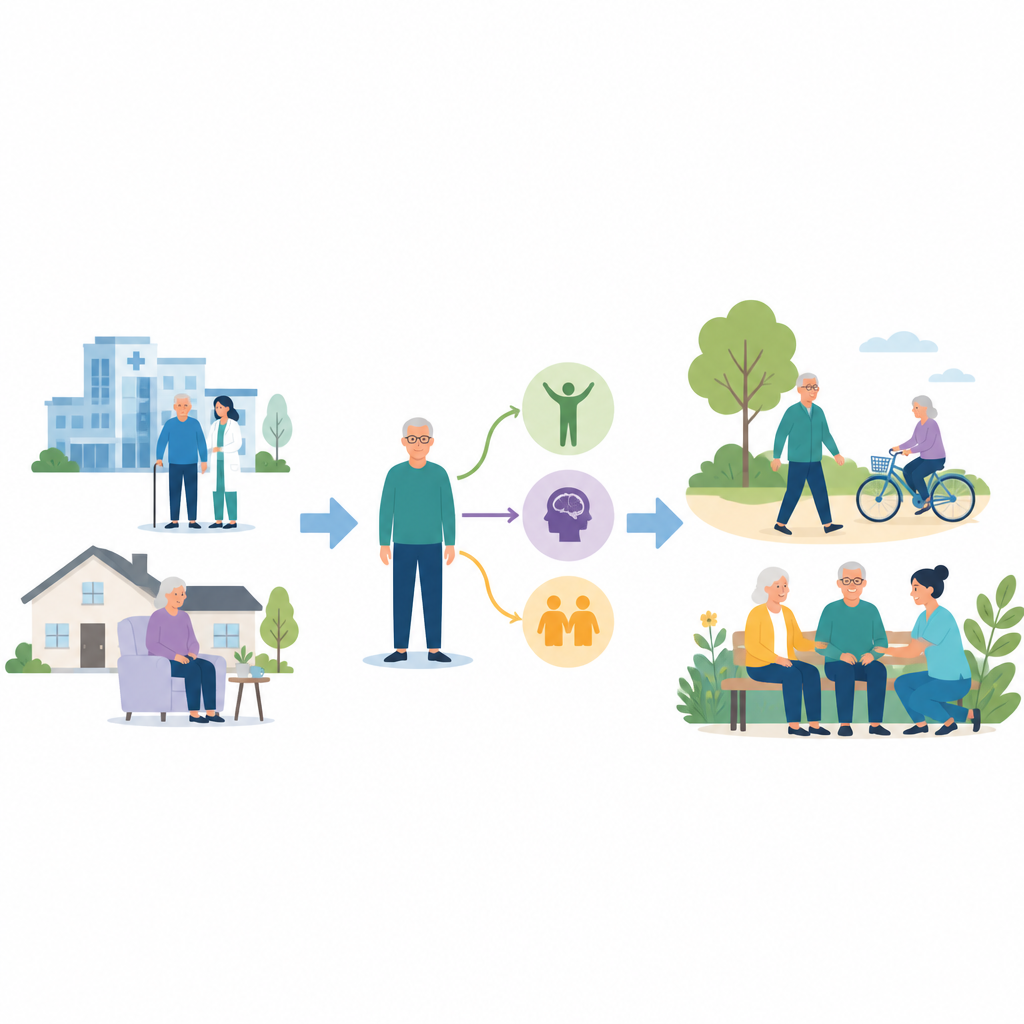
Who took part in the study
The dataset covers 666 patients from three hospital geriatric wards and two family doctors’ practices in Germany. On average, participants were just over 82 years old, most were women, and many were widowed. Each person lived with numerous medical diagnoses and around three to four geriatric syndromes at the same time. Importantly, these were not fit, independent retirees but acutely ill older adults receiving specialized geriatric care or being treated in general practice. Very severely impaired people, such as those with advanced dementia or who were completely bedridden, could not be included, which the authors note as a limitation.
What information was collected
During their hospital stay or clinic visit, patients underwent a comprehensive geriatric assessment that is already part of routine care. This covered thinking skills, mood, mobility, strength, daily activities like dressing and washing, and nutritional status. The team also extracted information from medical records, such as number of diagnoses and medicines. On top of this, patients answered questionnaires about their education, living situation, social ties, feelings of loneliness, and views on ageing. Other surveys asked how well they felt able to care for their own health, how confident they were in handling problems, how satisfied they were with life, and how they understood and used their medicines.
Following patients over time
To see how life unfolded after the acute illness, researchers phoned participants three and six months later. They recorded who was still alive, who had been readmitted to hospital, and how health, geriatric syndromes, and use of health services had changed. Key questionnaires on self-management, quality of life, mood, and views on ageing were repeated. The authors checked the quality of their measures, showing that the main self-care scale matched well with another established tool and that most questionnaires were internally consistent. They also compared different recruitment sites and follow up groups, finding only small differences, which supports treating the dataset as broadly coherent. 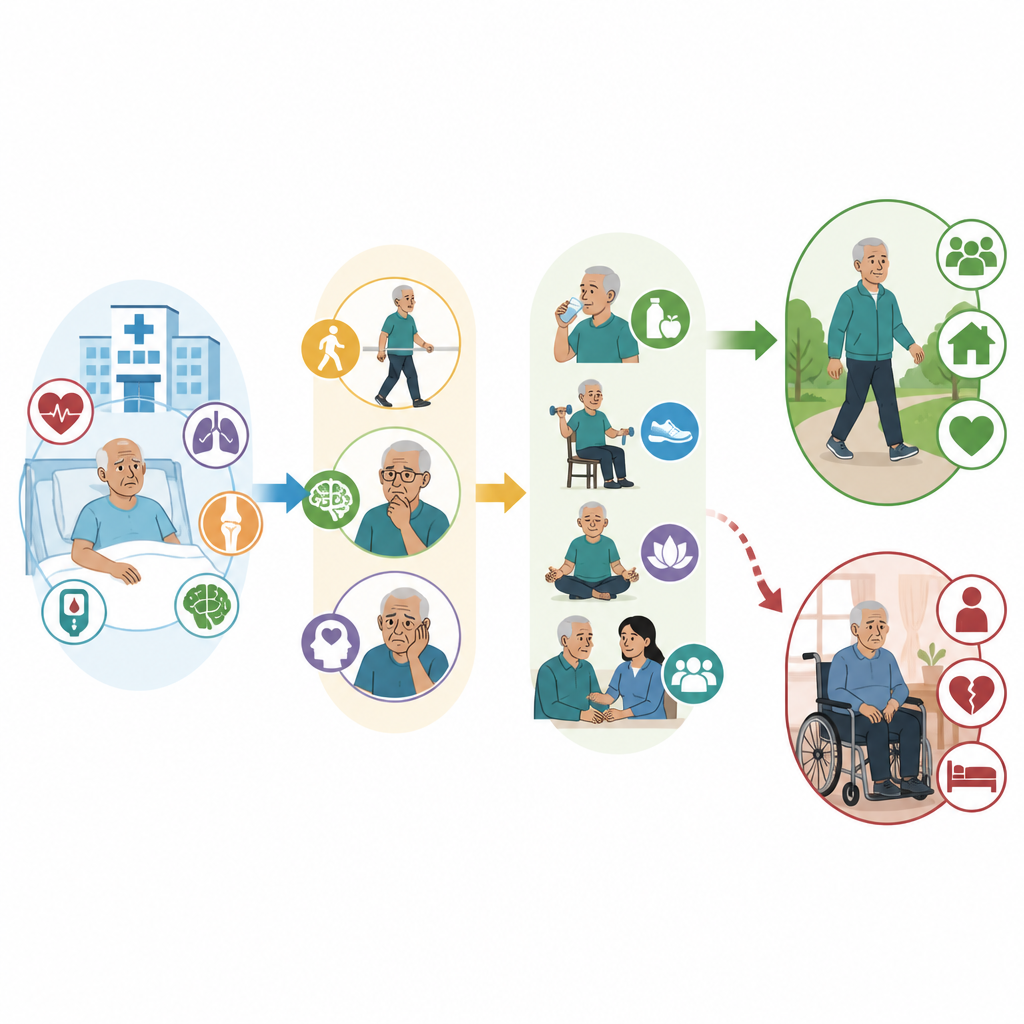
How other researchers can use these data
Because the dataset links medical records, performance tests, and self-reported experiences, it offers many ways to study late life health. Researchers can explore, for example, how beliefs about ageing relate to survival, how confidence in self-care connects to later hospital use, or how loneliness is tied to thinking skills and depressive symptoms. The data are stored in a secure repository, with detailed documentation and prepared summary scores, so scientists can apply their own theories and methods. The authors encourage careful handling of missing data and differences between sites, and recommend combining cross-sectional snapshots with the follow up information wherever possible.
What this means for ageing societies
For a lay reader, the main message is that caring for frail older adults is about much more than treating single diseases. This study gives a rare, detailed picture of how very old, acutely ill patients live with overlapping problems that affect body, mind, and social life, and how they try to manage these challenges themselves. By making these data available, the authors give health researchers and planners a powerful tool to understand what supports or undermines self-care and quality of life in later years, and to design care systems that better match the real needs of older patients.
Citation: Schönenberg, A., Heimrich, K.G., Wientzek, R. et al. Self-Management of Geriatric Syndromes–longitudinal data on medical and psychosocial factors in older patients. Sci Data 13, 794 (2026). https://doi.org/10.1038/s41597-026-07405-x
Keywords: geriatric syndromes, self management, older adults, quality of life, longitudinal study