Clear Sky Science · en
Telomere-to-telomere-level genome assembly and annotation of the Zi goose Anser cygnoides
Why a cold weather goose matters
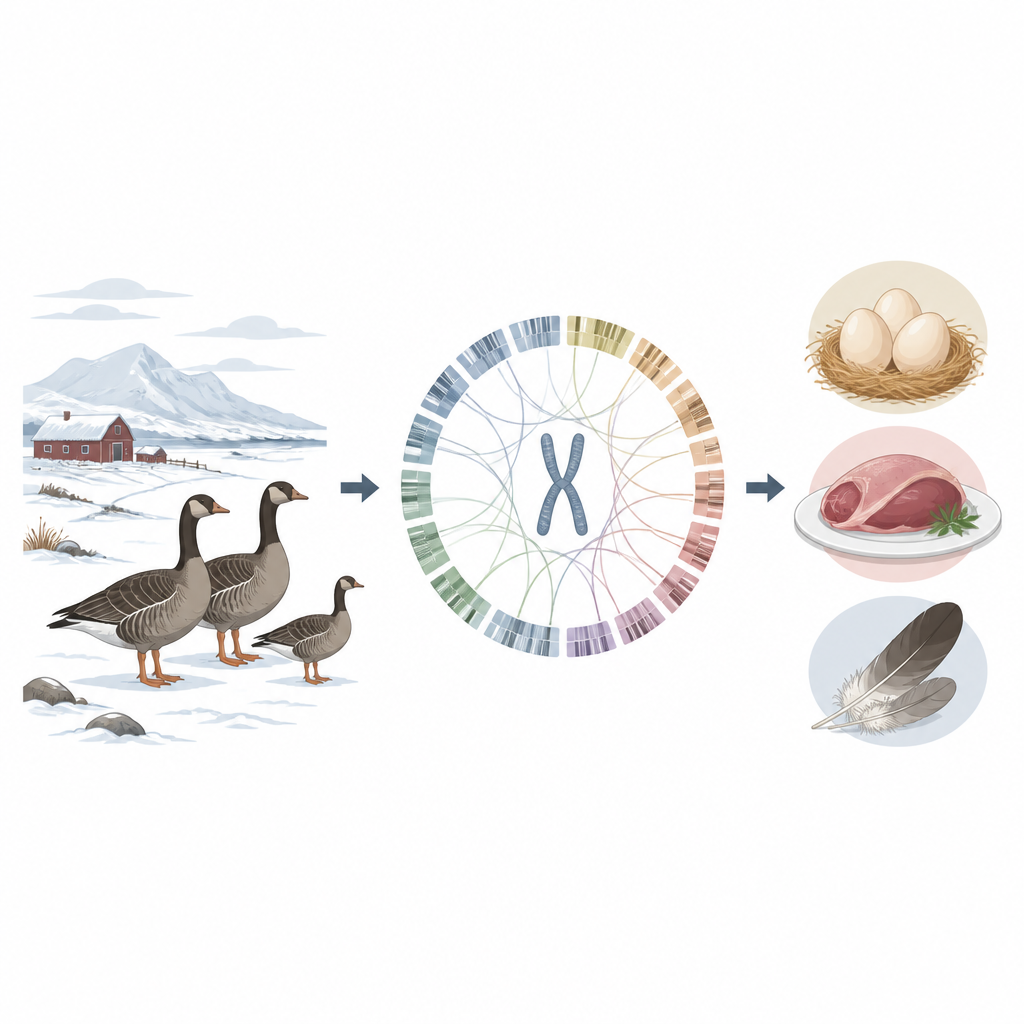
The Zi goose is a small, hardy bird raised in the frigid northeast of China, prized for its eggs, meat, and down. This study reads its entire genetic instruction book from end to end, giving farmers and biologists a detailed map of the DNA that lets these geese thrive in harsh winters and show unusual traits such as strong egg laying and healthy fat-rich livers.
Building a complete DNA map
Every living thing carries its blueprint in long strands of DNA packaged into chromosomes. Earlier goose DNA maps were helpful but incomplete, especially at the tips and centers of chromosomes where the sequence is highly repetitive and hard to read. The researchers set out to build a far more complete map of the Zi goose genome, connecting each chromosome from one end to the other with almost no missing pieces.
Combining many ways of reading DNA
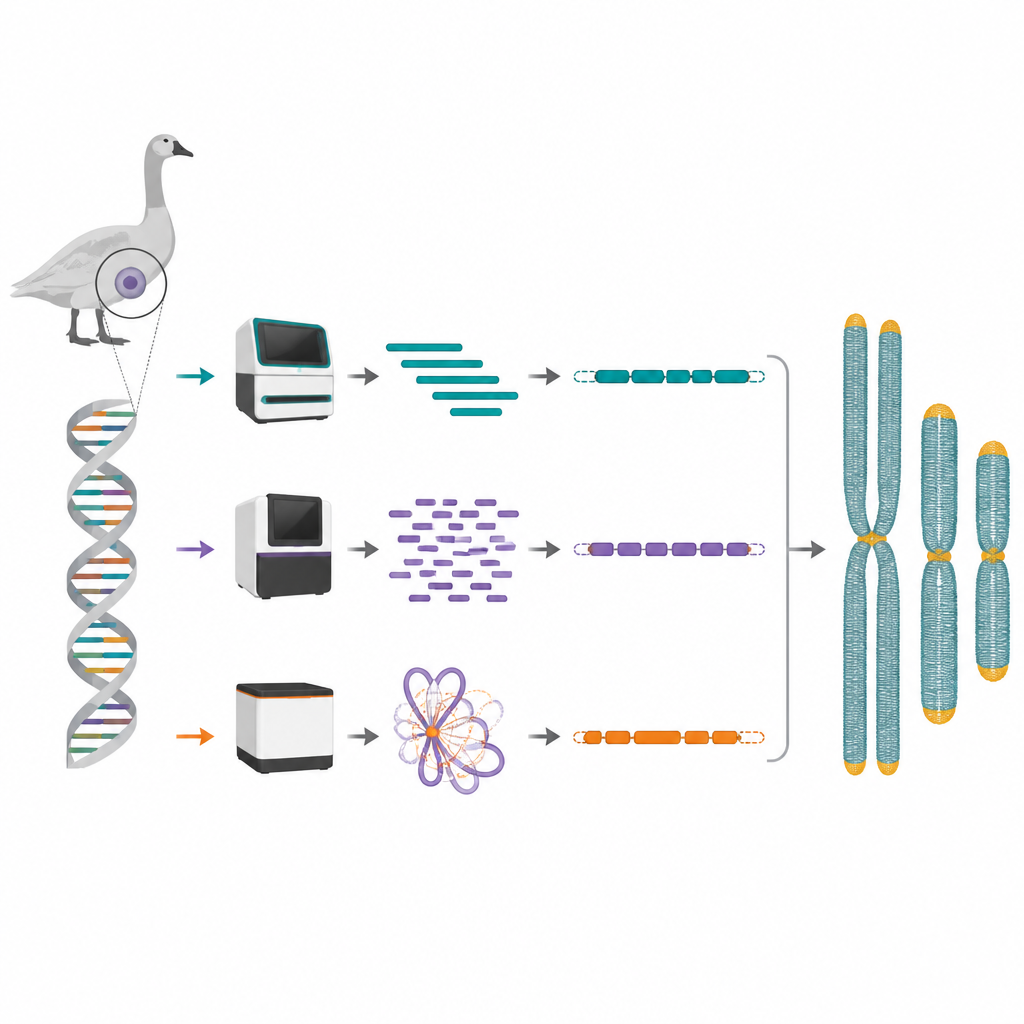
No single sequencing machine can easily capture all parts of a genome, so the team combined several. Short-read machines produced many small, accurate snippets of DNA. Two types of long-read machines generated very long fragments, which are excellent for bridging repeated regions and closing gaps. A method called Hi-C captured how pieces of DNA are physically folded and connected inside the cell, helping the scientists place contigs into the right order along each chromosome. They also collected RNA from eight different organs to see which genes are active and to guide gene discovery.
From raw data to chromosomes and genes
Using advanced software, the team stitched the long and short DNA reads into continuous stretches, then arranged them into 40 chromosomes matching the goose karyotype, including the Z and W sex chromosomes. Thirteen chromosomes were assembled completely gap free, and only a few small gaps remained elsewhere. They then searched the finished genome for specific repeat patterns that mark telomeres at chromosome ends and centromeres near the middle, and mapped these features across the Zi goose genome. Tests comparing the assembly to well known bird genes showed very high completeness and accuracy.
What the genome reveals about Zi geese
With the chromosome map in hand, the researchers catalogued the genetic elements it contains. They found over 18,000 protein-coding genes, the vast majority supported by RNA data and by comparisons to related birds such as ducks and other goose breeds. Nearly 20 percent of the genome consists of repetitive DNA, including several classes of mobile genetic elements, and they identified thousands of noncoding RNA genes that help regulate cell activity. The overall layout and gene structure closely resemble those of other waterfowl, but this assembly reaches a higher level of continuity in many chromosomes.
Why this resource is useful
To a non-specialist, the key message is that we now have a nearly gapless DNA reference for a goose breed that is both cold tolerant and economically important. This resource will help scientists link particular stretches of DNA to traits such as egg production, growth, fat storage, and resilience to low temperatures. In turn, that knowledge can support more precise breeding and management of geese in cold regions, and offer new animal models for studying conditions like fatty liver disease in humans.
Citation: Jiang, K., Wang, H., Cong, K. et al. Telomere-to-telomere-level genome assembly and annotation of the Zi goose Anser cygnoides. Sci Data 13, 771 (2026). https://doi.org/10.1038/s41597-026-07143-0
Keywords: Zi goose genome, telomere to telomere, poultry genetics, cold adaptation, goose breeding