Clear Sky Science · en
Chromosome level genome assembly of Camellia sinensis ‘Yuwan Xiaoye’
Why decoding a tea plant matters to your cup
Tea is more than a soothing drink; its flavor, aroma, and potential health benefits all arise from the chemistry inside the leaves. That chemistry in turn is written in the plant’s DNA. In this study, researchers built an extremely detailed genetic map of a new tea variety called Yuwan Xiaoye, which grows well in cooler regions and offers high yields and strong stress tolerance. This map provides a powerful toolkit for breeders and scientists who want to develop better teas and understand what makes tea plants unique.
A new kind of tea with special strengths
Yuwan Xiaoye is a cultivated tea plant selected through careful breeding in central China. It stands out because it sprouts early in the season, produces abundant leaves, and withstands environmental stresses better than many other varieties. These traits are especially valuable in regions north of the Yangtze River, where growing conditions can be harsher. The success of Yuwan Xiaoye on hundreds of hectares of farmland suggests that its genetic makeup carries combinations of useful features that breeders would like to capture and spread to future tea varieties.
Turning a vast genome into a clear map
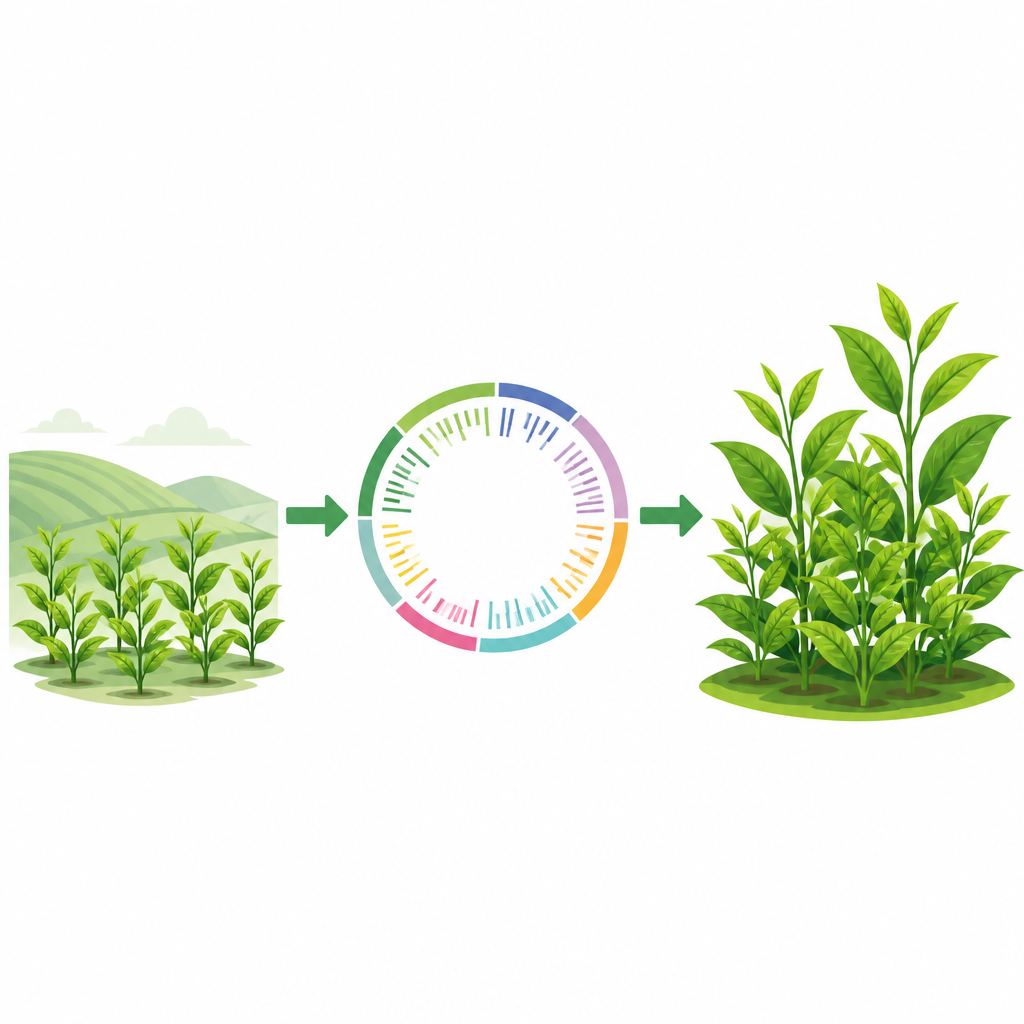
Tea plants have unusually large and complex genomes, filled with repeated DNA sequences and many subtle differences between individual plants. To handle this challenge, the team combined several modern sequencing approaches. They used long DNA reads that can span difficult regions, short reads that provide high accuracy, and a method that records how pieces of DNA sit next to each other inside the cell’s nucleus. By weaving these data together, they assembled a genome of about 3.18 billion DNA building blocks and arranged more than 93 percent of it into 15 full-length chromosomes, which match the plant’s actual chromosome count.
What the genetic blueprint reveals
The completed map shows that the Yuwan Xiaoye genome is packed with repeated DNA, which makes up over four-fifths of its length. Nested within this landscape, the researchers identified 40,119 genes that code for proteins, almost all of which could be linked to known functions from other organisms. They also cataloged thousands of non-coding RNA genes, which help control how and when other genes are switched on. Quality checks indicated that more than 99 percent of the standard plant reference genes are present, meaning the map is both broad and complete enough for detailed scientific work.
From genome data to better tea
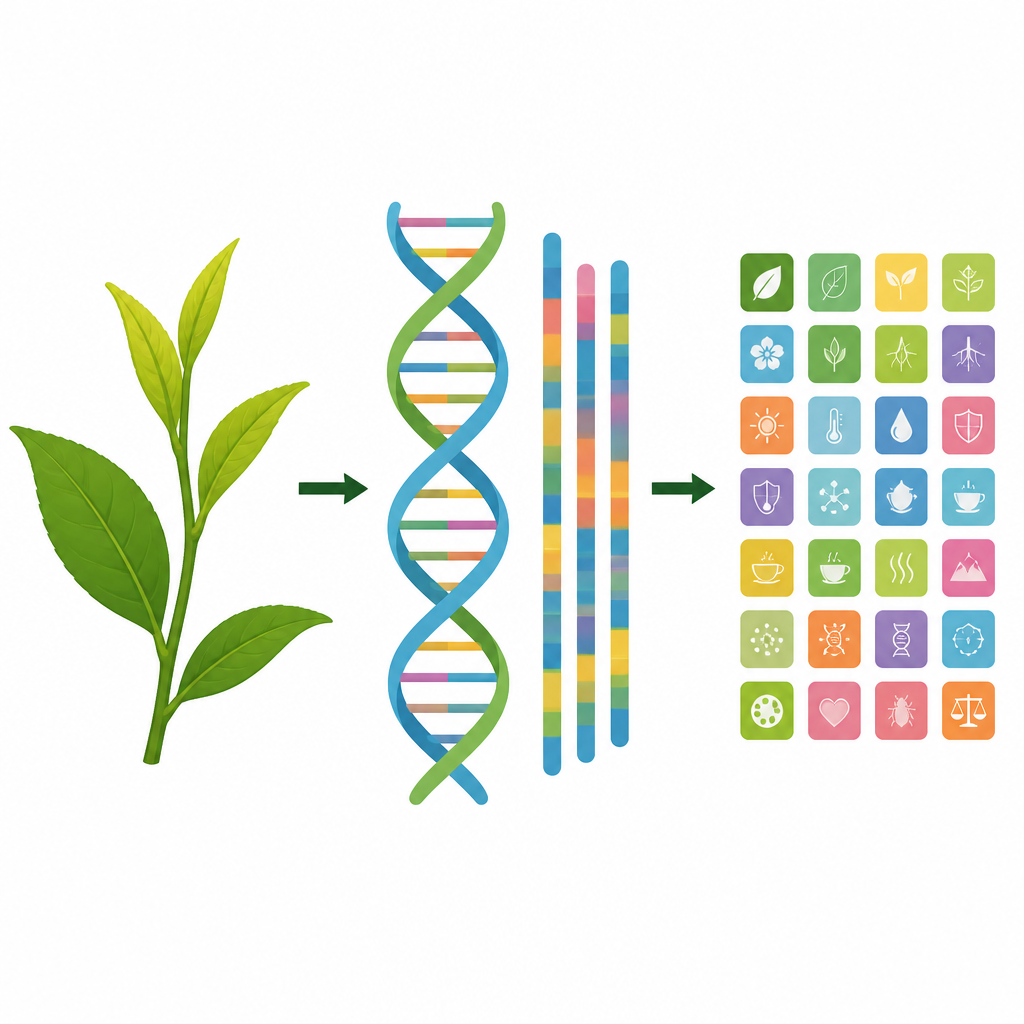
Because this genome is so complete and well annotated, it can serve as a reference for many kinds of studies. Scientists can compare Yuwan Xiaoye with other tea varieties to trace how tea plants evolved, how they acquired their diversity of flavors, and which genes support traits such as cold tolerance, disease resistance, or specific taste compounds. Breeders can use the map as a guide to select seedlings with desirable genetic signatures instead of waiting years to see how plants perform in the field. Over time, this resource can help protect tea genetic diversity, refine breeding programs, and support the development of new teas suited to changing climates and consumer preferences.
What this means for tea drinkers
For everyday tea drinkers, this study does not change how tea is enjoyed today, but it lays crucial groundwork for tomorrow’s varieties. By charting the complete genetic blueprint of a hardy, high-yielding tea plant, the researchers provide a reference that others can use to link genes to flavor, quality, and resilience. In the long run, this knowledge can guide the creation of teas that are easier to grow, more sustainable, and perhaps richer in the qualities people value in their daily cup.
Citation: Zhang, W., Chen, Y. Chromosome level genome assembly of Camellia sinensis ‘Yuwan Xiaoye’. Sci Data 13, 780 (2026). https://doi.org/10.1038/s41597-026-07142-1
Keywords: tea genome, Camellia sinensis, plant breeding, crop genetics, Yuwan Xiaoye