Clear Sky Science · en
A near telomere-to-telomere genome assembly of Pterocryptis cochinchinensis
A shy stream catfish under the spotlight
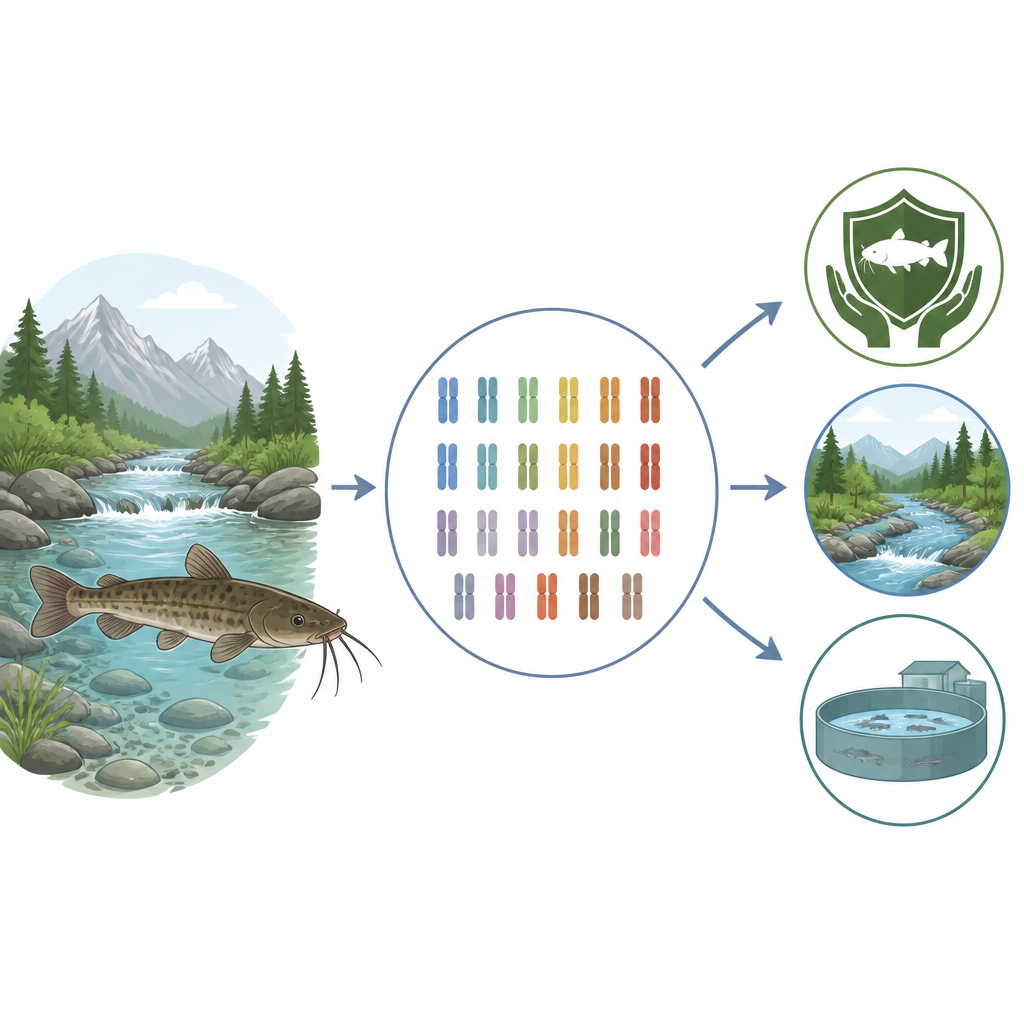
Pterocryptis cochinchinensis is a small, nocturnal catfish that hides in clear mountain streams across Southeast Asia and southern China. Because it is picky about water quality and habitat, its fate is closely tied to the health of these fragile freshwater ecosystems. Yet until now, scientists have known surprisingly little about its inner blueprint. This study delivers a nearly complete map of the catfish genome, offering new tools to understand its biology, protect its dwindling wild populations, and compare it with other catfish that share its rivers.
Why this little fish matters
This catfish stands out from its more familiar relatives. Dark on top and pale underneath, with long whisker like feelers, it spends daylight hours hiding among rocks and plants, venturing out at night to feed on insects, small fish, and crustaceans. Because it prefers cold, clean, fast flowing streams with gravel or sand bottoms, it is highly sensitive to pollution and habitat disturbance. In recent years, its wild numbers have fallen across parts of its range, and there are still no reliable methods to breed it on farms. These traits make it both vulnerable and valuable as a living indicator of stream health.
Building a near complete genetic blueprint
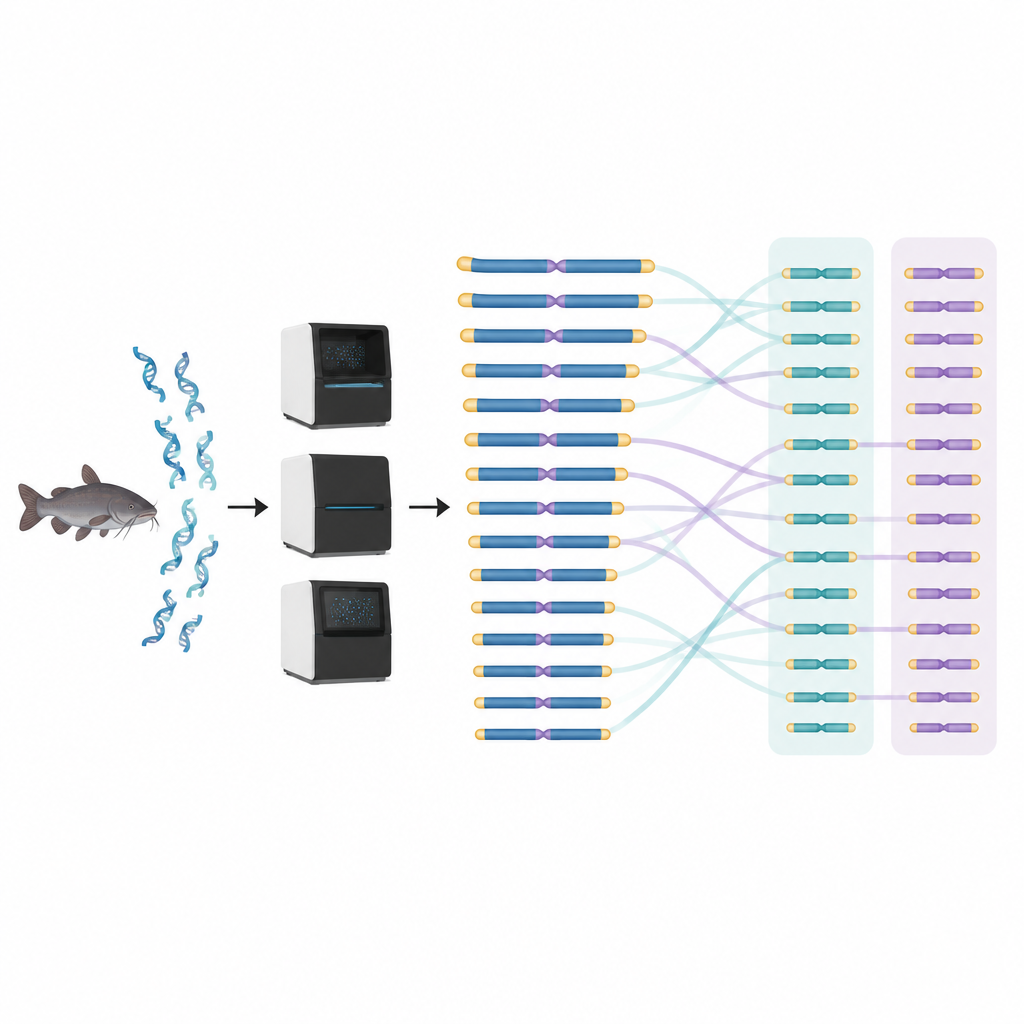
To reveal this fish’s genome with exceptional detail, the researchers collected tissue from a single adult female and combined several cutting edge DNA sequencing approaches. They used short DNA fragments for overall accuracy, extra long fragments to span hard to read regions, and a technique that captures how distant pieces of DNA sit together inside chromosomes. By weaving these data streams together, they assembled a genome of about 932 million DNA letters, arranged into 28 chromosomes, with very few gaps and errors. A widely used quality test suggested that more than 96 percent of expected genes are present and correctly assembled, placing this genome among the highest quality fish references so far.
What the genome reveals
The team then searched the genome for repeated stretches of DNA and for genes that code for proteins and other functional molecules. Almost half of the genome consists of repetitive elements, which can shape how genomes evolve over time. They identified over 31,000 protein coding genes, most of which matched known entries in major biological databases, lending confidence to the annotation. They also cataloged thousands of non coding RNA molecules, including transfer RNAs, ribosomal RNAs, and small RNAs that help control how genes are turned on and off. Together, these features sketch a detailed picture of how the catfish’s DNA is organized and regulated.
Connecting chromosomes across catfish relatives
To see how this species fits into the wider catfish family tree, the authors compared its chromosomes with those from two closely related Silurus catfish. Long, shared stretches of DNA showed that the three species have kept similar overall chromosome structures, while crisscrossing segments revealed places where chromosomes have broken and rejoined during evolution. These comparisons build on earlier work in related catfish that traced the history of sex chromosomes, and they set the stage for pinpointing how genes linked to traits like growth, reproduction, and environmental tolerance have shifted across species.
New tools for conservation and future research
By delivering a near telomere to telomere genome with clearly marked chromosome ends and centers, this study turns a poorly known stream dweller into a genetic reference for freshwater science. Conservation biologists can now track how different populations are related, how much genetic diversity they still hold, and how human pressures are shaping their DNA. Aquaculture researchers gain a roadmap for exploring traits that could support careful, small scale farming without harming wild stocks. More broadly, the genome will help scientists probe how sensitive freshwater fishes adapt or fail to adapt to rapid environmental change, offering clues for protecting river life in a warming, more crowded world.
Citation: Chen, W., Ouyang, Y., Fan, Y. et al. A near telomere-to-telomere genome assembly of Pterocryptis cochinchinensis. Sci Data 13, 773 (2026). https://doi.org/10.1038/s41597-026-07135-0
Keywords: catfish genome, freshwater biodiversity, chromosome assembly, conservation genetics, comparative genomics