Clear Sky Science · en
Chromosome-Level Genome Assembly and Annotation of Piptanthus nepalensis (Hook.) Sweet
A Mountain Shrub with Hidden Stories
Piptanthus nepalensis, sometimes called the Nepalese laburnum, is a shrub with bright yellow flowers that dots the high slopes of the Himalayas. Local communities have used it for generations to treat infections, and modern tests report strong activity against several bacteria. Yet until now, scientists have lacked a complete map of its DNA, the instruction book that shapes its healing chemistry, hardiness, and ornamental appeal. This study delivers that missing map, creating a detailed reference genome that opens the door to understanding how this modest mountain shrub makes its useful compounds and how it might be improved or conserved.
From Wild Hillside to Sequencing Lab
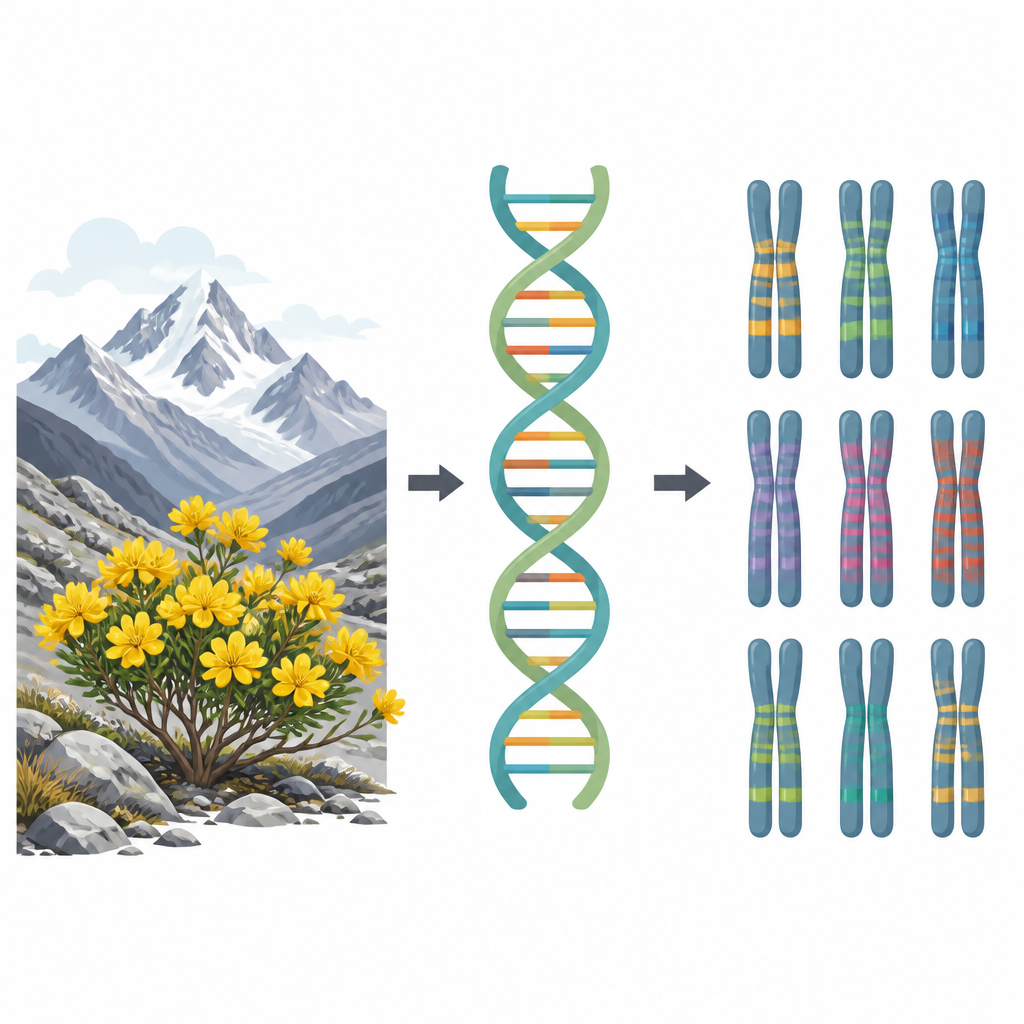
The research team began with a single healthy shrub growing in Tibet, carefully collecting leaves, stems, roots, and flowers. These tissues provided high quality DNA and RNA, which the scientists fed into several advanced sequencing machines. Long DNA fragments were read using PacBio technology, short but highly accurate fragments came from Illumina platforms, and a method called Hi-C captured how pieces of DNA are folded and packed inside the cell. Together, these data streams let the authors piece together not only the order of genetic letters, but also how long stretches of DNA are arranged into full chromosomes.
Building a Complete Chromosome Map
Using specialized software, the team assembled the DNA reads into long stretches and then used the 3D packing information from Hi-C to link them into nine chromosome-like structures, matching the known chromosome number of P. nepalensis. The finished genome covers about 1.04 billion DNA letters and is highly continuous, meaning most of the information is stored in a few long pieces rather than many short fragments. Quality checks showed that nearly all raw reads could be aligned back to this assembly and that the base-by-base accuracy is extremely high. Independent tests that look for standard “benchmark” plant genes found that more than 99% of them are present and intact, indicating that very little information is missing.
A Genome Rich in Repeats and Genes
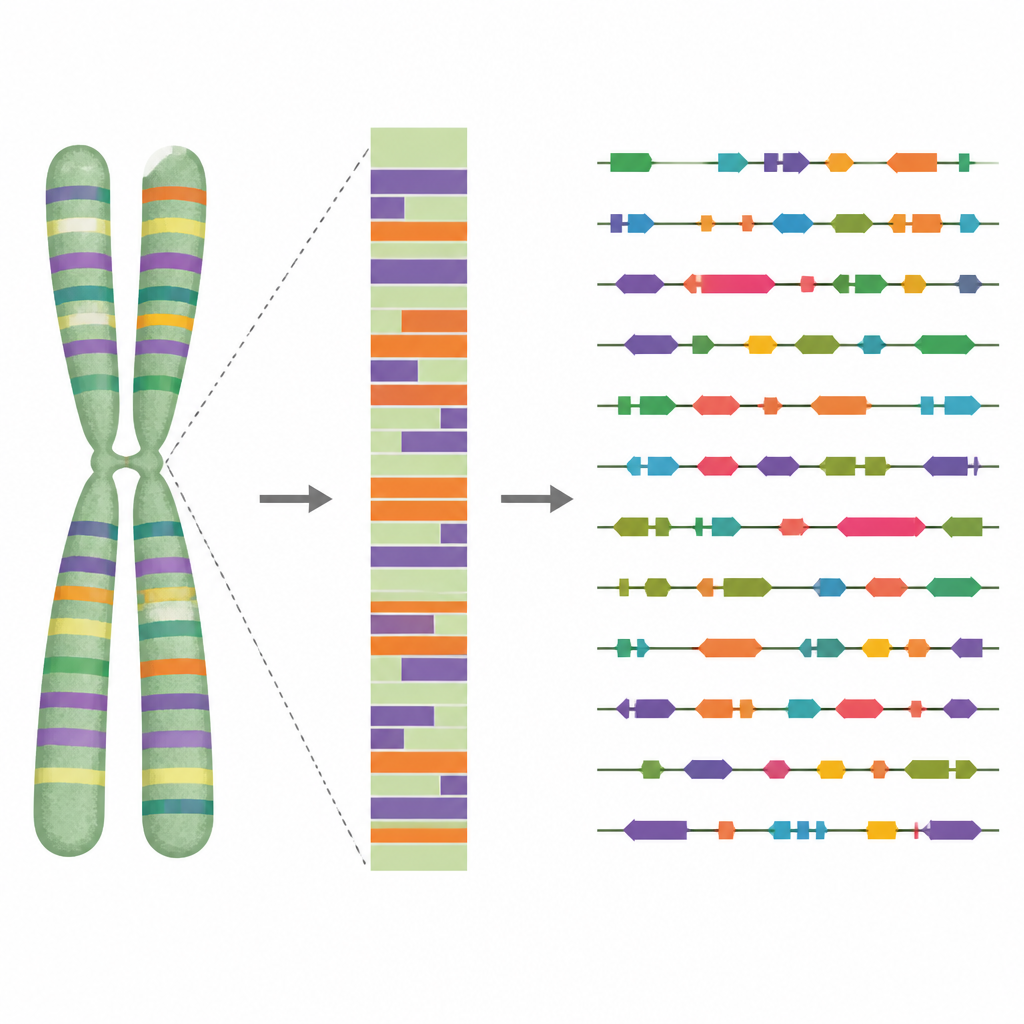
Once the broad map was complete, the researchers turned to what it contains. They found that about three quarters of the genome is made up of repetitive DNA, much of it belonging to jumping elements that copy and paste themselves around the chromosomes. These elements, especially a type known as LTR retrotransposons, are particularly abundant near the centers of chromosomes and are likely responsible for the plant’s relatively large genome size. On top of this repetitive backdrop, the team identified 26,035 protein-coding genes, many supported by direct evidence from RNA readouts. They also cataloged thousands of non-coding RNAs, such as transfer RNAs and small regulatory RNAs, which help control how genes are used.
Clues to Medicinal Power and Future Breeding
The gene catalog was compared against several major biological databases to infer likely functions. A large majority of the genes could be linked to known protein families, biological pathways, or cellular roles, providing a starting point for pinpointing the pathways that produce antibacterial and other bioactive compounds. Although the study does not yet single out specific drug-related genes, it supplies the crucial framework for that hunt. With this genome in hand, scientists can now search systematically for clusters of genes involved in secondary metabolites, study how these pathways evolved, and look for genetic markers that relate to traits such as flower color, growth form, or stress tolerance.
A Foundation for Exploring a Useful Himalayan Plant
In plain terms, this work gives researchers a high resolution instruction manual for Piptanthus nepalensis. The authors show that they have captured almost all of the plant’s DNA and genes in a clean, well organized form that others can freely explore. That resource will help connect the shrub’s traditional uses to specific molecules and genes, guide efforts to breed varieties with improved medicinal or ornamental traits, and support conservation of its wild populations. For anyone interested in how plants make their chemical arsenals, this genome turns a once mysterious mountain shrub into a well mapped system ready for deeper investigation.
Citation: Zhang, J., Zeng, Z., Bonjor, N. et al. Chromosome-Level Genome Assembly and Annotation of Piptanthus nepalensis (Hook.) Sweet. Sci Data 13, 772 (2026). https://doi.org/10.1038/s41597-026-07134-1
Keywords: Piptanthus nepalensis, plant genome, medicinal plants, chromosome assembly, Himalayan flora