Clear Sky Science · en
A chromosome-scale genome assembly of Tigridiopalma magnifica
A rare forest beauty and its hidden code
Tigridiopalma magnifica is a striking understory plant that grows only in a few shaded valleys of southern China. Its bold patterned leaves and bright flowers make it a natural showpiece, yet in the wild it is endangered and legally protected. This study reveals the full genetic instruction book of this species at the level of whole chromosomes, creating a foundation for understanding how it survives in its niche and how people might better protect it. 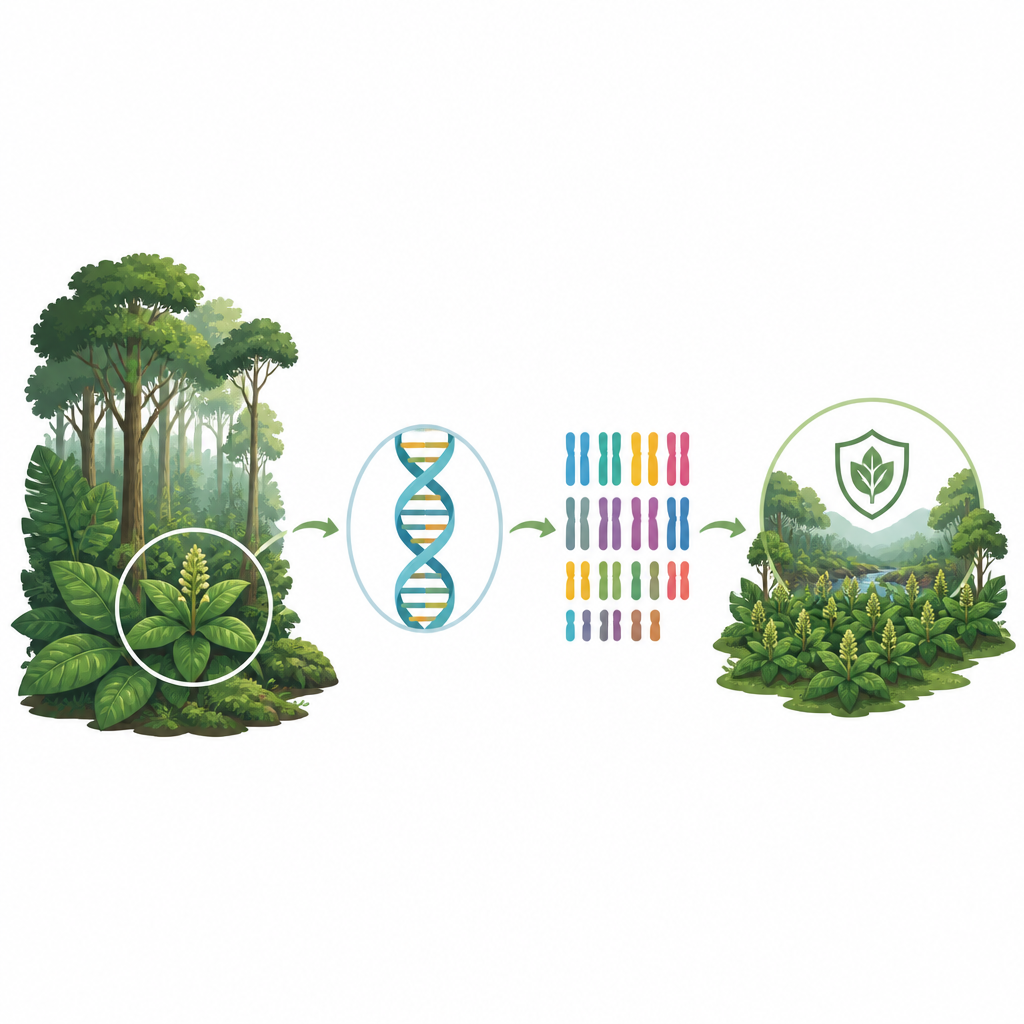
Why this plant needs help
Like many plants with narrow ranges, Tigridiopalma magnifica faces threats from habitat loss, pollution, invasive species, overuse, and climate change. It depends on very specific conditions such as deep shade under a closed tree canopy, moist soils, and nearby streams. These strict habitat needs, combined with its limited distribution, have pushed it to a threatened status in China. Until now, conservation work for this plant has relied mainly on field observations and simple records rather than detailed genetic knowledge.
Turning leaves and flowers into digital DNA
The researchers collected leaf and flower material from a single cultivated plant grown in a botanical garden, itself derived from tissue culture. From these tissues they extracted DNA and RNA and ran several types of modern sequencing. Long DNA fragments were read using an Oxford Nanopore device, while shorter but very accurate reads, three dimensional DNA contact data, and RNA data came from another high throughput platform. In total they generated hundreds of billions of bases of sequence, capturing both the raw genetic code and clues about which genes are active in leaves and flowers. 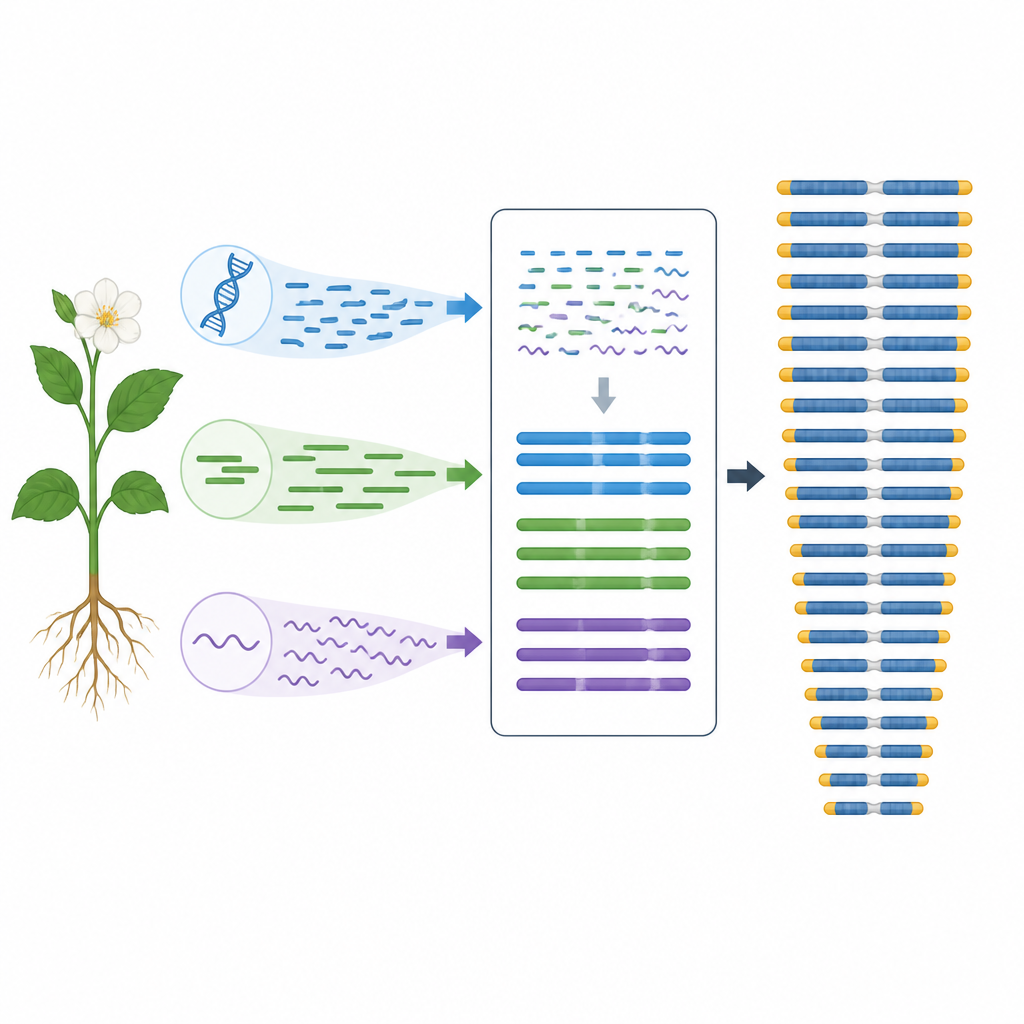
Building full chromosomes from millions of pieces
Raw sequence data arrive as countless short snippets that must be assembled like a massive jigsaw puzzle. The team first cleaned the data, then used specialized software to piece together long stretches of DNA from the noisy long reads. Additional tools removed duplicate stretches that reflect the two parental copies in the plant rather than true separate regions. They then used Hi C data, which show which parts of the genome tend to be near each other inside the nucleus, to order and orient these long stretches into 22 chromosome like structures called pseudochromosomes. Further polishing steps corrected errors and filled gaps, and a separate toolkit located the repeating DNA that marks the ends of chromosomes and the central centromere regions.
What the finished genome looks like
The final genome covers about 217 million DNA letters arranged into 22 pseudochromosomes, with only two small gaps remaining inside chromosomes 5 and 15. Telomeric caps appear at both ends of every pseudochromosome, and centromeres were identified on each, revealing the basic physical layout of the genome. Quality checks show that 95 percent of expected core plant genes are present, and measures of accuracy and continuity are high. The team cataloged about 43,000 protein coding genes and nearly 500 transfer RNA genes. They also charted the repetitive elements that make up over a third of the genome and found no clear signs of recent whole genome duplication in this species.
How this helps conservation and future research
This chromosome scale genome gives scientists a detailed reference for studying how Tigridiopalma magnifica has adapted to its shaded, moist forest home and how its populations are faring over time. With this map, future work can track genetic diversity in wild and cultivated plants, search for genes linked to stress tolerance or ornamental traits, and compare this species with its relatives. In practical terms, the new genome is a powerful tool that can guide more informed conservation plans and help ensure that this rare forest plant continues to thrive in nature and in gardens.
Citation: Vu, D.Q., Xiao, TW., Wang, ZF. et al. A chromosome-scale genome assembly of Tigridiopalma magnifica. Sci Data 13, 781 (2026). https://doi.org/10.1038/s41597-026-07127-0
Keywords: plant genomics, endangered species, genome assembly, conservation genetics, Tigridiopalma magnifica