Clear Sky Science · en
A digital biomarker dataset from hematopoietic cell transplant caregivers and patients
Why this story matters
For people undergoing intense treatments such as blood stem cell transplants, recovery does not happen alone. Family members often become round-the-clock caregivers, juggling medications, appointments, and emotional support while managing their own health. This study shares a large new dataset that captures everyday signals from both patients and caregivers using wearables, phone apps, and medical records, offering a clearer view of what life really looks like during the months after transplant.
Watching recovery in real time
Hematopoietic cell transplantation is a powerful treatment for serious blood diseases, but the months after transplant are demanding and risky. Patients must be closely watched for infections, organ problems, and a complication called graft-versus-host disease, where donor immune cells attack the patient’s tissues. Families often provide much of this monitoring, taking on physical and emotional strain that can affect how well patients do. Past research has mostly relied on occasional surveys or memories of how people felt, which can miss the daily ups and downs that shape both recovery and caregiver stress.
Pairing gadgets with human experience
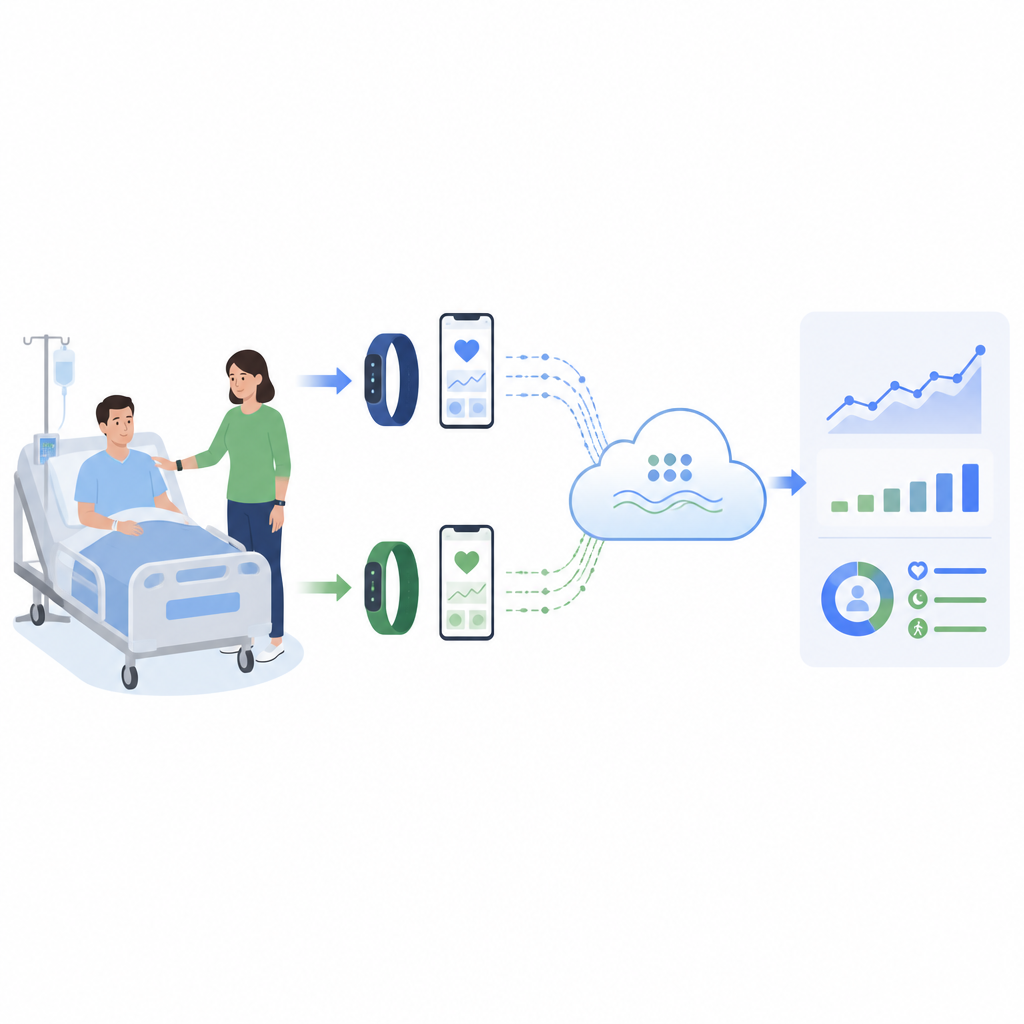
The research team followed 166 patient-caregiver pairs for 120 days after transplant at a major medical center. Both people in each pair wore a Fitbit Charge 3 wristband that recorded heart rate, steps, activity level, and sleep around the clock. They also used a smartphone app called Roadmap to answer a simple daily question about mood and to complete standard health questionnaires at the start of the study, one month in, and at four months. At the same time, the team pulled key medical information from the hospital record system, such as infections, hospital readmissions, relapse of disease, and episodes of graft-versus-host disease, and linked all of these streams together for each individual.
A closer look at a stressful journey
Some caregivers were randomly assigned an enhanced version of the app that included positive psychology activities such as gratitude journaling and mindfulness exercises, while others saw only basic Fitbit data and mood tracking. Although this article does not focus on trial results, the design means future researchers can compare how these added activities may influence caregiver well-being and, in turn, patient outcomes. The dataset itself is rich: it includes more than five million minute-by-minute heart rate readings and hundreds of millions of step records, detailed sleep summaries, over twenty thousand mood reports, and carefully coded clinical events over the first year after transplant. Importantly, it contains paired data, so scientists can study how changes in a caregiver’s sleep, mood, or activity line up with changes in the patient’s health.
Making sense of massive daily data
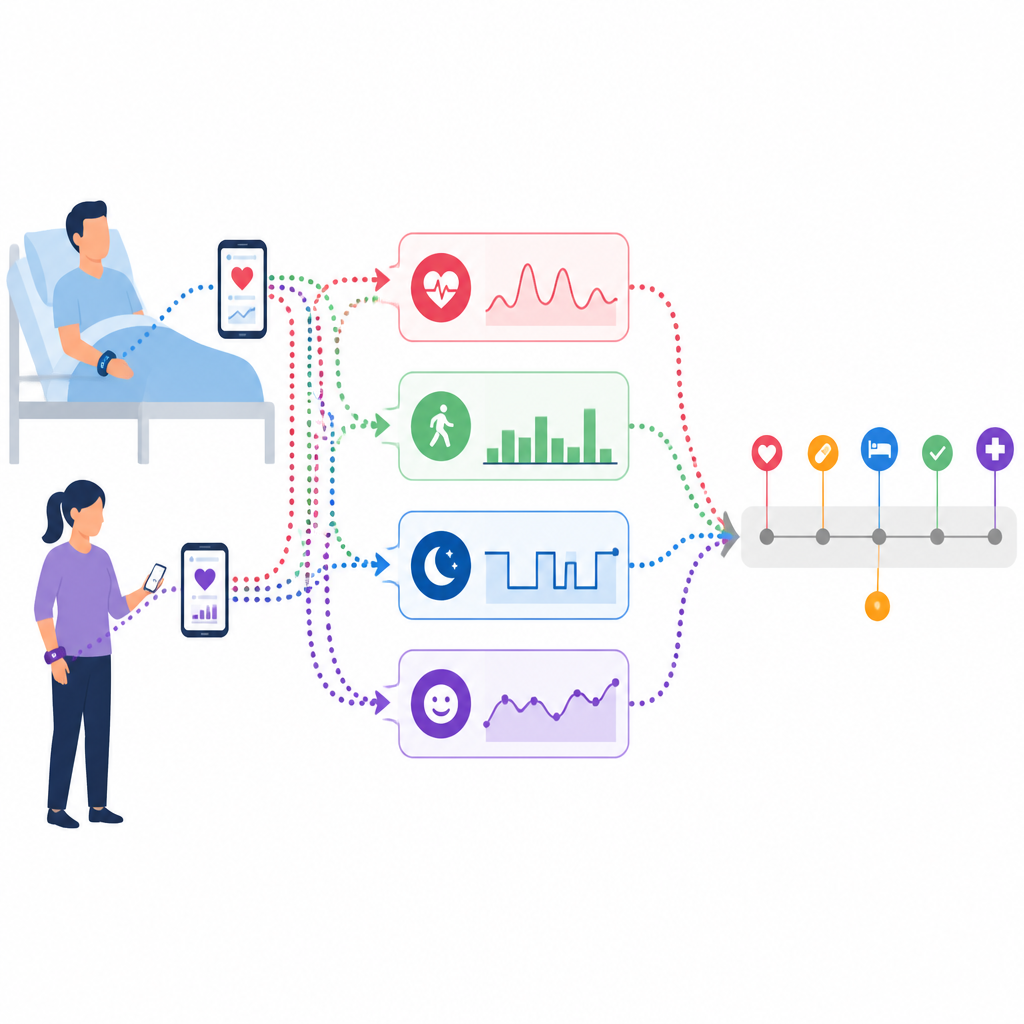
To turn this flood of information into a usable resource, the team created a structured set of thirteen linked files and checked the data from several angles. They filtered out records from devices not actually used by study participants, synchronized signals so that steps were counted only when heart rate showed the device was on a wrist, and converted survey answers into standard scores that can be compared with other patient groups. They confirmed that heart rates and sleep times fell within expected ranges and that patterns of missing data, such as gaps during hospital stays or busy caregiving periods, matched real-world challenges. By anonymizing all identities and expressing time relative to the date of transplant, they protected privacy while preserving the ability to trace how health and behavior shifted day by day.
What this means for future care
The finished dataset, now publicly available to researchers, offers a detailed window into the shared journey of transplant recipients and their caregivers. It can be used to build computer models that flag early signs of trouble, to explore how daily mood or sleep changes predict infections or hospital returns, and to understand how one person’s strain or resilience affects the other. For patients and families, the long-term payoff could be smarter digital tools that spot rising stress or health risks in real time and help care teams step in sooner, making a difficult recovery period a little safer and more manageable.
Citation: Jalin, A., Swatthong, N., Rozwadowski, M. et al. A digital biomarker dataset from hematopoietic cell transplant caregivers and patients. Sci Data 13, 759 (2026). https://doi.org/10.1038/s41597-026-07107-4
Keywords: digital biomarkers, stem cell transplant, caregivers, wearable devices, mHealth