Clear Sky Science · en
Chromosome-level assembly of spotted steed (Hemibarbus maculatus Bleeker, 1871) genome
Why this river fish matters
The spotted steed is a small freshwater fish that has long been valued on Chinese dinner tables for its tasty flesh, few bones, and good nutrition. Once common in rivers across East Asia, its numbers fell sharply as pollution, overfishing, and damaged spawning grounds took their toll. At the same time, demand for the fish has stayed high, turning it into an important farmed species. This study gives scientists and breeders a powerful new tool: a complete, chromosome-level map of the spotted steed’s DNA, which can guide efforts to protect wild stocks and improve aquaculture.
From river to genetic blueprint
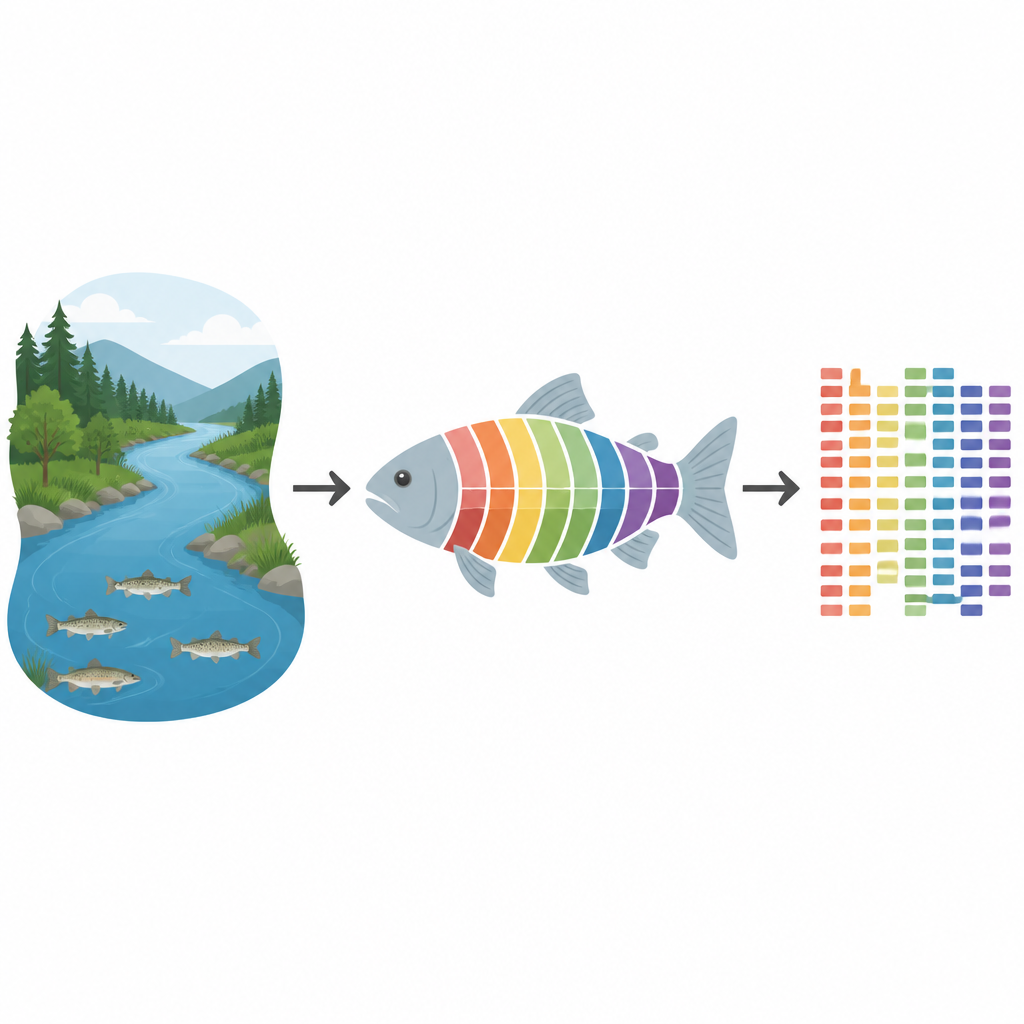
The researchers began with a wild two-year-old female spotted steed collected from a reservoir in central China. They carefully preserved muscle and eleven other tissues, such as brain, liver, and gill, to capture both the fish’s DNA and the genes that are actively switched on. By using different sequencing approaches on these samples, they aimed not just to list the fish’s genes, but also to understand how those genes are arranged across its chromosomes and how reliably they could be detected.
Combining several high tech lenses
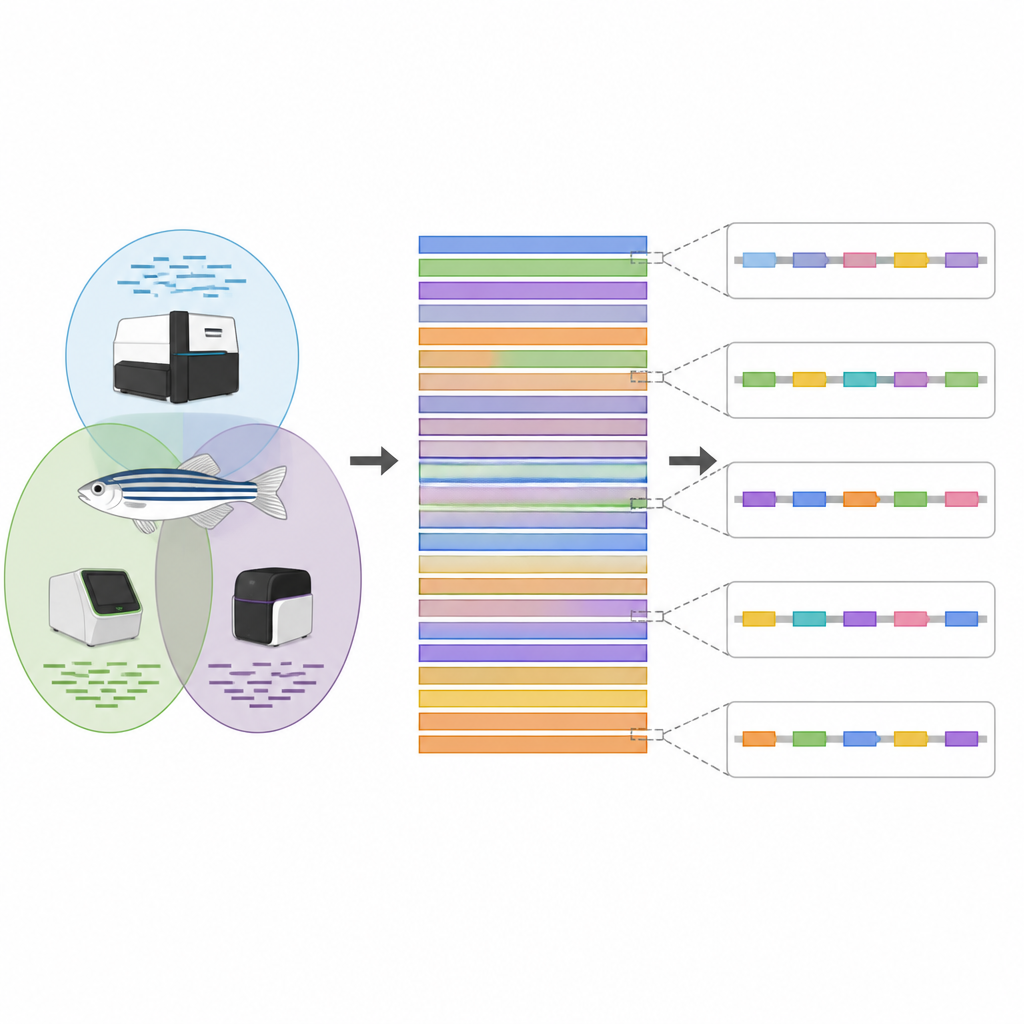
To read the fish’s genetic code, the team used a mix of short and long DNA reads. Short reads from an Illumina machine provided high-accuracy snippets that helped estimate the overall genome size and quality. Long reads from a PacBio platform produced stretches of DNA tens of thousands of bases long, which are better for stitching together large continuous pieces. A third method, called Hi C, captured how pieces of DNA sit next to each other inside the cell’s nucleus, allowing the scientists to group and order these pieces into full chromosomes, much like using a 3D snapshot of tangled yarn to work out which strands belong together.
Building the chromosomes and finding the genes
Using these data, the scientists assembled the spotted steed genome into roughly 1.1 billion DNA bases arranged on 25 chromosomes. Quality checks showed that more than 95 percent of the expected core fish genes were present, suggesting that very little was missed. They also found that about one quarter of the genome consists of repeated stretches, many of them mobile DNA elements that can copy and paste themselves in new locations. On top of this framework they predicted 23,233 protein coding genes, and managed to assign likely functions to more than 99 percent of them by comparing the sequences to large international databases and to genes from other well studied fish.
A tool for breeders and conservationists
This new genome is more than a catalog of DNA. It offers a reference map that breeders can use to track traits such as growth rate, resistance to poor water quality, and reproductive performance. It also helps biologists study how spotted steed populations respond to environmental stress, and how their genetic makeup compares with related species. Because the authors have made all raw data and annotations publicly available, other groups can build on this work rather than starting from scratch.
What this means for the future of spotted steed
By turning a once mysterious genome into a well organized set of chromosomes and genes, the study provides a foundation for smarter fish farming and better conservation planning. For non specialists, the key message is that having a clear genetic blueprint of this familiar food fish makes it easier to breed healthier stocks, monitor wild populations, and explore how aquatic life can cope with changing and sometimes polluted river habitats.
Citation: Zhang, M., Xu, Y., Ma, X. et al. Chromosome-level assembly of spotted steed (Hemibarbus maculatus Bleeker, 1871) genome. Sci Data 13, 754 (2026). https://doi.org/10.1038/s41597-026-07104-7
Keywords: spotted steed, fish genome, aquaculture, chromosome assembly, conservation genetics