Clear Sky Science · en
Raman spectra for plastics identification (RaSPI) and Raman maps for plastics identification (RaMPI) datasets
Why tiny plastic clues matter
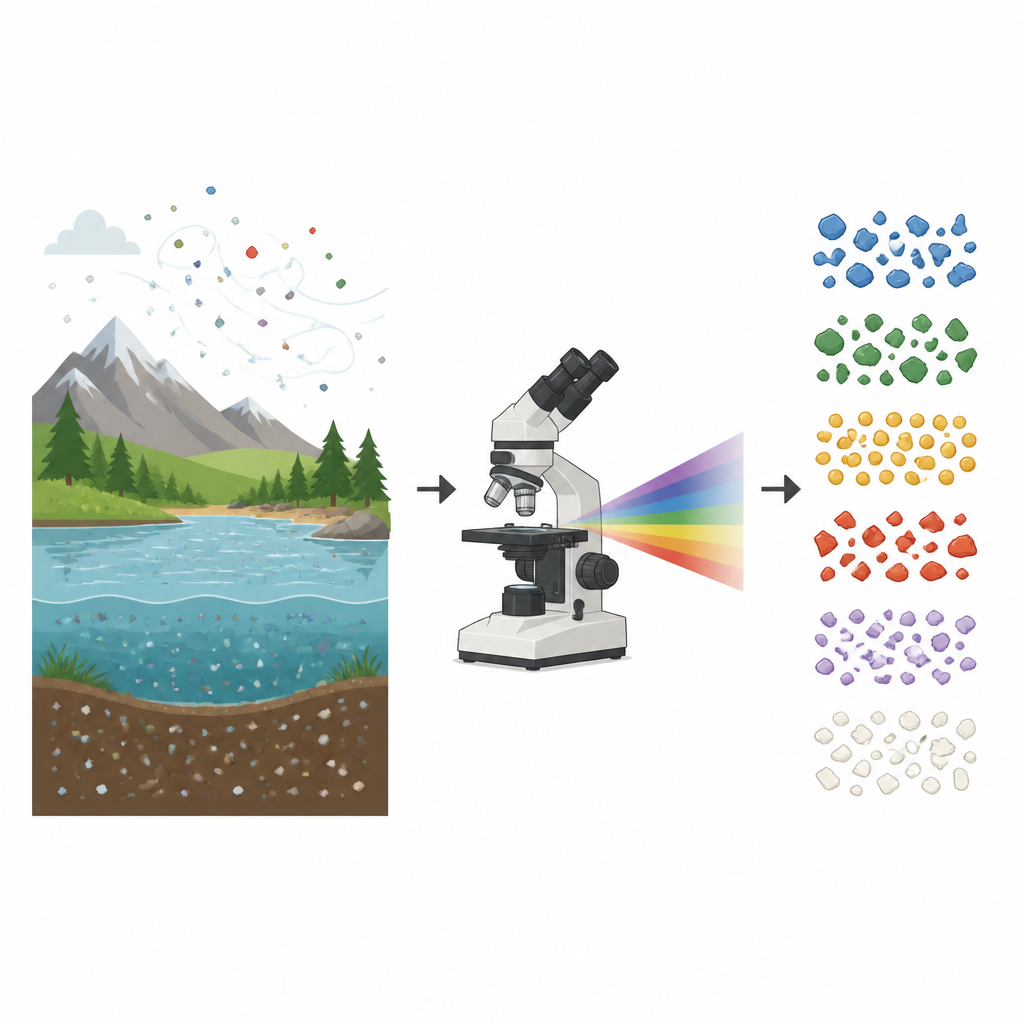
Plastic waste has spread across the planet, from deep oceans to mountain peaks and even into our own bodies. To understand how much plastic is out there, where it travels and how it might affect health, scientists need quick, reliable ways to tell what kind of plastic a tiny fragment is made of. This article introduces two carefully built collections of measurements that act like detailed fingerprints for plastics, designed to help researchers and computer programs recognize plastic pieces more easily and more accurately.
Looking at plastics with colored light
One powerful way to identify plastics is to shine laser light on them and record how the light scatters. This method, called Raman spectroscopy, produces a pattern of peaks that depends on the molecules inside the material, much like a barcode. It works especially well in wet or dirty samples because water does not interfere strongly with the signal. Until now, many plastic fingerprint libraries were based on clean, factory made pieces and used different settings and quality levels, which made it hard to compare results or to train computer programs that can sort through thousands of measurements without human help.
Building a clean set of plastic fingerprints
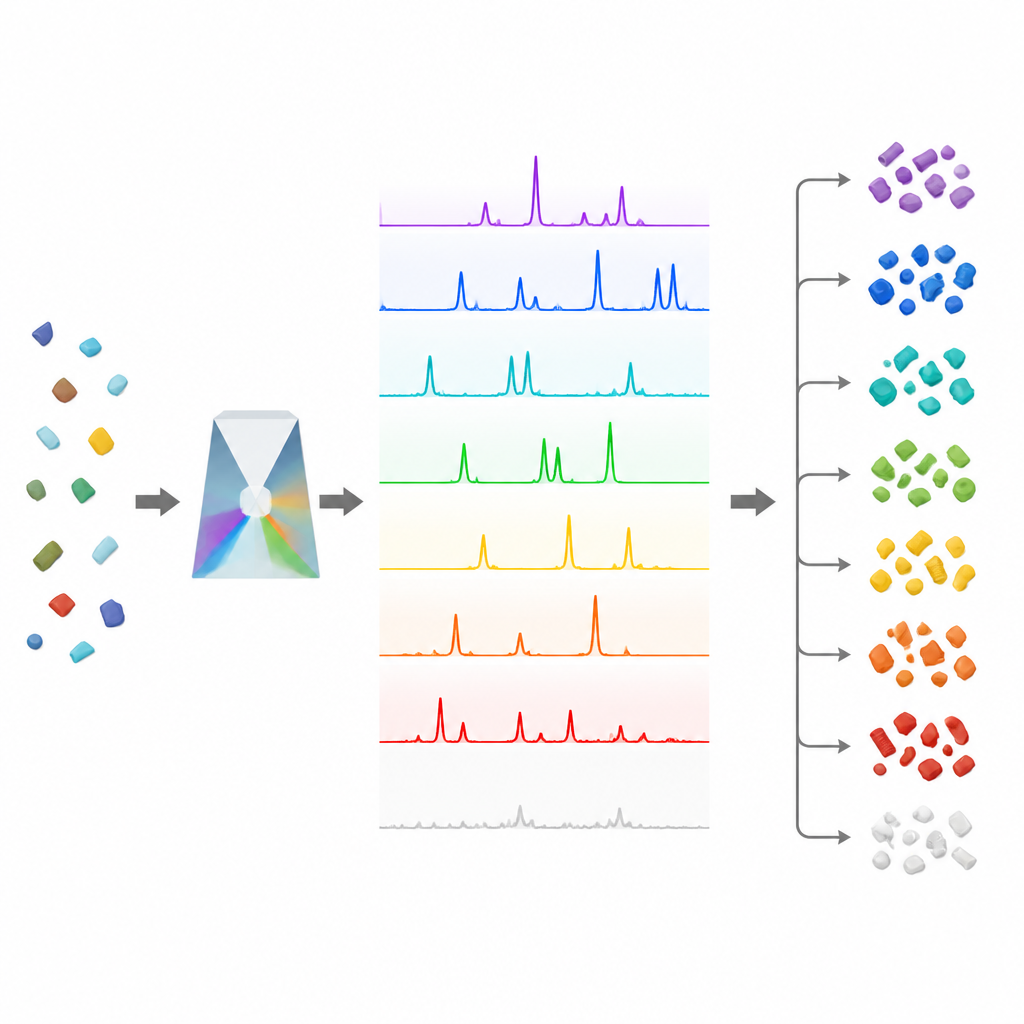
The first new collection, called RaSPI, gathers 402 very fine detailed spectra from 275 plastic items. These items cover 14 common plastic families, ranging from food packaging and drink cups to technical materials, and they include both commercial products and pieces pulled from real world pollution. The team used two laser colors and recorded across a wide range of signal so that subtle features would be captured. They also kept track of each item’s color, source and other notes, since dyes and additives can change the pattern. Every spectrum is shared in its original form and in a cleaned version: distracting background is removed, random bright spikes are corrected and the data are placed on a common grid so that different spectra line up neatly for later analysis.
Mapping plastic specks in two dimensions
The second collection, RaMPI, focuses on how plastic specks show up across a surface, like dust scattered on a slide. Here, the researchers created 34 tiny maps by scanning a laser across plastic mixtures and recording a spectrum at every point. Together these maps contain over 33,000 spectra, about half of which are from plastic and half from the empty background. The measurements were taken with one laser color over a narrower signal range but with many different choices of laser power and exposure time. This deliberate variation creates data that range from very clean to quite noisy, mirroring the uneven quality that scientists encounter in real samples from lakes, oceans and cities.
Teaching computers to read the signals
To make these maps truly useful, the team manually labeled every single spectrum as one of the 14 plastic types or as blank. They then checked the technical quality of the data by calculating signal to noise levels and by confirming that the processing steps did not distort the overall shapes. As a practical test, they trained a simple computer model on the RaSPI spectra and then asked it to classify all the RaMPI map points. The model’s answers closely matched the human labels across many maps, showing that the fingerprints from RaSPI and the maps from RaMPI are consistent with each other and well suited for developing and checking computer based tools.
What these datasets mean for plastic pollution
For people worried about plastic in the environment, these datasets are not a direct health study but a shared toolbox. By providing open, well documented fingerprints of many everyday plastics, including weathered pieces with unknown additives, the RaSPI and RaMPI collections give researchers and software makers a common foundation. With better training material, computers can learn to spot and sort plastic fragments more quickly and with less human effort. In turn, this can speed up surveys of plastic pollution in water, soil and air, helping scientists and policymakers gain a clearer picture of where plastics go and how big the problem really is.
Citation: Hogan, Ú.E., Voss, H.B., Lei, B. et al. Raman spectra for plastics identification (RaSPI) and Raman maps for plastics identification (RaMPI) datasets. Sci Data 13, 765 (2026). https://doi.org/10.1038/s41597-026-07103-8
Keywords: microplastics, Raman spectroscopy, machine learning, environmental pollution, spectral datasets